Why a Radiant Smile Matters
A bright, healthy smile does more than improve appearance—it activates the facial‑feedback hypothesis, releasing dopamine, serotonin and endorphins that lift mood and reduce stress. Research shows that within the first seven seconds of meeting someone, observers judge confidence, competence and trustworthiness largely based on the smile they see. Consequently, a polished smile can shape first‑impression outcomes in both social and professional settings. Cosmetic dentistry—through professional whitening, porcelain veneers, bonding or clear aligners—directly enhances oral aesthetics, helping patients align their external appearance with their internal self‑image. Studies consistently link improved dental aesthetics to higher self‑esteem, lower social anxiety and greater willingness to engage in conversations, networking and public speaking. In short, a radiant smile not only feels good but also supports mental well‑being and success in everyday life.
The Rise of Professional Teeth Whitening
 Professional teeth whitening has become the most popular cosmetic dental procedure, consistently topping patient surveys such as those by the American Academy of Cosmetic Dentistry. Its appeal lies in the ability to brighten a smile by several shades in a single office visit, delivering an immediate visual transformation that boosts confidence and self‑esteem.
How whitening works: In‑office whitening uses a high‑concentration peroxide gel that penetrates the enamel to break down stubborn stains from coffee, tea, red wine, tobacco, or aging. The gel is activated by a light or laser, accelerating the chemical reaction and allowing the shade lift to occur within minutes. Dentists may also provide custom‑made take‑home trays with a lower‑strength gel for continued improvement over a week, ensuring uniform results while protecting existing restorations.
Comparison with over‑the‑counter products: over‑the‑counter products contain lower peroxide concentrations and lack professional supervision, often leading to uneven color, slower progress, and a higher risk of sensitivity. In contrast, professional whitening delivers faster, more predictable outcomes, typically lasting six months to three years with proper oral hygiene.
Answer to common questions:
- What is the most popular cosmetic dental procedure? Professional teeth whitening holds that title because it is fast, non‑invasive, and affordable compared with veneers or orthodontics, offering an instant smile boost without altering tooth structure.
- What are the most popular cosmetic dental procedures? Besides whitening, patients frequently choose porcelain veneers for reshaping and covering imperfections, composite bonding for repairing chips or gaps, gum contouring to refine a “gummy” smile, and clear aligner therapy (e.g., Invisalign®) for discreet tooth straightening.
Overall, the convenience, safety, and dramatic aesthetic results of professional whitening make it the go‑to option for families and individuals seeking a quick, lasting confidence upgrade.
Transformations: Before & After Cosmetic Makeovers
 Most patients who seek a smile makeover arrive with common imperfections—stained or yellowed enamel from coffee, tea, and age; chips, cracks, or worn‑down crowns; visible gaps, uneven spacing, or a "gummy" gum line; and occasionally missing front teeth. These flaws can make people self‑conscious, limit smiling, and even affect professional confidence.
Modern cosmetic dentistry offers a menu of targeted treatments that can correct each of these issues in a single, coordinated plan. Professional teeth whitening lifts several shades in one visit, while Porcelain veneers or Dental bonding reshape, cover, or mask chips, gaps, and discoloration. Clear aligners discreetly straighten misaligned teeth, and Gum contouring reshapes an uneven gum line for a harmonious tooth‑to‑gum ratio. For more extensive damage or missing teeth, Cosmetic dentistry, onlays, or Dental implants restore form and function with natural‑looking results.
The before‑and‑after contrast is striking. After treatment, smiles appear brighter, uniformly aligned, and free of gaps or stains. Patients consistently report an immediate surge in self‑esteem: they laugh, speak, and network without hesitation, and first impression surveys show they are perceived as more approachable, trustworthy, and competent. In short, a well‑planned cosmetic makeover transforms a hesitant grin into a confident, healthy‑looking smile that enhances both personal well‑being and professional success.
Choosing Between Cosmetic Dentistry and Orthodontics
 Scope of cosmetic dentistry
Cosmetic dentistry focuses on the visual appearance of your smile. Treatments such as professional teeth‑whitening, porcelain veneers, dental bonding, inlays, onlays, and gum contouring are designed to mask stains, chips, gaps, and minor misalignment without fundamentally changing bite function. These procedures are typically minimally invasive, often completed in one or a few visits, and are considered elective, so they are usually not covered by standard dental insurance.
Scope of orthodontic treatment
Orthodontics addresses the position of teeth and jaws to achieve a proper bite and stable oral health. Using braces, clear aligners (e.g., Invisalign), or other appliances, orthodontists correct crowding, spacing, overbites, underbites, and other functional issues. The benefits are both aesthetic—creating a straighter smile—and health‑related, such as easier cleaning, reduced risk of gum disease, and alleviation of jaw strain.
When to combine both
In many cases patients benefit from a combined approach. Clear aligners can first straighten teeth, after which veneers or bonding close residual gaps for a flawless finish. Conversely, a cosmetic dentist may place veneers to hide a small diastema that orthodontics could also close, saving time and cost. Coordination between a cosmetic dentist and an orthodontist ensures that functional alignment is achieved while delivering the desired smile aesthetics.
Cosmetic dentistry vs orthodontics
Cosmetic dentistry is primarily aimed at improving the visual appearance of your smile through treatments such as teeth‑whitening, veneers, bonding, inlays, onlays and gum contouring, often without altering bite function. Orthodontics, by contrast, focuses on correcting the position of teeth and jaws to achieve a proper bite, using braces, clear aligners, or other appliances, and its benefits include both health and aesthetic improvements. While both specialties can enhance how you look, orthodontic work addresses underlying alignment and functional issues, whereas cosmetic procedures are largely surface‑level enhancements. In some cases the two overlap—an orthodontist may use clear aligners to straighten teeth for a more attractive smile, and a cosmetic dentist may employ veneers to close gaps that could also be treated orthodontically. Choosing between them depends on whether your primary concern is the health‑related alignment of your teeth or the immediate visual appeal of your smile.
Cosmetic dentistry vs general dentistry
General dentistry focuses on preventing, diagnosing, and treating oral health problems such as decay, gum disease, and tooth injury through routine cleanings, fillings, crowns, root canals, and extractions. Cosmetic dentistry, by contrast, is primarily concerned with the visual appearance of the smile, offering treatments like whitening, veneers, bonding, and smile redesigns. Many procedures—such as crowns, bridges, or implants—can serve both functional and aesthetic purposes, blurring the line between the two fields. While general dental services are usually covered by insurance because they are essential to health, cosmetic procedures are often elective and not reimbursed. Choosing a provider depends on whether your goal is to maintain oral health or to enhance the look of your teeth and gums.
Confidence Boost: Psychological and Functional Benefits
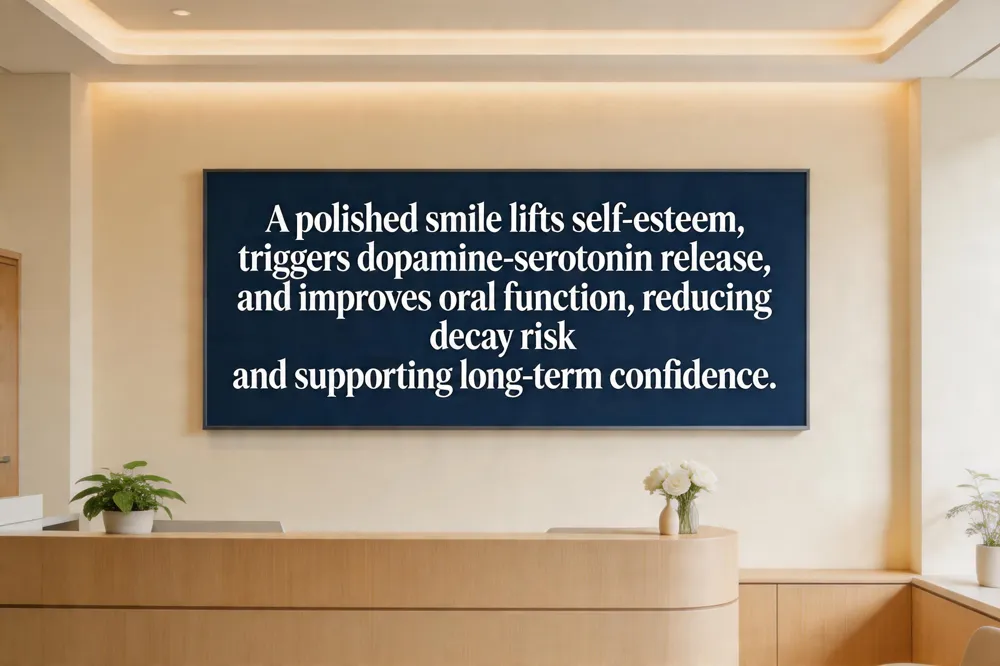 Cosmetic dentistry does more than perfect a smile—it reshapes how you feel and how you function.
Self‑esteem and social impact – A brighter, uniform smile instantly lowers self‑consciousness, making it easier to laugh, speak, and engage socially. Studies show that a polished smile is linked to higher self‑esteem, reduced social anxiety, and a perception of greater competence and trustworthiness, which can open doors in both personal and professional arenas.
Neurochemical effects of smiling – The facial‑feedback hypothesis explains that smiling triggers dopamine, serotonin, and endorphins, lifting mood and reinforcing confidence. When cosmetic work restores the desire to smile, these neurochemicals are released more often, creating a positive feedback loop that enhances overall well‑being.
Functional oral‑health advantages – Many cosmetic procedures (veneers, bonding, clear aligners) also improve bite alignment and make teeth easier to clean, lowering the risk of decay, gum disease, and jaw strain. Restorative aspects such as strengthened enamel and proper spacing support long‑term oral health, further cementing the confidence gained from a healthier mouth.
What are the benefits of cosmetic dentistry? – It brightens and unifies the smile, boosts self‑confidence, protects teeth, and improves bite and oral hygiene; durable materials like porcelain veneers can last 10‑15 years, while implants offer lifelong solutions.
How can cosmetic dentistry boost your confidence? – By eliminating stains, chips, gaps, and misalignment, treatments give a polished appearance that reduces self‑consciousness, enhances social connections, and supports professional growth.
Cosmetic dentistry cost – Prices vary: in‑office whitening $150‑$400 per session; veneers $800‑$2,500 per tooth; bonding $300‑$600 per tooth; clear‑aligner therapy $3,500‑$5,000; full smile makeovers often exceed $5,000. Most procedures are elective and not covered by insurance, but many practices provide flexible financing to fit different budgets.
Finding Your Smile Solution Locally
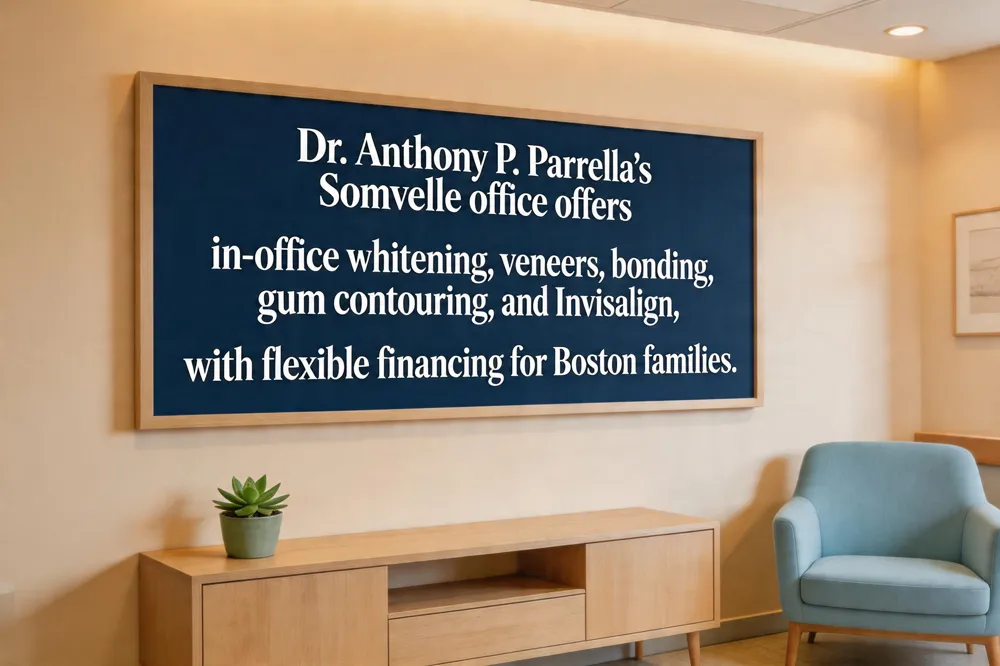 Dr. Anthony P. Parrella’s family‑run office in Somerville, MA offers a complete range of cosmetic services for Boston‑area families. In‑office professional whitening, custom porcelain veneers, direct composite bonding, gum‑contouring, and Invisalign® clear‑aligners are all available. To begin, call the office or fill out the online request form; a friendly coordinator will arrange a complimentary first‑visit exam and discuss your aesthetic goals. This local, personalized approach lets you start your smile makeover without traveling far. We also offer flexible financing to fit any budget today.
Your New Confident Smile Awaits
Your smile can change in a single visit. Professional whitening lifts years of stains, veneers mask chips and gaps, bonding repairs minor flaws, and clear aligners discreetly straighten teeth—all delivering instant confidence. At our practice we design a personalized plan that matches your goals, lifestyle, and budget. By choosing durable, minimally invasive options you also protect teeth, improve bite harmony, and make daily hygiene easier, ensuring the radiant smile you love supports long‑term oral health and lasting self‑esteem and a brighter future for you.