Understanding Gum Trouble Early On
Periodontal disease, commonly called gum disease, begins when bacterial plaque builds up along the gum line, causing inflammation that first appears as gingivitis. Early detection matters because gingivitis is fully reversible with proper oral hygiene and professional cleaning, while delayed treatment can lead to periodontitis, bone loss, and eventual tooth loss. Recognizing signs such as red or swollen gums, bleeding while brushing, persistent bad breath, gum recession, or shifting teeth allows intervention before permanent damage occurs. In our community, Dr. Anthony P. Parrella and his team prioritize education and gentle, evidence‑based care. They offer thorough exams, personalized cleaning plans, and prompt scaling and root planing to halt disease progression, helping families keep healthy, confident smiles.
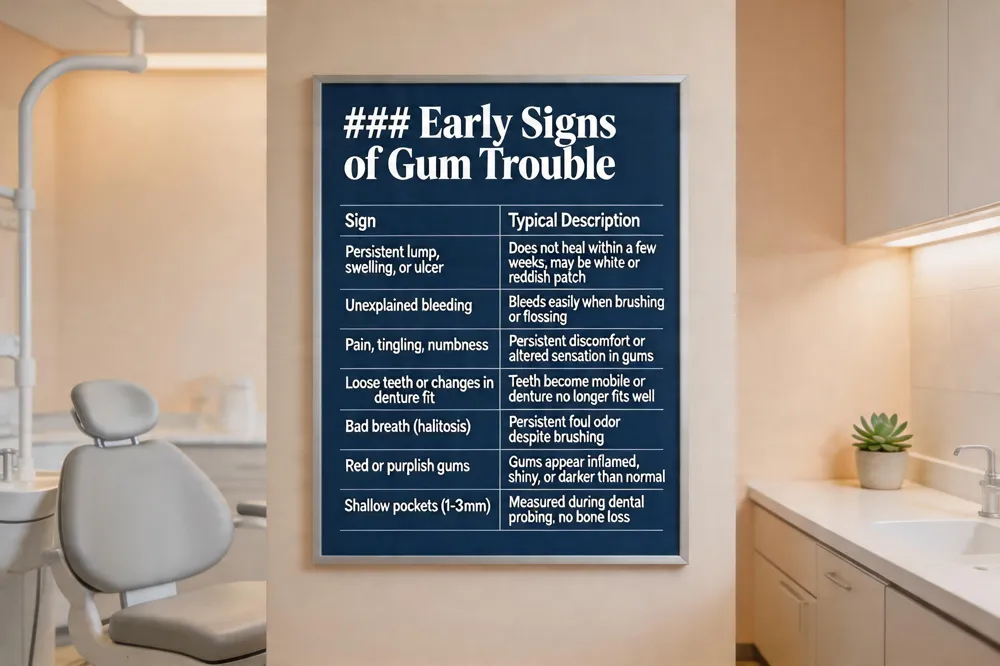
Early Signs of Gum Trouble
Early Signs of Gum Trouble
| Sign | Typical Description |
|---|---|
| Persistent lump, swelling, or ulcer | Does not heal within a few weeks; may be white or reddish patch |
| Unexplained bleeding | Bleeds easily when brushing or flossing |
| Pain, tingling, numbness | Persistent discomfort or altered sensation in gums |
| Loose teeth or changes in denture fit | Teeth become mobile or denture no longer fits well |
| Bad breath (halitosis) | Persistent foul odor despite brushing |
| Red or purplish gums | Gums appear inflamed, shiny, or darker than normal |
| Shallow pockets (1‑3 mm) | Measured during dental probing, no bone loss |
 Signs of gum cancer
Typical signs of gum cancer include a persistent lump, swelling, or irregular ulcer on the gums that does not heal within a few weeks. Look for white or reddish patches, unexplained bleeding, persistent pain, tingling, numbness, loose teeth, or changes in denture fit. Any sore that repeatedly reopens or fails to heal should prompt a dental evaluation.
Early signs of gum disease treatment
Red or puffy gum edges, bleeding when brushing or flossing, tenderness along the gumline, and persistent bad breath that doesn’t improve after brushing signal gingivitis. Early treatment focuses on diligent home care—brushing twice daily with fluoride toothpaste, daily flossing, and an antimicrobial mouth rinse—plus a professional cleaning, and if needed, scaling and root planing to remove sub‑gingival plaque and tartar buildup.
Gingivitis
Gingivitis is the reversible, earliest stage of periodontal disease caused by plaque and tartar buildup. Signs include red, swollen, tender gums that bleed easily, and bad breath. Prompt professional cleaning and improved oral hygiene can restore gum health and prevent progression.
What does stage 1 gum disease look like?
Stage 1 (gingivitis) presents as shiny, swollen gums that may appear purplish, bleed on brushing, and have shallow pockets (1‑3 mm) with no bone loss. The gum texture feels softer than healthy tissue.
How do you know if you have early stage gum disease?
Watch for reddish or purplish gums, tenderness, swelling, bleeding on brushing or flossing, persistent bad breath, and early recession. If any of these signs appear, schedule a dental check‑up promptly.
Causes, Risk Factors, and Contagion
Causes, Risk Factors, and Contagion
| Category | Details |
|---|---|
| Primary cause | Dental plaque → tartar → gum inflammation |
| Smoking/tobacco | Doubles risk by impairing blood flow & immune response |
| Diabetes (uncontrolled) | Amplifies inflammation and slows healing |
| Hormonal changes | Pregnancy, menopause increase susceptibility |
| Genetics | Family history predisposes to periodontal problems |
| Poor nutrition & stress | Weaken immune defense and gum tissue |
| Contagion | Periodontal bacteria spread via saliva (shared utensils, kissing) |
| Prevention of Good oral hygiene, regular dental visits, avoid sharing saliva | |
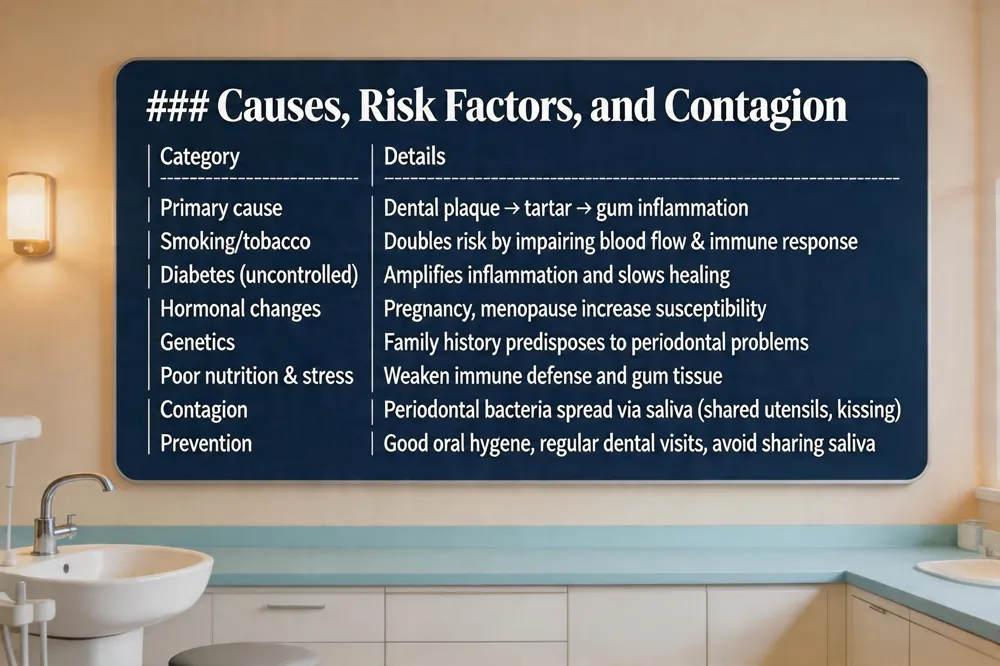 Gum disease starts when dental plaque buildup that hardens into tartar, irritating the gum tissue and triggering inflammation that can progress to gingivitis and, if untreated, to periodontitis. Smoking and other tobacco products double the risk of disease by impairing blood flow and immune response, while uncontrolled diabetes and hormonal changes (pregnancy, menopause) amplify inflammation and slow healing. Genetics also play a role; a family history of periodontal problems can make the gums more vulnerable. The bacteria that cause gum disease are spread through saliva, so sharing utensils, drinking from the same cup, or kissing can transmit the microbes, though good oral‑hygiene habits usually prevent infection.
What causes gum disease? Gum disease begins with plaque buildup that hardens into tartar, leading to inflammation; risk factors include smoking, diabetes, hormonal changes, poor nutrition, stress, and genetics.
Is gum disease contagious? Yes—periodontal bacteria can be passed via saliva, but diligent brushing, flossing, mouthwash use, and regular dental visits greatly reduce the chance of infection.
Types of gum disease gingivitis (reversible inflammation) can advance to periodontitis (bone‑loss stage). periodontitis is classified as chronic (slow‑progressing) or aggressive (rapid‑progressing), and systemic periodontitis occurs when other health conditions predispose a person to infection.
Home Care and Self‑Help Strategies
Home Care & Self‑Help Strategies
| Routine Action | Frequency / Details |
|---|---|
| Brushing | Twice daily, 2 min, soft‑bristled brush, circular motion |
| Flossing | Every night, focus on gum line |
| Antimicrobial mouth rinse | 1‑2 times daily (chlorhexidine or alcohol‑free essential‑oil) |
| Warm salt‑water rinse | ½ tsp salt in warm water, 2‑3 times daily |
| Diluted H₂O₂ rinse | 1:1 mix of 3 % peroxide & water, 1‑2 times daily |
| Natural anti‑inflamatives | Aloe‑vera gel, turmeric‑coconut‑oil paste, sage tea as needed |
| Oil‑pulling | Coconut oil, 3‑4 times a week |
| Nutrition | Vitamin C, Vitamin D, omega‑3 fatty acids daily |
 A solid daily routine is the cornerstone of gum health. Brush twice a day with a soft‑bristled toothbrush for two minutes, using gentle circular motions to avoid gum recession, and floss every night to disrupt plaque along the gum line. Antimicrobial mouth rinses such as chlorhexidine or an alcohol‑free essential‑oil rinse can reduce bacterial load. Warm salt‑water rinses (½ tsp salt in a glass of warm water) 2‑3 times daily and diluted hydrogen‑peroxide (equal parts 3 % peroxide and water) help draw out infection and calm swelling. Natural anti‑inflammatories—aloe‑vera gel, turmeric‑coconut‑oil paste, or sage tea—can soothe irritated gums, while oil‑pulling with coconut oil a few times a week may lower bacterial counts. Support gum tissue with a diet rich in vitamin C, vitamin D and omega‑3 fatty acids.
How to cure gum disease without a dentist? Early‑stage gum inflammation can be slowed at home with the above measures, but professional care is needed if bleeding or recession persists.
Gum disease treatment at home follows the same routine, adding antibacterial rinses and natural soothing agents.
Is gum disease curable? Yes, if caught as gingivitis; later periodontitis can be managed but not fully cured.
Can you cure gum disease? Only the reversible stage (gingivitis) can be fully cured; advanced disease requires professional intervention and ongoing maintenance.
When Professional Care Is Needed
When Professional Care Is Needed
| Intervention | Typical Indication | Approx. Cost (USD) |
|---|---|---|
| Scaling & root planing (deep cleaning) | Mild‑to‑moderate periodontitis, sub‑gingival plaque | $400‑$4,000 (full mouth) |
| LANAP (Laser‑Assisted New Attachment Procedure) | Advanced disease, desire for minimally invasive option | $5,000‑$12,000 |
| Pocket‑reduction (flap) surgery | Deep pockets >6 mm, persistent inflammation | $600‑$3,000 per quadrant |
| Bone or soft‑tissue grafting | Lost bone or exposed roots, advanced stage | $600‑$3,000 per quadrant |
| Regular periodontal maintenance | Post‑treatment monitoring, disease stability | Varies; often covered 50‑100 % by dental plans |
 Early gum disease can be halted with scaling and root planing (deep cleaning), which removes plaque and tartar below the gum line and smooths root surfaces so gums can re‑attach. For more advanced cases, the Laser‑Assisted New Attachment Procedure (LANAP) selectively eliminates diseased tissue while preserving healthy gum, offering a minimally invasive alternative. Pocket‑reduction (flap) surgery reshapes gum tissue and reduces deep periodontal pockets, and bone or soft‑tissue grafting restores lost jawbone and covers exposed roots.
Periodontal therapy cost – Deep cleaning ranges $400‑$4,000 for the whole mouth; LANAP $5,000‑$12,000; grafting and surgery $600‑$3,000 per quadrant. Most dental plans cover 50‑100 % of preventive and many therapeutic procedures, and financing options are often available.
Periodontal treatment – Starts with a thorough exam, probing depths, and X‑rays. Non‑surgical scaling and root planing is used for mild‑to‑moderate disease; surgical options (flap, grafts, guided tissue regeneration address advanced loss.
Periodontal disease – An infection of the gums and supporting bone that begins as gingivitis and can progress to periodontitis, causing bone loss, gum recession, and tooth mobility.
Can gum disease kill you? – While not directly fatal, untreated gum disease raises the risk of heart disease, stroke, diabetes complications, and serious infections. Early detection and treatment protect both oral and overall health.
Managing Advanced Disease and Systemic Health
Managing Advanced Disease & Systemic Health
| Stage | Clinical Features | Systemic Implications |
|---|---|---|
| Stage 1 (gingivitis) | Red, swollen, soft gums; bleed on probing; pockets 1‑3 mm; no bone loss | Generally localized; early intervention prevents systemic impact |
| Stage 2 (early periodontitis) | Shallow pockets, mild bone loss, slight recession | May increase systemic inflammatory load |
| Stage 3 (moderate periodontitis) | Pockets >6 mm, noticeable bone loss, tooth mobility, shifting | Associated with higher risk of cardiovascular disease, diabetes complications |
| Stage 4 (advanced periodontitis) | Severe bone destruction, deep pockets, pus, high tooth‑loss risk | Can exacerbate systemic conditions (heart disease, stroke, poor glycemic control) |
 Stages of gum disease
Gum disease progresses through four main stages. Stage 1, gingivitis, is inflammation of the soft gum tissue caused by plaque buildup and is usually reversible with professional cleaning and good oral hygiene. Stage 2, early periodontitis, occurs when the infection spreads below the gum line, creating shallow periodontal pockets and mild bone loss. Stage 3, moderate periodontitis, is marked by deeper pockets (greater than 6 mm), noticeable bone loss, tooth shifting, and increased sensitivity. Stage 4, advanced periodontitis, involves severe bone destruction, gum recession, pus formation, and a high risk of tooth loss, often requiring surgical intervention.
Stages of gum disease
Gum disease progresses through four main stages. Stage 1, gingivitis, is inflammation of the soft gum tissue caused by plaque buildup and is usually reversible with professional cleaning and good oral hygiene. Stage 2, early periodontitis, occurs when the infection spreads below the gum line, creating shallow periodontal pockets and mild bone loss. Stage 3, moderate periodontitis, is marked by deeper pockets (greater than 6 mm), noticeable bone loss, tooth shifting, and increased sensitivity. Stage 4, advanced periodontitis, involves severe bone destruction, gum recession, pus formation, and a high risk of tooth loss, often requiring surgical intervention.
Periodontal disease symptoms Red or purplish, swollen gums that bleed easily, persistent bad breath, an unpleasant taste, and soreness while chewing are early warnings. As disease advances, gums recede, exposing longer roots, teeth become loose or shift, and deep pockets may fill with pus. Prompt dental evaluation can halt further tissue and bone loss.
Gum infection symptoms Persistent halitosis, foul taste, tender or painful gums, recession, heightened sensitivity, and visible pus between teeth and gums signal an active infection that needs immediate care.
Orthodontic treatment meaning Orthodontic care uses appliances such as braces or clear aligners to gently move teeth into proper alignment, improving smile aesthetics, bite function, and reducing the risk of cavities and gum disease.
What is the 3‑3‑3 rule for teeth? Brush for about 3 minutes per session, ideally three times a day (morning, evening, and an additional cleaning), to maximize plaque removal.
What are the 5 P’s of periodontics? Predictive, preventive, personalised, participatory, and periodontal health promotion guide modern, care.
Taking Control of Your Gum Health
Recognizing gum disease early saves teeth and health. Bleeding, swollen or red gums, persistent bad breath, receding gums, and tooth sensitivity are the most common warning signs. When these appear, a professional evaluation—often starting with scaling and root planing—can halt progression and restore tissue health. At Dr. Parrella’s Somerville office, we perform a thorough periodontal exam, use gentle ultrasonic tools, and discuss personalized home‑care plans, including proper brushing, flossing, and antimicrobial rinses. Our team also offers advanced options such as LANAP laser therapy, bone or tissue grafts, and regular maintenance visits to keep gums stable. We are committed to improving oral health for every family in Somerville, providing education, affordable care, and a welcoming environment.