Introduction
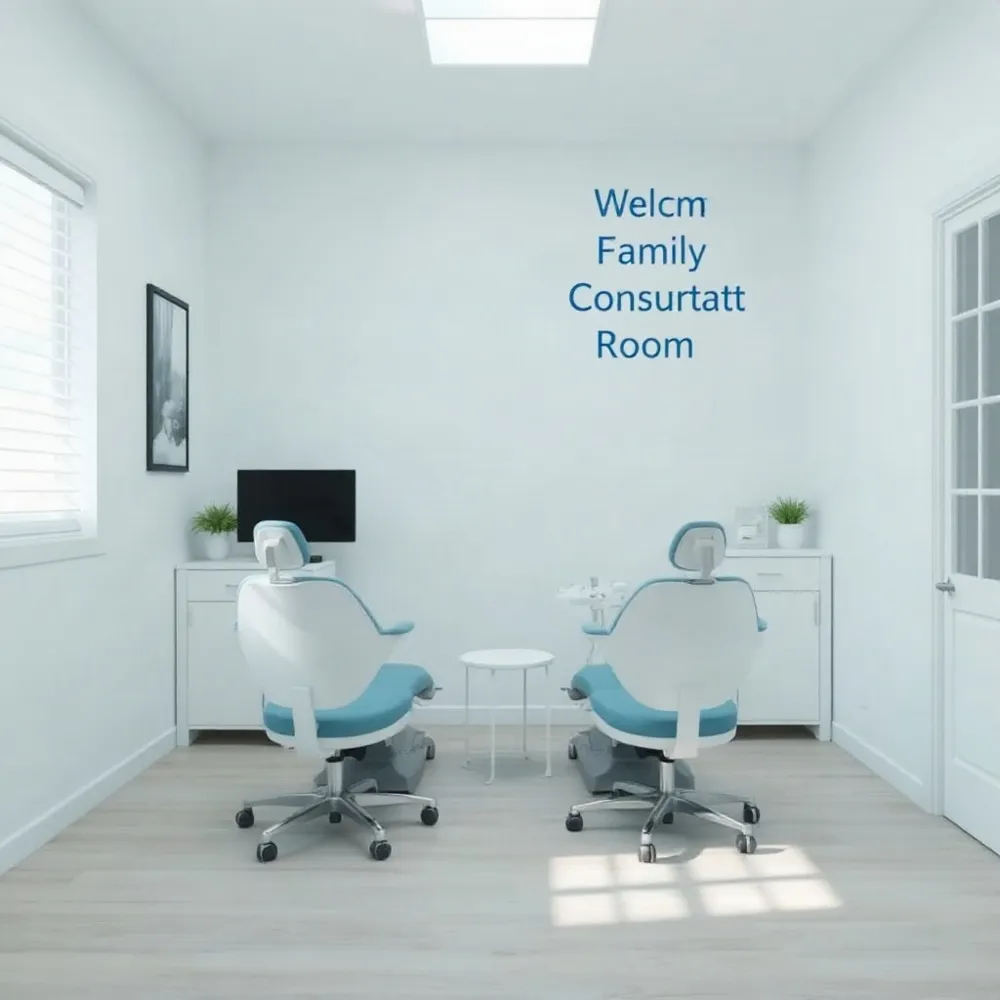
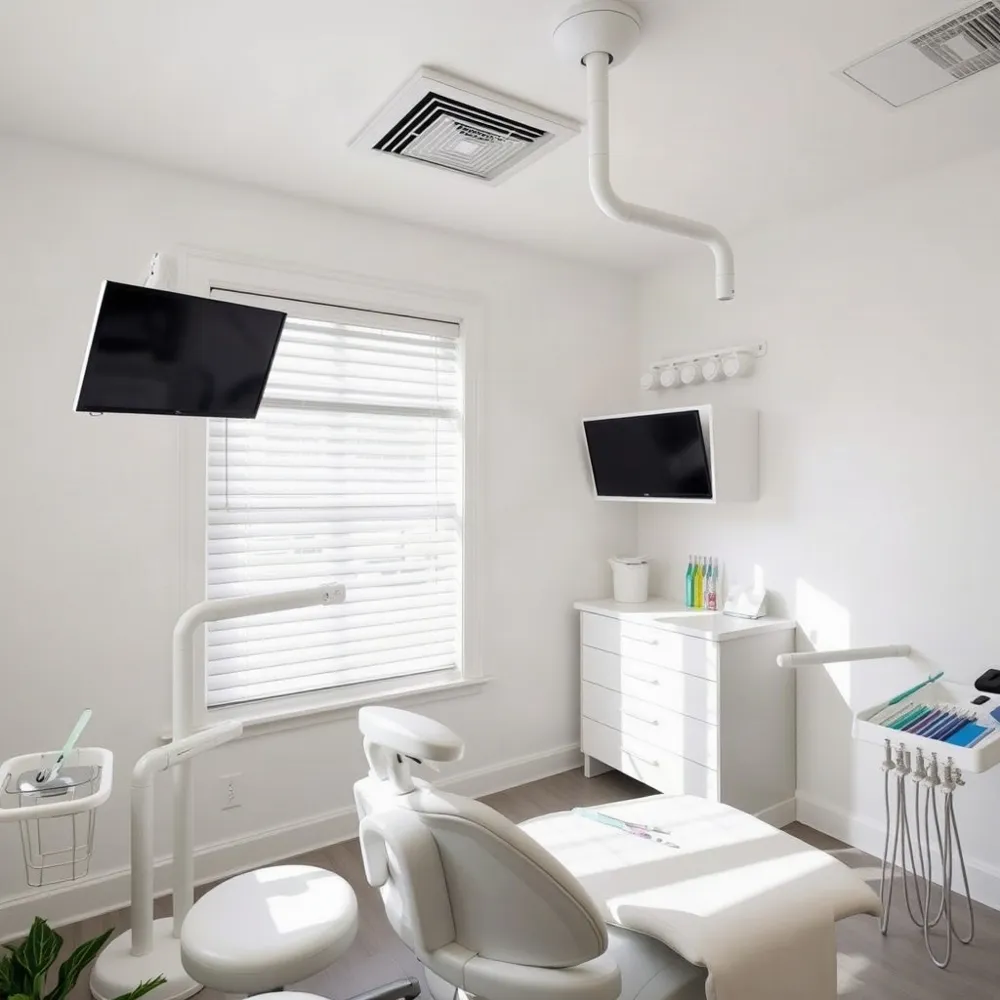
Welcome to Dr. Anthony P. Parrella’s family‑run dental practice in Somerville, MA, where our dedicated team of dental hygienists strives to keep your family’s smiles healthy and bright. This article explains why regular preventive care matters, outlines how our hygienists integrate clinical excellence with compassionate education, and offers a glimpse into the smooth, patient‑focused workflow that defines our office. From the moment the day begins—reviewing schedules, sterilizing instruments, and donning proper PPE—to the final documentation in the electronic health record, each step is designed to protect safety, enhance efficiency, and foster trust. By understanding this process, families can feel confident that every visit is a collaborative effort toward lasting oral health. They also take digital X‑rays and apply fluoride treatments.
Morning Preparation and Infection Control
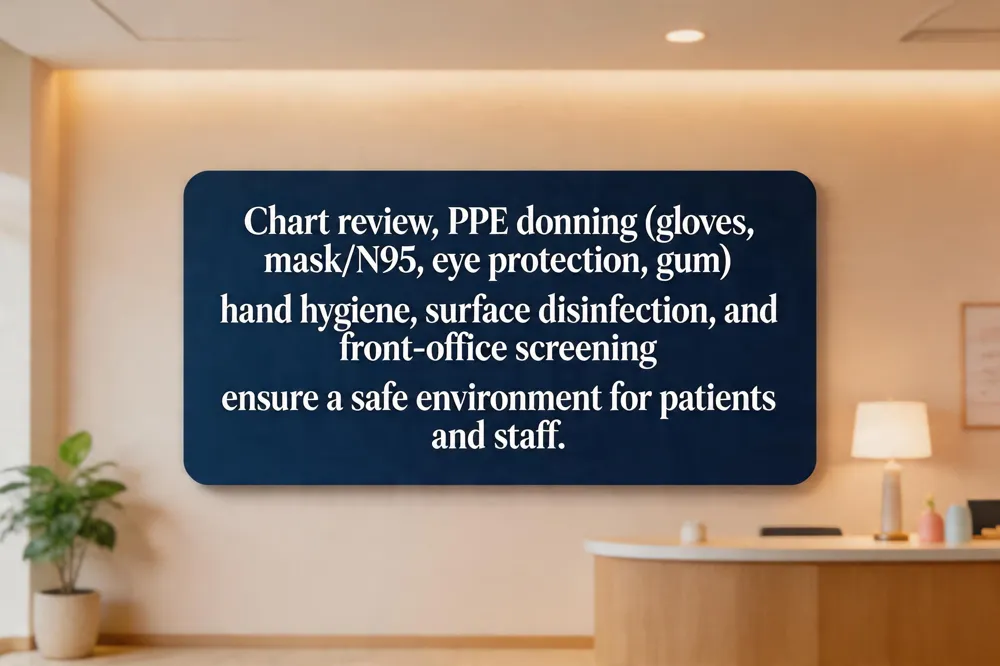 Before the first patient walks in, the dental hygienist reviews the day’s chart and verifies each patient’s medical and dental history, confirming any special needs and updating the electronic health record. With the schedule confirmed, the hygienist dons the full complement of PPE—gloves, a fit‑tested surgical mask or N95 respirator for aerosol‑generating procedures, eye protection, and a disposable gown—exactly as CDC Standard Precautions require. Hand hygiene is performed with soap and water or an alcohol‑based rub before and after every patient contact, and all clinical surfaces and non‑critical instruments are disinfected between chairs while reusable hand instruments are processed through an FDA‑cleared autoclave. The front‑office manual guides the reception team through patient screening: a brief health questionnaire, temperature check, and verification of infection‑control status are completed at intake, and any symptomatic patients are rescheduled or managed per the practice’s protocol. This coordinated approach—chart review, meticulous PPE donning, strict hygiene standards, and a standardized front‑office workflow—creates a safe, community‑focused environment that protects both patients and staff while supporting the hygienist’s vital role in preventive oral health.
Clinical Workflow and the 20‑20‑20 Rule
 At the start of each morning the hygienist reviews the schedule, checks vitals and updates medical histories before the first patient enters. This intake phase sets the stage for safe, personalized care.
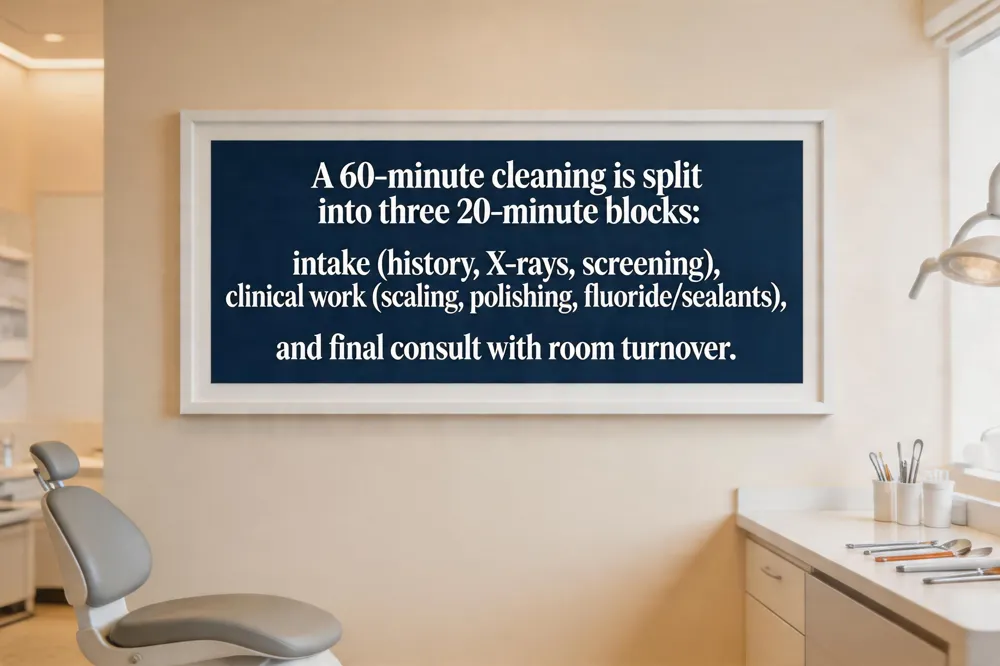
The 20‑20‑20 rule structures a 60‑minute cleaning into three 20‑minute blocks. The first 20 minutes cover intake tasks such as confirming health information, taking X‑rays and performing oral screening. The middle 20 minutes are devoted to clinical work: pocket probing, scaling and root planing, polishing with a low‑abrasion paste, and applying fluoride varnish or sealants. The final 20 minutes allow the dentist a consultation, followed by room turnover, disinfection and preparation for the next case.
Scaling removes plaque and tartar from all surfaces, while polishing smooths enamel and improves aesthetics. Preventive procedures include fluoride varnish, sealants and oral‑health counseling.
All findings are entered into health record, where imaging, intra‑oral scans and automated billing streamline the workflow. The dental workflow follows initiation, planning, execution, monitoring, control, completion, evaluation and closure, with special rules such as the 3‑3‑3 pain‑management guideline for post‑procedure discomfort.
Education, Certification, and Ongoing Learning
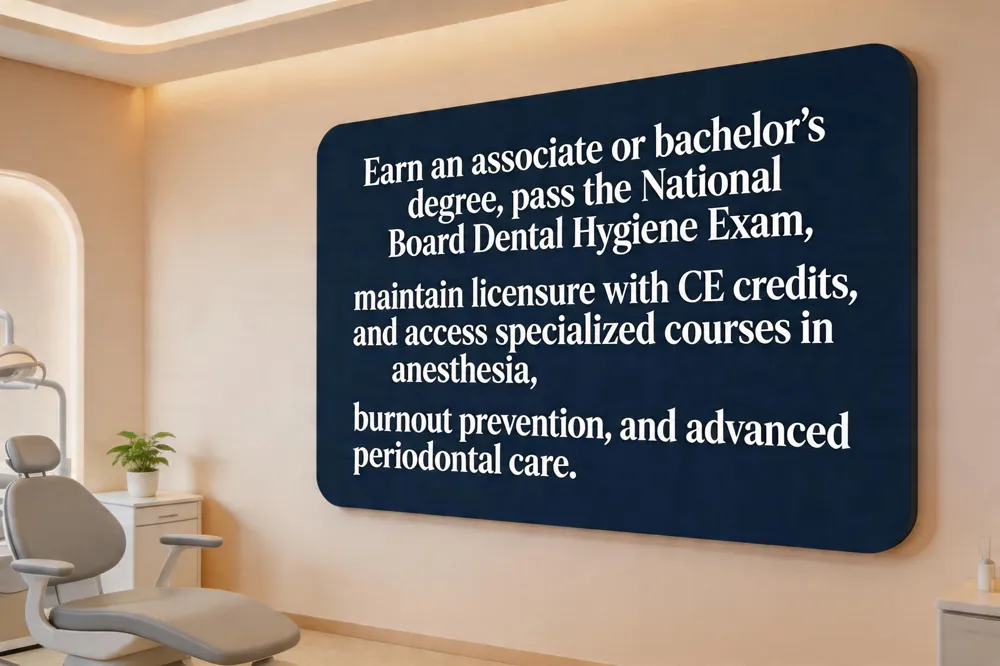 To become a dental hygienist you first need a high‑school diploma and a focus on science courses. Enrolling in an accredited associate‑degree program (2‑3 years) or a bachelor’s program (4 years) provides classroom instruction, labs, and supervised clinical experience. After graduation you must pass the National Board Dental Hygiene Examination and any state or regional licensure exam to obtain a registered dental hygienist (RDH) license.
Accredited programs are offered at community colleges, career‑tech institutes and many universities; they often include flexible summer sessions for working students. Once licensed, maintaining competence requires continuing‑education (CE) credits. Platforms such as Dental CE Academy, the Colgate Oral Health Network, and Viva Learning deliver free and low‑cost webinars, on‑demand modules, and hands‑on workshops covering hygiene, orthodontics, implants, practice management, and emerging topics like oral cancer screening.
Specialized CE for local anesthesia and burnout prevention is also available. Courses on anesthesia (8‑30 CEUs) teach injection techniques, dosage calculations and emergency management, while burnout‑prevention programs (e.g., Course 687 “Navigating Burnout in the Dental Profession”) focus on stress‑management, mindfulness and ergonomic strategies. These resources enable hygienists at Dr. Anthony P. Parrella’s Somerville practice—and elsewhere—to stay current, deliver compassionate care, and protect their own well‑being.
Roles, Responsibilities, and Collaboration
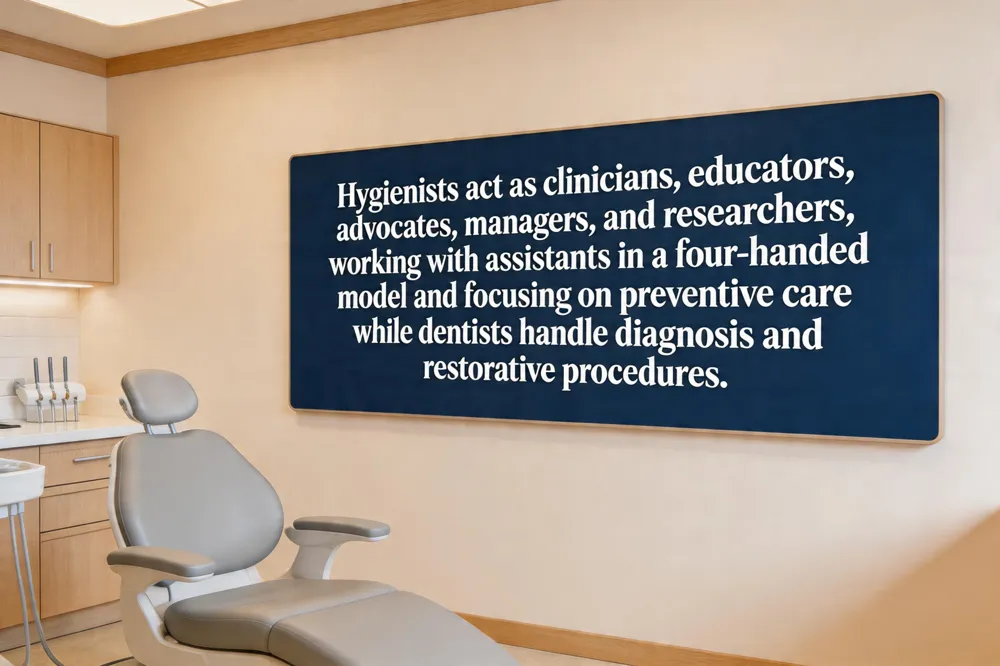 Dental hygienists wear many hats in a family dentalrun practice. Five core roles include clinician (cleanings, scaling, fluoride, radiographs), oral‑health educator (brushing, flossing, diet guidance), patient‑care advocate (comfort, treatment explanations), manager (scheduling, staff training, compliance), and researcher (data collection for preventive studies). Main clinical duties involve removing plaque, tartar, and stains with hand and ultrasonic instruments, applying fluoride varnish or sealants, taking diagnostic X‑rays, performing comprehensive oral exams, documenting findings in the electronic health record, and delivering personalized home‑care instructions. Interaction with dental assistants is collaborative: assistants prepare and sterilize the operatory, manage inventory, and assist during procedures, while hygienists focus on one‑on‑one preventive care and education. Comparison with dentists highlights that hygienists specialize in preventive treatment and education, whereas dentists (DDS/DMD) diagnose disease, prescribe medications, and perform restorative or surgical work. Both work together in a “four‑handed” model to ensure seamless patient care. Compensation and salary trends show a median annual wage of $94,260 (2024 BLS data) with earnings ranging $66,000‑$120,000, top salaries up to $133,730 in high‑cost areas such as Santa Maria, CA. Salaries vary by region, experience, and practice type, offering a solid middle‑income career with growth potential.
Career Outlook, Work Settings, and Well‑Being
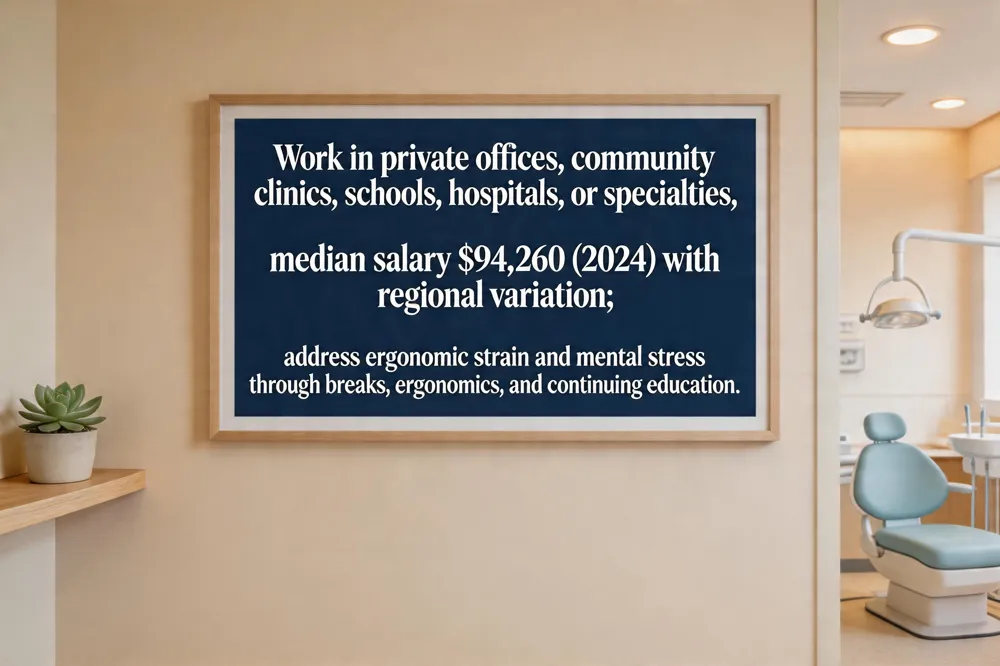 Dental hygienists primarily work in private dental offices, delivering preventive cleanings, oral‑health education, and routine X‑rays. They also serve in community clinics, school‑based programs, hospitals, nursing homes, and specialty practices such as orthodontics or periodontics, bringing essential care to diverse populations. The most rewarding yet demanding aspect of the job is its physical and mental toll: long hours standing, repetitive hand motions, and awkward postures can cause neck, shoulder, back, and wrist pain, while managing anxious patients and strict infection‑control protocols adds mental strain. High‑earning regions include affluent metropolitan areas and states with strong demand for preventive dentistry, such as California, New York, and Massachusetts, where hourly wages often exceed the national median. For those seeking deeper expertise, advanced periodontal courses—covering the AAP staging system, evidence‑based scaling, laser adjuncts, and systemic health links—provide CE credit and hands‑on training that enhance patient outcomes. Addressing ergonomic strain, scheduling regular breaks, and pursuing continuing education are key strategies to mitigate burnout and promote long‑term well‑being for dental hygienists.
Conclusion
Each morning at Dr. Parrella’s office begins with a brief huddle, chart review, and sterilization of instruments, allowing the hygienist to greet patients, conduct oral exams, take digital X‑rays, and perform thorough cleanings that include scaling, polishing, and fluoride varnish. Throughout the day, strict infection‑control protocols—mask changes after each patient, PPE, hand hygiene—protect both staff and families. Between appointments the team restocks supplies, sanitizes surfaces, and shares oral‑health education, reinforcing the practice’s commitment to community wellness. Looking ahead, Dr. Parrella’s practice will expand digital workflows, offer more preventive programs in schools and senior centers, and continue investing in staff training to keep patient care safe, compassionate, and cutting‑edge. These initiatives will also foster stronger patient relationships and support long‑term oral health outcomes overall.