Introducing Digital X‑Ray Technology
Digital X‑ray technology replaces traditional film with electronic sensors that capture images instantly. The high‑resolution, grain‑free pictures reveal fine details of teeth, bone and soft tissue, allowing clinicians to spot tiny cavities, early bone loss or subtle cracks that film might miss. Because the sensor is far more sensitive, the exposure can be reduced by 70‑90 % without sacrificing diagnostic quality, making the procedure safer for children, pregnant patients and anyone needing frequent scans. Images appear on a monitor within seconds, eliminating the waiting time for chemical development and enabling the dentist to discuss findings with the patient during the same appointment. The ability to zoom, adjust contrast and enhance the picture on the fly further improves accuracy while preventing repeat exposures. Overall, digital X‑rays provide clearer, faster and safer diagnostics, supporting preventive care and more confident treatment planning for families.
Digital vs. Film: Image Quality and Diagnostic Power
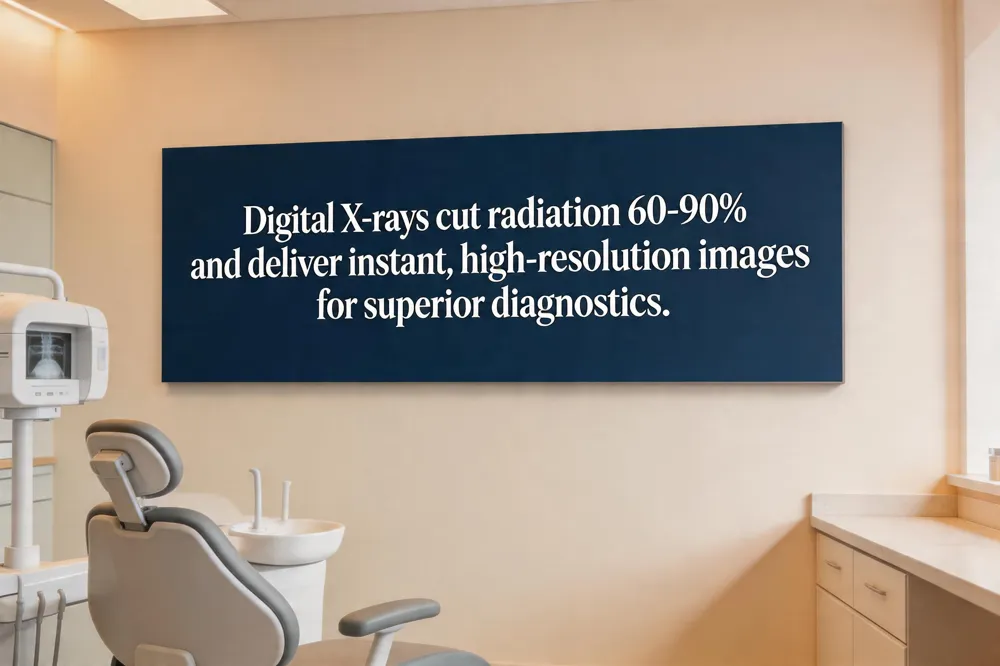 Digital dental X‑rays use solid‑state sensors that convert X‑ray photons directly into a high‑resolution, grain‑free image. The result is a picture that can be enlarged, zoomed, and contrast‑adjusted without loss of clarity, making it easier to spot tiny caries, fine cracks, and subtle bone loss that might be missed on film. Because the sensor is far more sensitive than photographic film, the radiation dose can be reduced by 60‑90 % while still delivering diagnostic‑quality images. In practice, a digital exposure often uses only a fraction of the millirems required for a comparable film image, which is especially important for children, pregnant patients, and anyone needing repeat scans.
Instant image availability is another major advantage. Within seconds of the exposure, the radiograph appears on a monitor, allowing the dentist to discuss findings with the patient during the same appointment, to make on‑the‑spot adjustments, and to avoid the waiting time associated with chemical development. The digital file can be stored securely, shared electronically with specialists, and retrieved instantly for future comparisons, streamlining workflow and reducing chair‑time.
Digital dental X‑ray vs. film X‑ray – Digital sensors produce an instant, manipulable image and expose patients to roughly 60‑90 % less radiation. Film requires a higher dose to create a usable image and needs chemical processing, which adds time, waste, and potential for repeat exposures. While film still offers high‑quality diagnostics, studies show digital images provide comparable clarity for detecting periapical lesions and assessing root‑canal work, with the added benefits of speed, safety, and environmental friendliness.
Are digital dental X‑rays better than traditional film X‑rays? – Yes. They dramatically lower radiation exposure (by 80‑90 %), deliver images instantly, enable real‑time enhancement, and eliminate hazardous chemicals. The digital workflow also simplifies record‑keeping and patient education, making visits shorter and more comfortable.
Main advantages and disadvantages – Advantages include reduced radiation, instant display, easy image enhancement, electronic storage, and eco‑friendly operation. Disadvantages involve a higher upfront cost for sensors and software, the need for regular maintenance, and occasional challenges positioning bulkier sensors, which can cause discomfort for gag‑prone patients. Overall, the safety, diagnostic power, and efficiency of digital radiography outweigh the initial investment for modern, patient‑focused dental practices.
Safety Protocols and Radiation Management
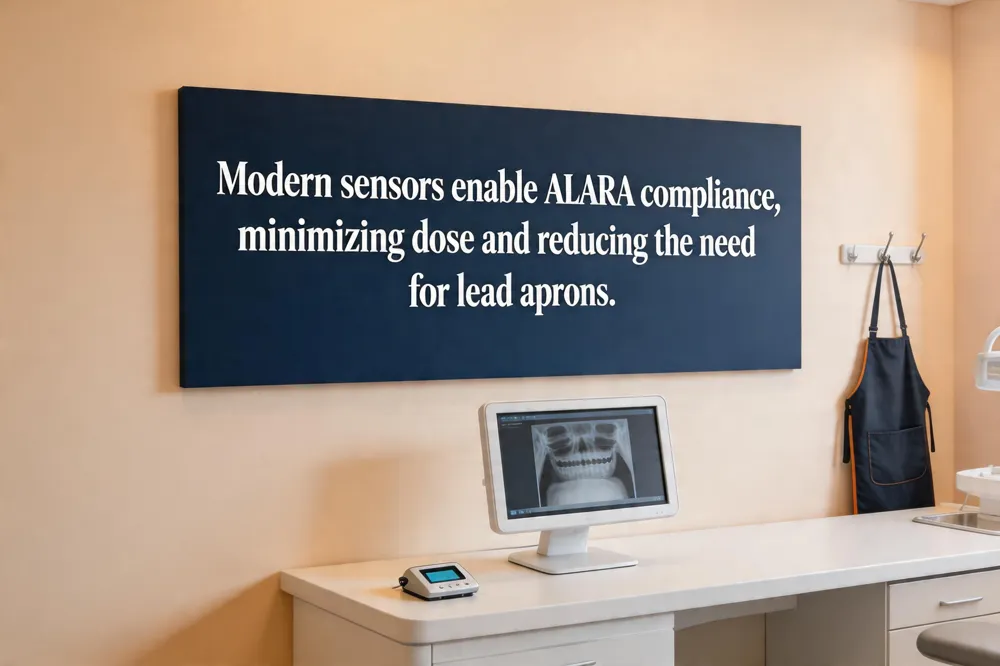 Digital dental radiography has transformed patient safety by delivering high‑resolution images with dramatically lower radiation doses. Modern sensors are 50‑90 % more sensitive than film, allowing clinicians to use the lowest possible exposure while still obtaining diagnostic‑quality pictures. This dose reduction, combined with instant image review, means fewer repeat scans and a smoother, more comfortable visit for families.
Lead apron usage – Because digital X‑rays emit only a fraction of the radiation previously required, the protective benefit of a lead apron is now minimal. National guidelines (e.g., ACR, AAPM) advise against routine apron use for standard dental imaging, aligning with the ALARA principle and streamlining appointments.
Radiation dose reduction – Techniques such as adjusting tube voltage (kVp) and milliamperage‑seconds (mAs), using high‑sensitivity detectors, and applying the 15 % rule help keep exposure as low as reasonably achievable. The 15 % rule states that a 15 % increase in kVp roughly doubles the receptor exposure, allowing the operator to halve the mAs to maintain image quality while reducing patient dose.
Key questions
- Why are lead aprons no longer recommended for routine dental X‑rays? Modern digital systems deliver doses far below thresholds that could affect reproductive organs; studies show no measurable risk, so the apron’s protective benefit is negligible and omitting it speeds care.
- What is the 15 % rule in radiography? Raising kVp by 15 % doubles exposure; to keep the same image brightness, mAs should be reduced by half, balancing image quality and dose.
- What are two disadvantages of digital imaging in dentistry? The technology requires significant upfront investment in sensors, software, and training, and it creates reliance on electronic systems—hardware failures or software glitches can interrupt care and increase operational costs.
Aesthetic Planning and Smile Design
 The 50‑40‑30 rule is a visual guideline for the ideal width of the maxillary anterior teeth when viewed straight on. It states that the two central incisors occupy about 50 % of the visible space, the lateral incisors roughly 40 %, and the canines about 30 %. Following this proportion helps dentists create a balanced, natural‑looking smile that feels both attractive and functionally sound.
Digital imaging is a key tool for applying the rule. High‑resolution, instant digital X‑rays and intraoral scans let clinicians magnify and adjust contrast in real time, allowing precise measurement of tooth width and smile arc. The immediate, editable images can be shared with patients and specialists, ensuring everyone sees the same aesthetic plan and enabling rapid adjustments without repeat radiation exposure. This patient‑centered, technology‑driven approach makes smile design safer, faster, and more accurate.
Patient Comfort and Experience
 Digital imaging has transformed the dental visit, making it faster, safer, and more comfortable for families. A dental cone‑beam CT (CBCT) scan is not painful; you simply sit or stand while the scanner rotates around your head, remaining still for a few seconds to a minute. No needles, injections, or drilling are involved, and the only sensation is a brief movement of the machine and a faint click. If you feel anxious, the staff can offer support and pause the scan.
The 2‑2‑2 rule simplifies oral hygiene: brush twice daily for two minutes each time and see your dentist twice a year for cleanings and exams. This routine, combined with instant digital X‑ray images, shortens chair time. Images appear on a screen within seconds, allowing the clinician to discuss findings and begin treatment planning during the same appointment, reducing wait times and improving the overall patient experience.
Practice Implementation and Community Impact
 Integrating digital X‑ray technology into a dental practice streamlines the entire workflow. Sensors capture images instantly, eliminating the waiting time for film development. Clinicians can view, enhance (contrast, brightness, zoom), and share the radiographs on a computer screen within seconds, allowing same‑day diagnosis and treatment planning. This rapid turnaround reduces chair‑time, increases appointment efficiency, and lets the team focus more on patient education and preventive care.
The environmental benefits are significant. Digital radiography removes the need for chemical developers, fixers, and dark‑room processing, cutting hazardous waste and the carbon footprint of the practice. By storing images electronically, the office reduces paper records and physical storage space, further supporting a greener operation.
In Somerville, local practices such as Dr. Anthony P. Parrella’s family‑run clinic exemplify these advantages. Their use of digital X‑rays provides patients—especially children, pregnant women, and those requiring frequent imaging—with up to 90 % lower radiation exposure compared with traditional film. The instant images enable dentists to discuss findings with families during the same visit, fostering trust and informed decision‑making. Moreover, the ability to securely transmit digital files to specialists or insurers speeds referrals and insurance approvals, enhancing the overall patient experience for the Somerville community.
Embracing Safer, Faster Diagnostics
Digital X‑ray technology dramatically improves patient safety by cutting radiation exposure up to 90 % compared with traditional film. This lower dose is especially important for children, pregnant patients, and anyone requiring repeat imaging. At the same time, the instant, high‑resolution images give clinicians the clinical efficiency to diagnose and discuss findings within the same appointment, reducing chair time and eliminating the wait for film development. Because images are stored electronically, they can be securely shared with specialists, insurance providers, and electronic health records, streamlining coordination of care. For families in our community, this means faster, more accurate treatment plans, less inconvenience, and a greener practice that avoids hazardous chemicals. Clinics such as Southwest Diagnostic Imaging Center in Dallas and local dental offices are already using digital X‑rays to deliver safer, quicker, and more precise diagnostics, reinforcing our commitment to compassionate, patient‑focused care.