Why Floss Matters for Busy Lives
Flossing once a day removes plaque and food debris from the 40 % of tooth surfaces a toothbrush can’t reach, cutting the risk of cavities, gum inflammation, bad breath and even systemic issues such as heart disease. An 18‑inch length of floss wrapped around the middle fingers gives a fresh segment for each interproximal space, preventing bacterial transfer. For busy professionals, break the routine into two short sessions—upper teeth after breakfast and lower teeth before bed—or floss immediately after meals to neutralize acids before sleep. Use pre‑threaded picks, floss sticks, or a water flosser to finish the job in under two minutes. Set a phone reminder or keep floss visible by the toothbrush to make the habit automatic for long‑term oral health.
Mastering the Right Tools
| Tool Type | Description | Pros | Cons |
|---|---|---|---|
| String Floss | Thin filament (waxed/unwaxed, flavored, eco‑friendly) | Thorough plaque removal; inexpensive | Requires dexterity, can snap |
| Floss Picks | Small plastic handle with short floss segment | Easy to use in tight contacts; good for limited dexterity | Uses more material; may wear out quickly |
| Floss Holders | Ergonomic grip with cutter and clean length of floss | Reduces waste; improves control for back teeth | Slightly bulkier than picks |
| Interdental Brushes | Tiny brush sized to each interdental space | Excellent for wide gaps, braces, implants | Must match each space size; can be pricey |
| Water Flossers | Pulsating water stream | Gentle on gums; reaches difficult areas without snapping | Requires power source; less effective for tight contacts |
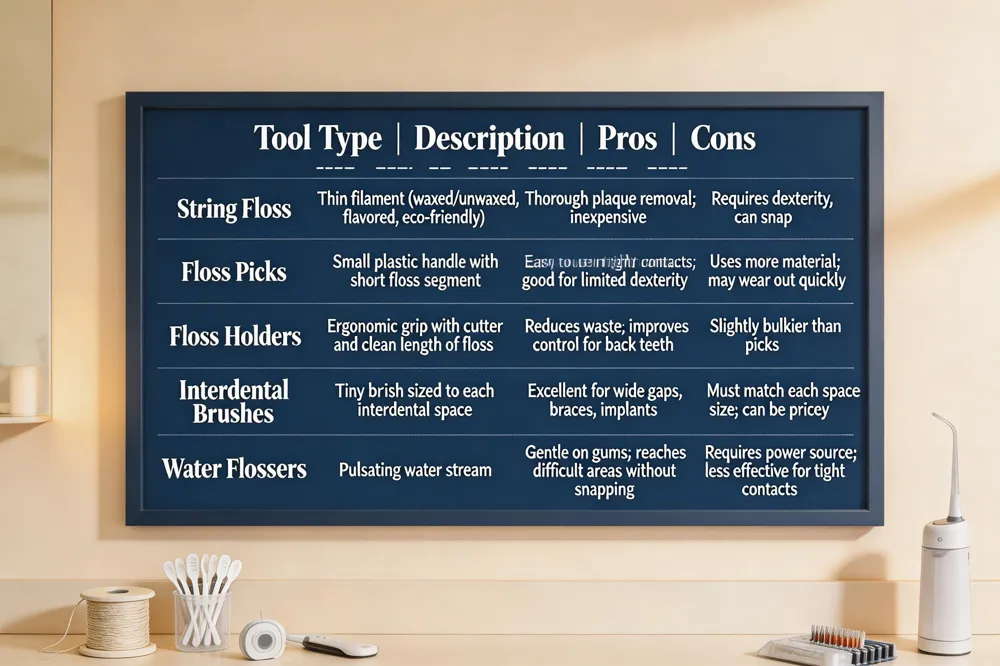 Choosing the right floss‑ tool makes daily oral care effortless and effective. Types of flossing tools include traditional string floss (waxed, unwaxed, flavored or eco‑friendly), floss picks, interdental brushes, water flossers, and reusable floss holders. Traditional floss still offers the most thorough plaque removal, while a pick or holder adds convenience for busy professionals.
Floss picks are small, plastic‑handled devices with a short piece of floss stretched between two prongs. They glide easily into tight contacts, are ideal for patients with limited dexterity, braces, or bridges, and come in mint‑flavored or PTFE‑free versions to reduce gum irritation.
Floss holders keep a clean length of floss ready for use, provide an ergonomic grip, and often include a cutter, minimizing waste and improving control when reaching back teeth.
Interdental brushes are tiny brushes sized to fit each interdental space, effectively removing plaque and debris where a brush cannot, and are especially useful for wider gaps or orthodontic appliances.
Water flossers emit a gentle, pulsating stream of water that reaches difficult areas without snapping floss, making them a valuable adjunct for patients with braces or sensitive gums.
Together, these tools—paired with the proper C‑shaped technique—support healthier gums, fresher breath, and a brighter smile.
Step‑by‑Step Flossing Techniques
| Step | Action | Tips |
|---|---|---|
| 1 | Cut ~18 inches of floss, wrap around middle fingers | Use fresh segment for each tooth |
| 2 | Slide floss gently between teeth | Use a C‑shaped motion around each tooth |
| 3 | Move floss up‑and‑down below gum line | Avoid snapping; be gentle on gums |
| 4 | For tight contacts, use PTFE‑coated or waxed floss | Thin floss slides easier |
| 5 | For wide gaps, use dental tape or a pick | Larger surface area removes more plaque |
| 6 | Finish with rinse | Helps remove dislodged debris |
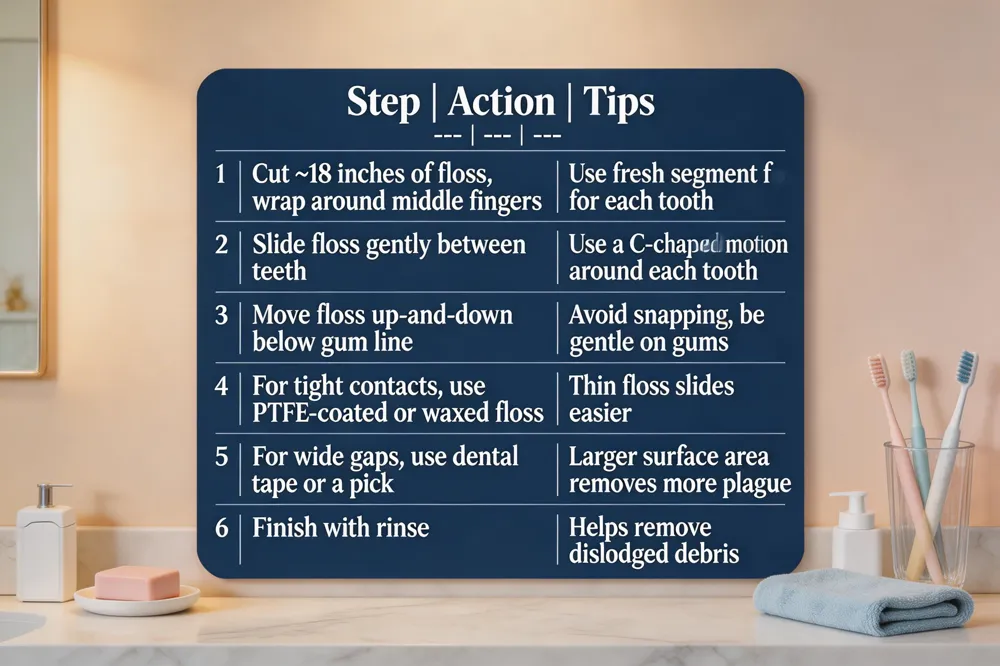 Flossing removes plaque that brushing can’t reach, protecting against cavities and gum disease. The standard technique uses about 18 inches of floss, wrapped around the middle fingers, with a gentle C‑shaped motion around each tooth and a soft up‑and‑down slide beneath the gum line. For tight contacts, choose a thin PTFE‑coated floss, or waxed floss; for wider gaps, dental tape or a floss pick works well.
How to floss properly with floss picks – Hold the pick by its handle, slide the floss segment between teeth, curve it into a C around the tooth, and move it up‑and‑down. Use a fresh segment for each tooth and rinse afterward.
How to floss properly for kids – Start when two teeth touch (≈2‑3 years). Use a pre‑threaded pick or tiny holder, guide floss with a gentle C‑motion, and rotate to a clean segment after each tooth. Keep it brief and fun.
How to floss properly with braces – Thread floss with a floss threader under the archwire, then C‑shape the floss around each bracket and tooth. Water flossers or interdental brushes are effective alternatives.
Loop method of flossing – Tie a short piece of floss into a circle, place all fingers (except thumbs) inside, and use thumbs to guide the loop through upper teeth while index fingers guide lower teeth, maintaining a C‑shape on each side.
How to floss back teeth – Use a thin, PTFE‑coated floss, wrap around middle fingers, and gently saw between molars before C‑shaping and sliding below the gum line.
How to floss your teeth with pictures – Use a mirror, cut 18 inches of floss, wrap around middle fingers, C‑shape between each tooth, and refresh the segment after each pair. Rinse to finish.
Integrating Flossing Into a Busy Routine
| Routine Order | Steps | Benefits |
|---|---|---|
| Standard | 1. Floss 2. Brush 3. Tongue scrape 4. Mouthwash | Removes interdental plaque first, then surface debris; fresh breath |
| Oil‑Pulling Variant | 1. Oil pull (5‑15 min) 2. Tongue scrape 3. Floss 4. Brush 5. Mouthwash | Reduces oral bacteria before mechanical cleaning; promotes gum health |
| Quick Tips | • Set phone alerts • Place floss by mirror • Pair flossing with brushing | Builds habit; ensures consistency |
| Tracking | • Record start date • Note bleeding/plaque reduction • Ask hygienist for feedback | Monitors progress; motivates improvement |
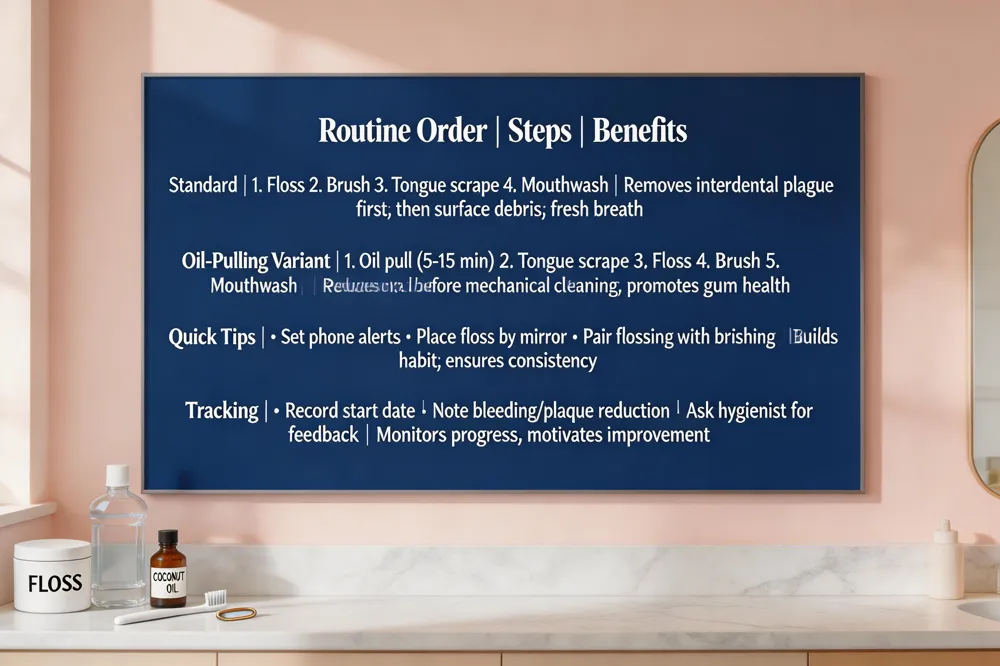 Oral hygiene routine order: A good oral‑hygiene routine should begin with flossing to dislodge food particles and plaque from between the teeth and under the gum line. Next, brush all tooth surfaces for two minutes with a fluoride toothpaste, using gentle circular motions and remembering to clean the outer, inner, and chewing surfaces. After brushing, scrape or brush the tongue to remove bacteria that cause bad breath and contribute to plaque buildup. Finish the routine with a therapeutic mouthwash rinse to reduce remaining microbes and deliver extra fluoride or anti‑gingivitis agents.
Oral hygiene routine order with oil pulling: Start your day on an empty stomach by doing oil pulling for 5–15 minutes, then spit the oil into a trash can and rinse thoroughly with water. Next, scrape your tongue with a metal scraper, then floss to clear interdental plaque. Follow flossing with brushing using fluoride toothpaste, and end with an alcohol‑free mouthwash if desired.
Quick improvement tips: Brush twice daily with a soft‑bristled brush, replace it every three months, and add a 12‑inch floss segment each session. Rinse with fluoride mouthwash, stay hydrated, limit sugary snacks, and schedule a professional cleaning at least once a year.
Reminder systems: Set phone alerts, place floss by the mirror, or pair flossing with an existing habit (e.g., after brushing) to build consistency.
Tracking progress: Note the start date, record any bleeding or plaque reduction, and ask your dental hygienist to evaluate your technique at each visit.
Special Situations & Frequently Asked Questions
| Question | Answer Summary |
|---|---|
| Can I kiss my boyfriend with gingivitis? | Possible bacterial transfer; treat gingivitis first, maintain oral hygiene, limit saliva sharing until inflammation resolves. |
| Flossing vs. not flossing | Flossing removes plaque from tight spaces, reduces gingivitis and calculus formation; alternatives (brushes, picks) work if floss is difficult. |
| What is the 3‑3‑3 rule for teeth? | Suggests 3× daily brushing, 3 min each, 3 h after meals; not evidence‑based. Recommended: 2× daily brushing for 2 min, daily flossing. |
| What is the 2‑2‑2 rule for oral hygiene? | Brush twice a day for two minutes each, see dentist twice a year. |
| Oral health tips for adults | Consistent twice‑daily brushing, nightly flossing, limit sugar, stay hydrated, avoid tobacco/alcohol, regular dental check‑ups, use mouthguard if needed. |
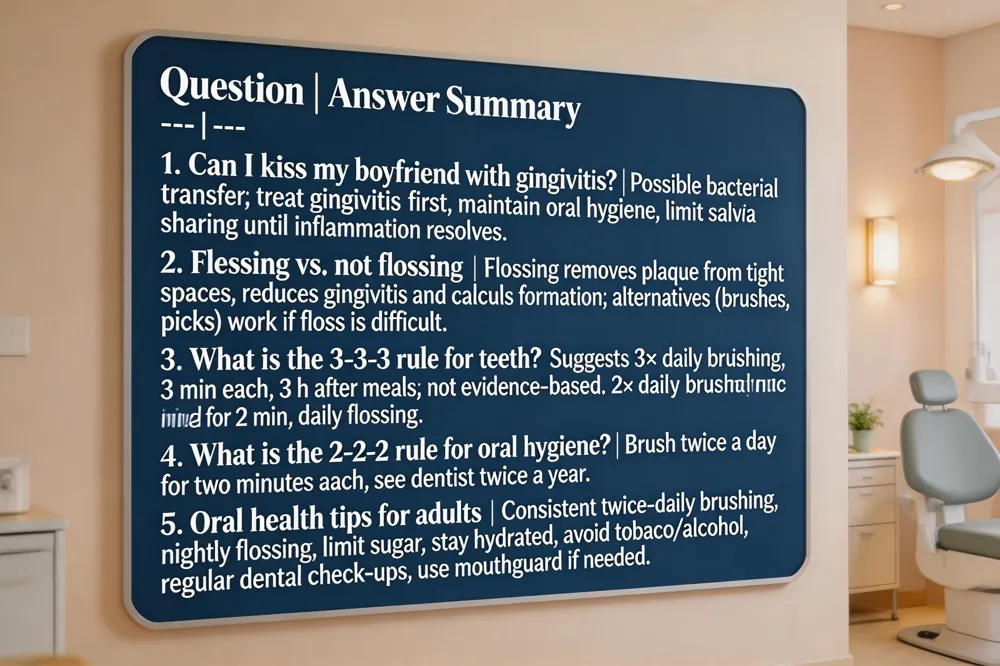 Can I kiss my boyfriend with gingivitis?
Yes, you can technically kiss while you have gingivitis, but the bacteria that cause gum inflammation can be transferred through saliva. This doesn’t guarantee he will develop gum disease, but it does increase his exposure to the same plaque‑forming microbes. To protect both of you, treat the gingivitis first—brush twice daily, floss, and see your dentist for a professional cleaning. Once the inflammation resolves, the risk drops dramatically. Until then, consider limiting close‑contact activities that involve saliva sharing.
Flossing vs. not flossing
Flossing (or any interdental cleaning) removes plaque from tight spaces a toothbrush toothbrush can’t reach preventing rapid gingivitis—often within 24 hours of skipping it. Left‑over plaque can harden into calculus, requiring professional removal and potentially progressing to periodontitis, bone loss, and tooth loss. Short‑term studies consistently show that brushing plus flossing reduces plaque and gum bleeding more than brushing alone. If string floss is difficult, interdental brushes, water flossers, or soft picks are effective alternatives.
What is the 3‑3‑3 rule for teeth?
The 3‑3‑3 rule suggests brushing three times a day, three minutes each session, and waiting three hours after the last meal before bedtime. It lacks scientific endorsement. Evidence‑based guidelines recommend brushing twice daily for two minutes, daily flossing, and regular professional cleanings for optimal protection.
What is the 2‑2‑2 rule for oral hygiene?
The 2‑2‑2 rule: brush twice a day for two minutes each time, and see a dentist twice a year.
Oral health tips for adults
Maintain a consistent routine—brush twice daily with fluoride toothpaste, floss each night, limit sugary foods, stay hydrated with fluoridated water, and avoid tobacco and excess alcohol. Schedule dental check‑ups at least annually (more often if you have diabetes, a gum‑disease history, or dentures). Use a mouthguard for sports, and contact your dentist promptly if you experience dry mouth, persistent pain, or taste changes.
Flossing after meals or before bedtime is often preferred because it fits into most adults’ schedules and ensures removal of food debris before sleep
DIY Hacks & Free Resources
| Resource | Description | Link |
|---|---|---|
| Printable PDF Guide | Visual daily oral‑hygiene routine, charts, calendar | https://www.drparrella.com/oral‑hygiene‑guide.pdf |
| Interdental Brushes | Small brushes for wide gaps, braces, implants | https://www.colgateprofessional.com/hygienist-resources/tools-resources/easy-ways-floss-patients |
| Soft Picks / Disposable Picks | Pre‑tied floss segment, no wrapping needed | https://www.gieslerfamilydentistry.com/4-tips-to-make-flossing-easy-and-comfortable.html |
| Water Flosser | Gentle pulsating water stream for hard‑to‑reach areas | https://www.hinsdaledentistry.com/blog/secrets-to-effective-flossing/ |
| Oil Pulling | Coconut oil swish to lower oral bacteria (adjunct) | https://www.uhc.com/news-articles/medicare-articles/5-tips-for-flossing-the-right-way |
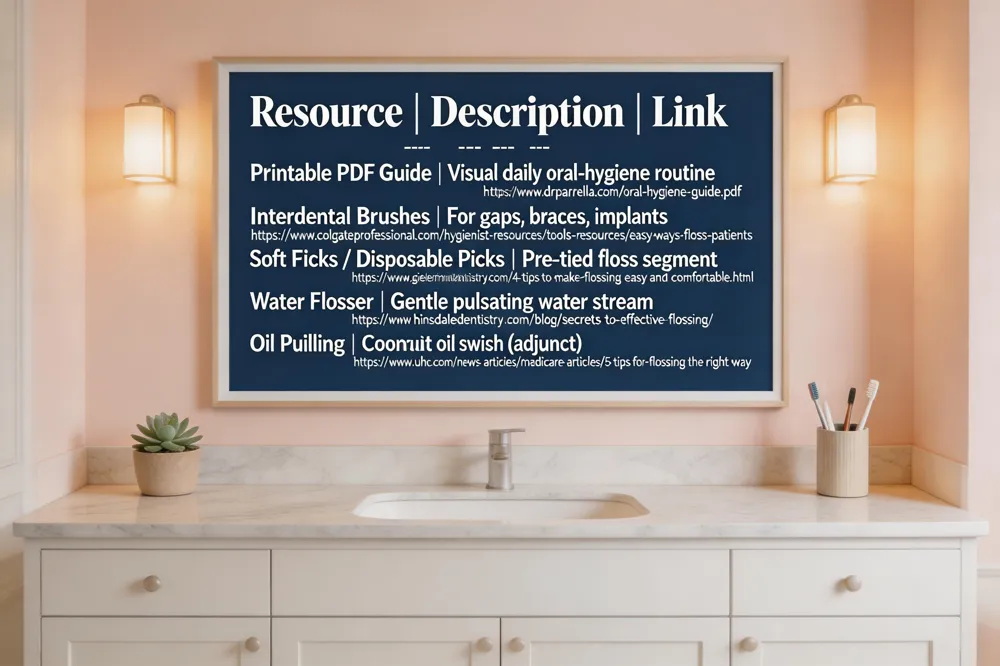 A printable PDF guide on oral hygiene is an easy way to visualize an effective daily routine. The guide walks patients through proper brushing motions, the C‑shaped flossing technique, and the importance of removing plaque from interproximal spaces. It also offers charts for selecting the right toothbrush, fluoride toothpaste, and flossing tools, plus a calendar of dental‑visit reminders. The PDF can be downloaded from our website at www.drparrella.com/oral‑hygiene‑guide.pdf.
If traditional string floss feels cumbersome, several alternatives work well at home. Small interdental brushes sweep plaque from wider gaps, while soft picks and disposable floss picks provide a pre‑tied strand that eliminates finger‑wrapping. Water flossers (oral irrigators) deliver a gentle, pressurized stream that reaches under the gum line—ideal for braces, implants, or sensitive gums. Dental tape, a broader, flatter floss, slides easily into larger spaces, and silicone gum stimulators massage the gingiva while dislodging debris. For a natural adjunct, oil‑pulling with coconut oil or chewing xylitol‑sweetened gum can lower oral bacteria, but they should complement—not replace—mechanical cleaning.
Busy professionals can turn flossing into a quick habit by breaking it into two short sessions (upper teeth in the morning, lower teeth at night) or using a 30‑second timer while watching a short video. Keeping floss visible on the bathroom mirror or setting a phone reminder also helps maintain consistency.
Putting It All Together for a Healthier Smile
Consistent daily flossing is the cornerstone of a healthy smile. Setting a reminder—whether a bathroom‑mirror note, phone alert, or a timer after lunch—helps turn flossing into a habit, even for busy professionals. Choose tools that fit your mouth: fine or waxed floss for tight contacts, broader dental tape for larger gaps, floss picks or pre‑threaded holders for easier handling, and a water flosser as an adjunct when manual floss is challenging. Whatever the choice, use about 18 inches per session and a gentle C‑shaped motion to protect gums. Finally, schedule regular dental visits. A hygienist can assess technique, replace worn picks, and tailor recommendations to your anatomy, ensuring long‑term success. Consistent flossing also reduces bad breath and supports overall health.