Why Go Digital?
Switching to digital X‑ray imaging removes the need for traditional photographic film and the developer‑fixer chemicals that create hazardous waste in dental offices. A single reusable sensor can capture hundreds of images, cutting material consumption and eliminating the disposal of silver‑laden film and toxic solutions. Digital radiography also lowers patient radiation exposure by 60‑90 % compared with film, enhancing safety while delivering high‑resolution images. Images appear instantly on a monitor, allowing the to diagnose and discuss treatment options in real time, which speeds up appointments and reduces repeat scans. Over time, practices save on film, chemicals, processing equipment, and waste‑disposal fees, and they meet the American Dental Association’s eco‑friendly dentistry guidelines, reinforcing a commitment to sustainable, patient‑centered care.
Radiation Safety and Environmental Impact
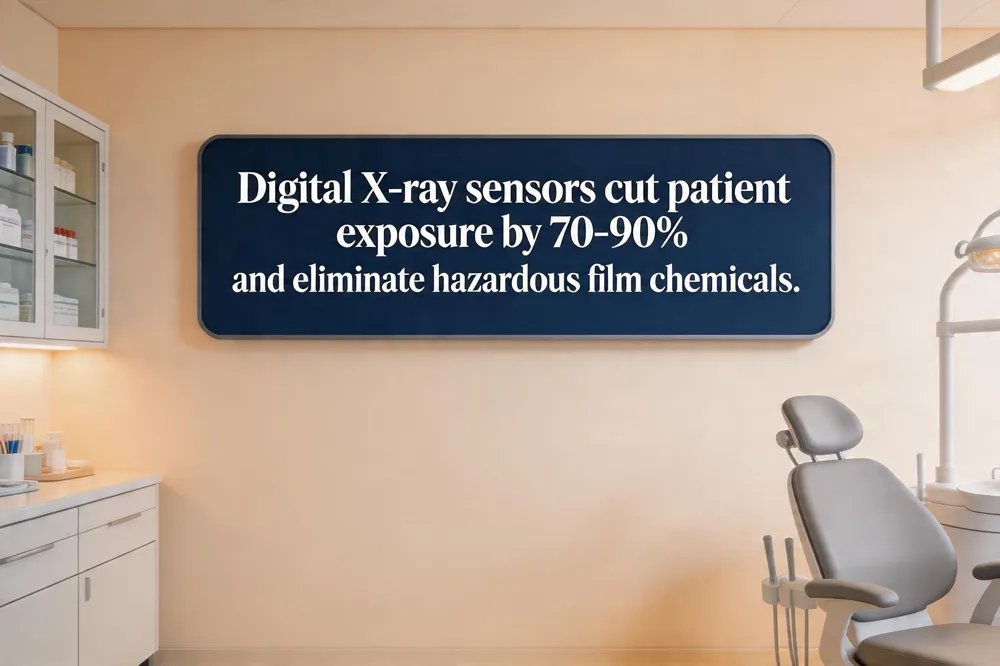 Digital dental X‑ray sensors capture diagnostic‑quality images while using far fewer X‑ray photons than traditional film, cutting patient exposure by 70 % to 90 % compared with conventional film‑based radiography. The higher sensitivity of electronic detectors and advanced image‑enhancement software mean fewer retakes, which further lowers cumulative dose—particularly important for children, pregnant patients, and those needing frequent exams.
By replacing photographic film with reusable electronic sensors, digital systems eliminate the need for developer, fixer, and other hazardous chemicals that generate toxic waste. Images are stored, backed up, and shared electronically eradicating paper records and the physical storage space required for film archives. This paperless workflow reduces material consumption and the carbon footprint of a practice, as there is no shipping, disposal, or energy‑intensive processing of film.
Patients also benefit from a smaller, more comfortable sensor that fits easily in the mouth, and from instant image review that speeds diagnosis and treatment planning. In short, digital radiography provides safer, quieter, and environmentally responsible care while maintaining the high diagnostic standards expected by families.
The Cutting‑Edge: 3‑D Cone‑Beam Imaging
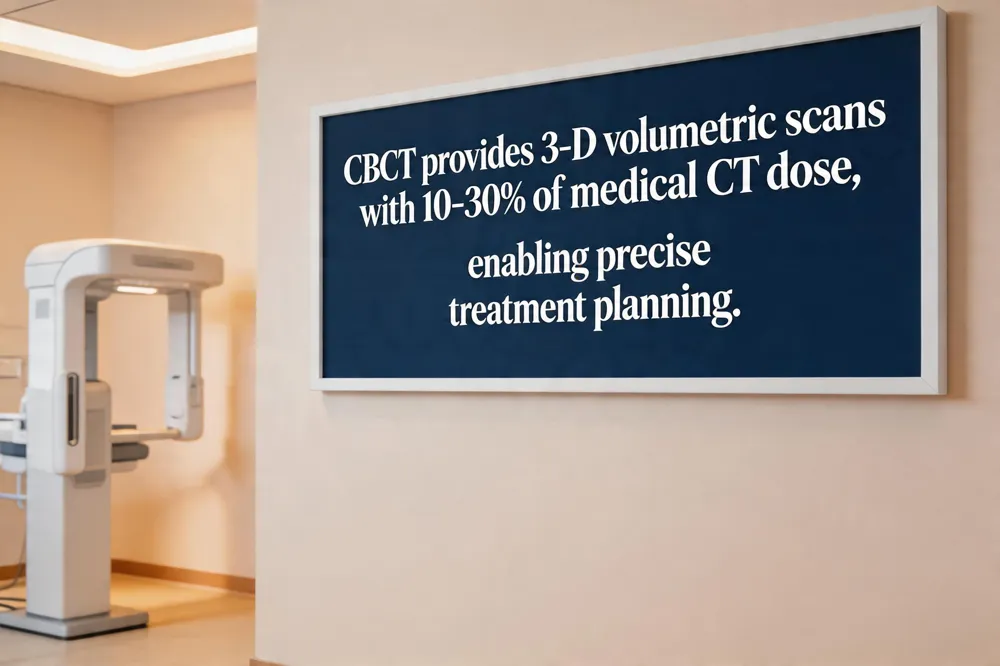 Three‑dimensional cone‑beam computed tomography (CBCT) is the newest dental imaging technology, capturing volumetric scans of teeth, bone, and surrounding soft tissues in a single, rapid rotation. Unlike traditional two‑dimensional X‑rays, CBCT produces precise spatial relationships and cross‑sectional views that help clinicians diagnose complex anatomy and plan treatments with millimeter accuracy. The system integrates seamlessly with digital radiography and intra‑oral scanners, creating a comprehensive, computer‑aided diagnostic workflow that can be enhanced by AI‑driven analysis.
Clinical Applications CBCT is a versatile tool for many dental specialties. In implant dentistry, it reveals bone volume, density, and vital structures such as nerves and sinuses, allowing safe and accurate implant placement. Orthodontists use CBCT to assess tooth position, alveolar bone, and airway dimensions, supporting efficient treatment planning. Endodontists benefit from detailed views of root canal morphology, detecting hidden canals or fractures that traditional X‑rays may miss. The technology also aids in maxillofacial surgery, temporomandibular joint evaluation, and pathology detection.
Radiation Dose Compared with Traditional CT While conventional medical CT scans deliver high radiation doses, CBCT uses a focused cone‑beam and a much lower exposure, often delivering 10‑30 % of the dose of a medical CT for a comparable field of view. This reduction aligns with the ALARA (As Low As Reasonably Achievable) principle, enhancing patient safety without compromising image quality.
Speed and Patient Comfort A CBCT scan is completed in just 10–40 seconds, minimizing the time you spend in the chair. The patient is comfortably seated or standing, and the equipment often includes a bite‑block or cheek retractors that are less intrusive than traditional film holders. Immediate image availability allows the dentist to discuss findings with you during the same appointment, fostering transparent communication and quicker treatment decisions.
What is the new technology for dental imaging? The newest dental imaging technology is three‑dimensional cone‑beam computed tomography (CBCT), which captures volumetric scans of the teeth, bone, and surrounding soft tissues in a single, rapid rotation. Compared with traditional two‑dimensional X‑rays, CBCT provides precise spatial relationships and detailed cross‑sectional views, allowing clinicians to diagnose complex anatomy and plan treatments with millimeter accuracy. It delivers high‑resolution images while using significantly less radiation than conventional medical CT scans, often completing a scan in just 10–40 seconds. Integrated with digital radiography and intraoral scanners, CBCT forms part of a comprehensive, computer‑aided diagnostic workflow that can be further enhanced by AI‑driven analysis. This advanced imaging platform has become essential for implant placement, orthodontics, endodontics, and other sophisticated dental procedures.
How much does a 3‑D scan of your teeth cost? A 3‑D dental scan (CBCT) in the United States usually costs between $150 and $500, depending on the size of the area being imaged. Small‑field‑of‑view scans (limited to a few teeth) are often $150–$350, while medium‑size scans that cover a quadrant or arch run $300–$450, and full‑mouth or sinus scans can be $400–$700 or more. Prices can vary by dental office, geographic region, and whether you request a copy of the images. Many dental insurance plans will cover a portion of a CBCT when it is deemed medically necessary, but coverage levels differ by provider. Your dental office can give you a precise estimate and help verify any insurance benefits before the scan.
By choosing CBCT, you receive cutting‑edge diagnostic detail with reduced radiation exposure, faster results, and a comfortable experience—all while supporting a practice that prioritizes both your oral health and environmental stewardship.
Eco‑Friendly Dentistry Practices Beyond Imaging
 Eco‑friendly dentistry—also known as green or sustainable dentistry—delivers high‑quality oral care while minimizing a practice’s environmental footprint. It follows the 4R model: rethink how services are provided, reduce material and energy use, reuse durable supplies such as digital sensors and intraoral scanners, and recycle waste whenever possible. Low‑waste, biodegradable products replace disposable plastics, and many offices now employ biodegradable impression trays and compostable barriers. Energy‑efficient LED lighting, smart HVAC systems, and auto‑shutdown features cut electricity consumption by up to 30 %, lowering carbon emissions and operating costs. Water‑conserving technologies—including high‑efficiency dental units, water‑recycling systems, and sensor‑based flow controls—significantly reduce water waste during clean‑ups and instrument sterilization. Lead‑free radiation shielding made from bismuth or tungsten eliminates toxic heavy‑metal waste, while mercury‑free amalgam alternatives and proper amalgam separators prevent hazardous runoff. By integrating these practices, dental offices protect patient health, conserve natural resources, and demonstrate a commitment to a healthier planet without compromising clinical excellence.
Real‑World Examples: Sustainable Dental Offices
 Pacific Highway Dental in Surrey has replaced film‑based X‑rays with a fully digital workflow, eliminating developer chemicals and paper records while delivering instant, high‑quality images. Green Dental in Glenview uses an intra‑oral scanner for 3‑D impressions, erasing the need for alginate molds and cutting disposable waste; all records are kept paper‑less in the cloud. Eco Tree Dental in Chicago adopts lead‑free shielding made from bismith‑tungsten composites, providing radiation protection without toxic heavy metals. Ecotown Diagnostics in Bangalore installed energy‑efficient digital X‑ray units that draw up to 30 % less electricity than older machines, lowering their carbon footprint. St. Mary’s Hospital in Seattle upgraded its radiography department with modern digital X‑ray systems, achieving a 30 % reduction in electricity use and associated emissions, demonstrating how digital adoption benefits both patients and the environment.
Future Directions: AI, Cloud, and Energy Efficiency
 Looking ahead, dental imaging will become smarter, greener, and more secure. AI‑driven analysis will automatically highlight cavities, bone loss, and early disease, giving clinicians faster, more accurate diagnoses while reducing repeat scans. [Secure cloud backup](https://pmc.ncbi.nlm.nih.gov/articles/PMC12536090/) will store every radiograph off‑site, eliminating the need for physical drives and [cutting paper waste](https://pmc.ncbi.nlm.nih.gov/articles/PMC12536090/). Modern units will enter [sleep mode](https://ecotowndiagnostics.com/eco-friendly-practices-in-digital-x-ray-technology/) when idle and use [motion‑sensor lighting](https://vitalscan.health/how-can-radiology-be-greener/) saving up to 30 % electricity. New [lead‑free shielding](https://ecotowndiagnostics.com/eco-friendly-practices-in-digital-x-ray-technology/) made from bismuth, tungsten, and barium compounds protects patients without toxic metals. Finally, federal and professional policies—such as [EPA ENERGY STAR](https://ecotowndiagnostics.com/eco-friendly-practices-in-digital-x-ray-technology/) and [ADA sustainability guidelines](https://pmc.ncbi.nlm.nih.gov/articles/PMC12536090/)—will incentivize practices to adopt these eco‑friendly technologies, benefitting both oral health and the environment.
Putting It All Together
Digital X‑ray imaging brings three major benefits to families. First, patient health and safety improve because the sensors use 60‑90 % less radiation than film, reducing exposure while delivering sharper images that help dentists detect problems early. Second, the technology supports environmental stewardship: eliminating film, developer chemicals and paper archives cuts hazardous waste, lowers the practice’s carbon footprint, and aligns with community goals for a cleaner neighborhood. Third, cost‑effective, high‑quality care becomes possible; clinics save on consumables, disposal fees and energy, allowing them to invest savings into preventive, cosmetic and restorative treatments. Dr. Parrella embraces these advances, championing sustainable practice that protects patients, the planet and offers affordable, cutting‑edge dental care. His clinic also educates families on eco‑friendly oral‑health daily habits.