Why Fluoride Varnish Matters
Fluoride varnish works by delivering a high‑concentration fluoride coat that quickly hardens on the tooth surface. The varnish releases fluoride ions for several hours, allowing calcium and phosphate from saliva to rebuild weakened enamel and form fluorapatite, a mineral that resists acid attacks. Clinical trials and systematic reviews consistently show that twice‑yearly applications cut new cavity incidence by 30‑40 % in children and up to 25 % in adults, with some studies reporting a 60 % reduction in high‑risk groups. As part of a comprehensive preventive plan—regular cleanings, fluoride toothpaste, a low‑sugar diet, and sealants—fluoride varnish adds months of protection, reduces sensitivity, and helps keep teeth healthy longer, saving families time and costly dental work, and fewer appointments, with confidence for everyone today.
Science‑Backed Benefits and How Often to Use Fluoride Varnish
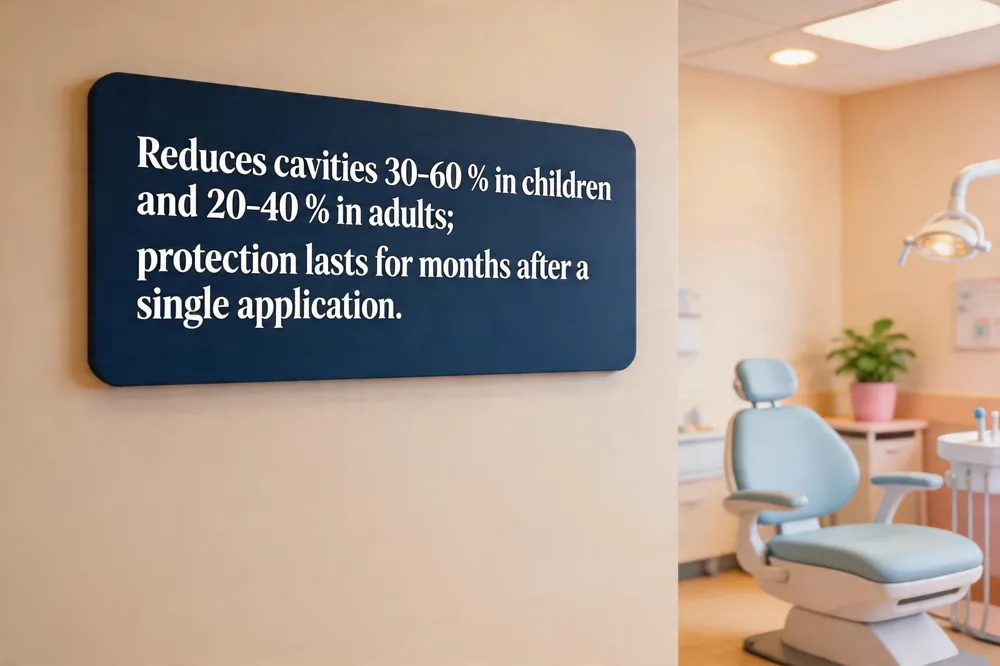 Systematic reviews and multiple randomized trials show that professionally applied 5% sodium‑fluoride varnish cuts new cavities by 30‑60 % in children and 20‑40 % in adults, with a prevented‑fraction of ≈ 40 % for primary teeth and a 64 % boost in enamel remineralization.
How long does fluoride stay on teeth before eating? The varnish adheres for 6‑24 hours, releasing fluoride slowly. You may eat soft foods right away, but avoid hard, crunchy, or acidic items and brushing for the first 4‑6 hours (minimum 30 minutes) to let the protective layer work.
How often should fluoride varnish be applied? Guidelines from the ADA, AAPD and USPSTF recommend applications every 3‑6 months for moderate‑to‑high‑risk patients, with quarterly visits for those at the highest risk. More frequent use shows no added benefit and raises cost.
Benefits of fluoride varnish for adults – The high‑concentration fluoride promotes remineralization of enamel and root surfaces, reduces dentin sensitivity, and protects margins of crowns, bridges, or braces. It is safe for pregnant women, seniors, and patients with dry mouth, and a single application can protect teeth for several months, decreasing the need for future fillings or crowns.
Application Basics and Post‑Treatment Care
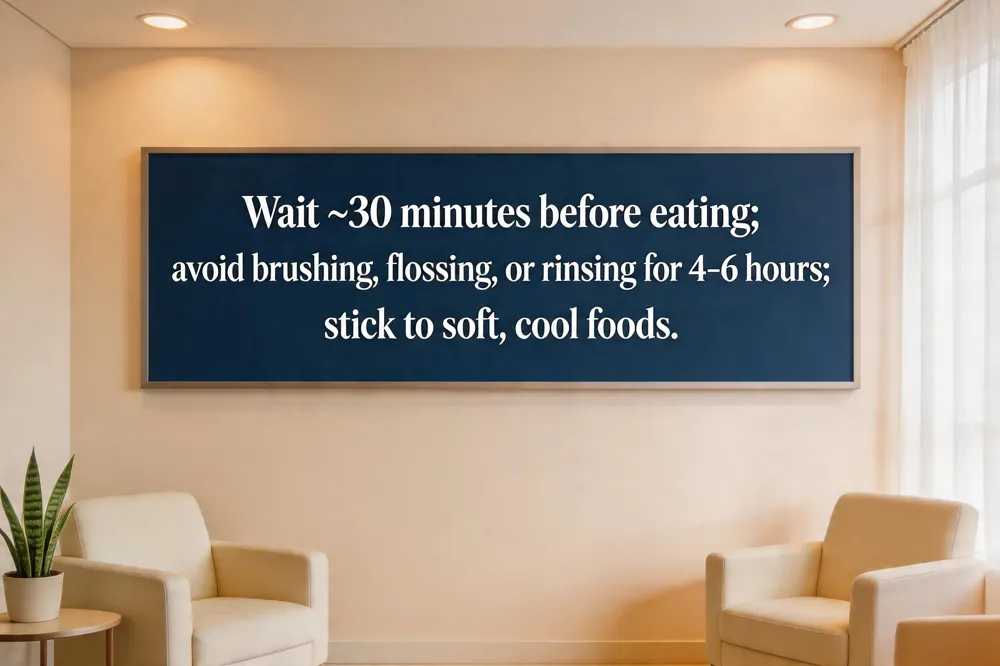 When your dentist or hygienist paints fluoride varnish on your teeth, the coating should stay in place for about 30 minutes before you eat or drink. This brief waiting period lets the fluoride ions begin to soak into the enamel. For the strongest protection, avoid brushing, flossing, or using any additional fluoride rinses for the next 4‑6 hours. During that time, stick to soft, cool foods and steer clear of hard, sticky, or hot items that could dislodge the varnish. You may resume normal oral‑hygiene habits the following morning, after the varnish has naturally worn away. If you notice any mild irritation, give us a call—serious side effects are extremely rare. Following these simple post‑care steps helps maximize fluoride uptake, keeps your enamel strong, and reduces the risk of future cavities.
Age‑Specific Recommendations: From Babies to Seniors
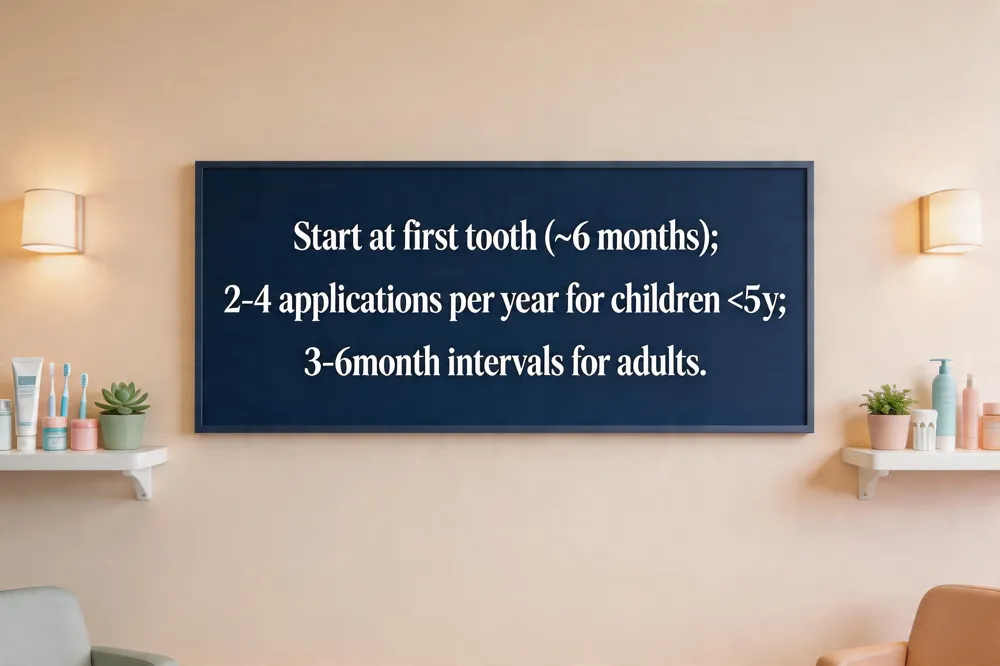 Fluoride varnish is safe for children as soon as the first primary tooth erupts—typically around six months of age—and is recommended through the fifth birthday. The USPSTF advises an initial application at eruption and 2‑4 applications per year for all children under five, with many state programs requiring varnish at each well‑child visit. After age five, the focus shifts to regular dental care and other fluoride sources.
For kids, the varnish is a quick‑drying, painless coating applied 2‑4 times annually (or every 3‑4 months for higher‑risk children). It creates a protective fluoride reservoir that remineralizes enamel for several months while only a tiny amount is swallowed. In our Somerville practice we tailor the schedule to each child’s caries risk, combine it with daily fluoride toothpaste, and ensure parental consent.
Adults benefit from varnish too—especially those with dry mouth, root exposure, or multiple restorations. The same 5% sodium fluoride formulation is applied every 3‑6 months and providing months of protection and helping to extend the life of natural teeth and dental work.
Safety, Side Effects, and Addressing Concerns
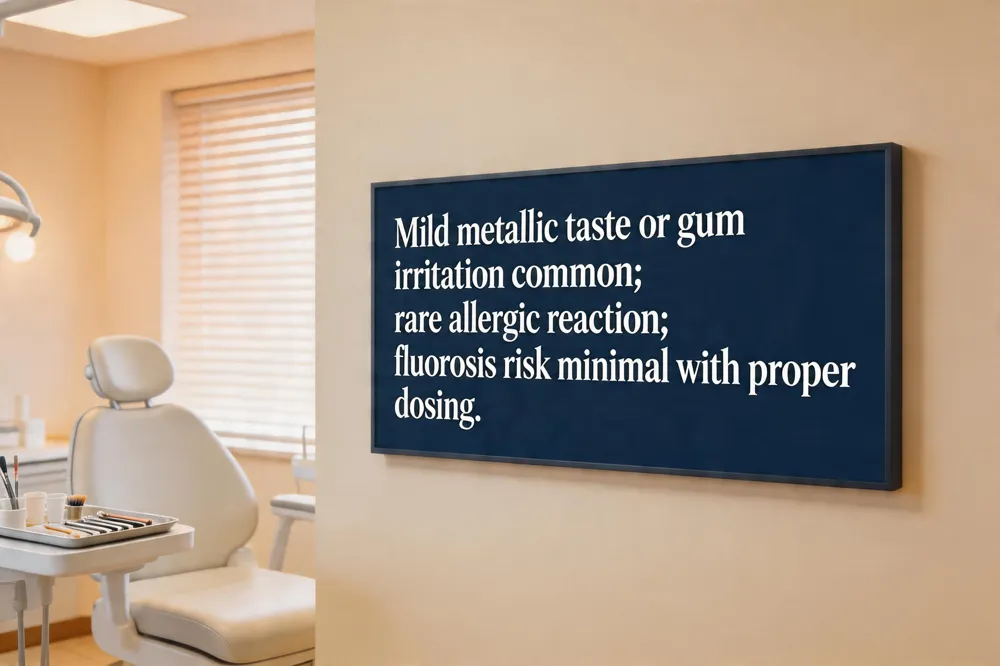 Fluoride varnish is a quick, painless, and safe preventive treatment. Most patients notice only a mild metallic taste or brief gum irritation after application. Rarely, an allergic reaction to the resin can cause redness, swelling, or localized discomfort, and excessive ingestion could lead to acute fluoride toxicity (nausea, vomiting, abdominal pain). The primary concern for children is dental fluorosis—white‑yellow spots on developing enamel—if large amounts are swallowed; this risk is minimized by the tiny dose used and the varnish’s quick hardening. If you have concerns about these side effects, discuss alternatives with your dentist, such as increased use of fluoride toothpaste, fluoridated water, or non‑fluoride remineralizing agents. Declining professional fluoride is a personal choice; maintaining diligent oral hygiene, regular clean‑ups, and a low‑sugar diet can still protect your smile while respecting your preferences.
Adult‑Focused Fluoride Strategies
 Fluoride varnish is a high‑concentration, paint‑on fluoride coating that a dentist or hygienist applies to the surfaces of your teeth. It works by remineralizing enamel and creating a fluoride‑rich reservoir that slows acid attacks, making teeth more resistant to cavities. Because the varnish is thin and adheres for only a few hours, systemic absorption is minimal, so it is safe for all adults—including pregnant patients and seniors.
Why adults benefit from varnish: The coating protects not only natural enamel but also the margins of crowns, bridges, veneers, and orthodontic appliances, reducing the risk of secondary decay. It also helps relieve dentin hypersensitivity and is especially useful for those with dry mouth or a history of frequent cavities.
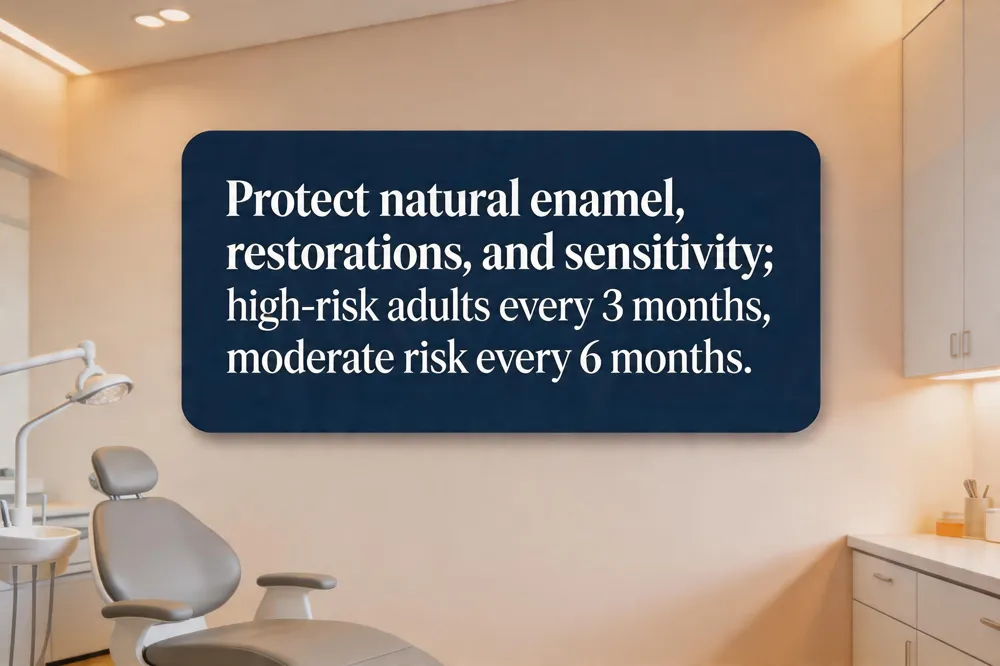
Frequency for high‑risk adults: Evidence‑based guidelines (ADA, AAPD, and USPSTF) recommend applications every 3‑6 months for patients at elevated caries risk. In practice, many clinicians schedule varnish every three months for high‑risk adults and every six months for those at moderate risk.
Application on restored teeth: Varnish can be safely painted over existing restorations, sealing microscopic gaps and protecting exposed root surfaces. It is painless, quick (under five minutes), and after application you should avoid eating, drinking, or brushing for about 30 minutes to allow the varnish to set. Most insurance plans cover the procedure; ask your office for details.
DIY Guidance and Community Impact
 Fluoride varnish is a safe, quick way to boost enamel protection at home when a dentist has prescribed it. First, brush with an ADA‑approved fluoride toothpaste and floss to clear plaque. Pat each tooth dry with a clean gauze or cotton swab, then use the small brush supplied in the varnish kit to spread a thin, even coat over the front, back, top and bottom of each tooth you are treating. The varnish hardens in seconds on contact with saliva, so keep your mouth closed and avoid rinsing for a few minutes. After it sets, wait at least two hours before eating solid foods, drinking hot drinks, or brushing to let the fluoride be absorbed. Resume your normal oral‑hygiene routine, and repeat the application every 3‑6 months—or as your dentist advises—to maintain protection.
Cost‑effectiveness: A single professional varnish visit costs $25‑$55, but it can prevent costly restorations, saving families hundreds of dollars over time. Many dental insurance plans cover two annual applications for children and high‑risk adults; when coverage is limited, community health centers often provide low‑cost or free varnish programs.
Community impact: Public‑health initiatives—such as school‑based varnish clinics, WIC‑partner programs, and Medicaid‑reimbursed services—bring this preventive tool to underserved families. Combining varnish with fluoridated water, fluoride toothpaste, and oral‑health education creates a layered defense that reduces cavities across the entire community.
Putting It All Together for a Longer‑Lasting Smile
Fluoride varnish is a fast, painless, high‑concentration topical treatment that remineralizes enamel, reduces bacterial acid attack, and can cut cavity risk by 30‑60 % in children and 25‑40 % in adults. It also eas din sensitivity, protects restoration margins, and adds months of protection after a single 5% NaF application. At Dr. Parrella’s family practice we blend this evidence‑based tool with your unique risk profile—age, diet, dry‑mouth, orthodontic appliances, or recent restorations—to design a schedule that fits your lifestyle. Call us to discuss a personalized fluoride plan and keep your smile healthy for years to come.