Why FSAs and HSAs Matter for Dental Care
FSAs and HSAs let you set aside pre‑tax dollars that the IRS does not count as income, lowering your federal, state and payroll taxes. An FSA is an employer‑sponsored “use‑it‑or‑lose‑it” account, while an HSA is owned by you, rolls over year‑to‑year and is only available with a high‑deductible health plan. A limited‑purpose FSA (LPFSA) is a hybrid that can be used for dental and vision expenses only, preserving a regular FSA for other medical costs. For 2024 the contribution limits are $3,050 for FSAs, $4,150 for individual HSAs and $3,400 for LPFSAs; 2025 raises the FSA limit to $3,000 (or $3,400 in 2026) and HSA limits to $4,150/$8,300, then $4,400/$8,750 in 2026. Because the money is spent pre‑tax, every dollar used for an eligible cleaning, filling, crown or implant reduces your out‑of‑pocket bill by roughly your marginal tax rate, often 20‑30 % for your family’s oral health and long‑term savings.
Fundamentals of FSAs and HSAs for Dental and Vision Care
 Flexible Spending Accounts (FSAs) and Health Savings Accounts (HSAs) let you set aside pre‑tax dollars for qualified health expenses, reducing taxable income. The IRS — through Publication 502 and §213(d) of the Internal Revenue Code — defines a qualified expense as one that diagnoses, treats, mitigates, or prevents disease, or restores the function or structure of the body.
Eligibility of dental and vision expenses – Routine cleanings, exams, X‑rays, fillings, crowns, bridges, implants, orthodontic work, eye exams, prescription glasses, contacts, and related supplies all meet the IRS definition and are eligible for reimbursement from both FSAs and HSAs. Purely cosmetic procedures (e.g., teeth whitening, veneers) are excluded unless a Letter of Medical Necessity shows a functional or medical need.
Contribution limits and rollover rules – For 2024 the maximum employee contribution is $3,050 for a health‑care FSA and $4,150 for an individual HSA, with HSAs rolling over year‑to‑year and earning tax‑free interest. FSAs follow a “use‑it‑or‑lose‑it” rule, but many plans offer a 2½‑month grace period or a limited carry‑over (up to $610 in 2024).
Limited‑purpose vs. general‑purpose FSAs – A limited‑purpose FSA (LPFSA) can be used only for dental and vision costs, preserving a general‑purpose FSA for other medical expenses.
FAQ
- Can a Flexible Spending Account (FSA) be used for dental and vision expenses? Yes. FSAs reimburse qualified dental and vision services, from preventive cleanings and eye exams to crowns and prescription lenses, provided you submit itemized receipts and any required documentation.
- Does an FSA cover vision expenses? Yes. Eligible vision costs include eye exams, glasses, contacts, lenses, and LASIK procedures, but purely cosmetic products are not covered.
- Can an HSA be used for cosmetic procedures? Only when the procedure is medically necessary (e.g., after trauma or to correct a congenital defect) and supported by a Letter of Medical Necessity. Purely aesthetic work is not HSA‑eligible and may incur penalties.
Eligible Dental Services and Products
 Flexible Spending Accounts (FSAs) let you pay for qualified dental care with pre‑tax dollars, reducing your taxable income. Under IRS Publication 502, any procedure that treats, prevents, or restores oral disease is eligible, while purely cosmetic work—such as whitening or veneers—is not, unless a Letter of Medical Necessity shows a functional need.
What dental items are eligible for reimbursement with an FSA? Eligible items include preventive services (routine cleanings, exams, X‑rays, fluoride treatments, sealants), restorative work (fillings, crowns, bridges, dentures, implants, root canals, extractions), orthodontic appliances, periodontal therapy, and required oral surgery. Over‑the‑counter supplies that address a medical condition—prescription‑strength toothpaste, therapeutic mouth‑rinses, floss, night guards, denture cleaners, and medicated gels—also qualify with a detailed receipt.
Can I use an FSA for routine dental cleanings? Yes. Preventive cleanings, exams, and periodontal check‑ups are qualified medical expenses. Submit an itemized receipt or use the FSA debit card at the office, and remember the “use‑it‑or‑lose‑it” deadline.
Does an FSA cover dental crowns? Yes, when the crown restores function or protects a tooth after a root canal. Cosmetic crowns without a health purpose are excluded. A Letter of Medical Necessity may be required for reimbursement.
Can an FSA be used for dental implants? Yes—medically necessary implants, including any bone grafts, abutments, and crowns, are eligible. Purely aesthetic implants are not.
Can an FSA be used for orthodontic treatment (braces)? Yes, if the treatment corrects a bite problem, disease, or functional issue. Cosmetic orthodontics are excluded.
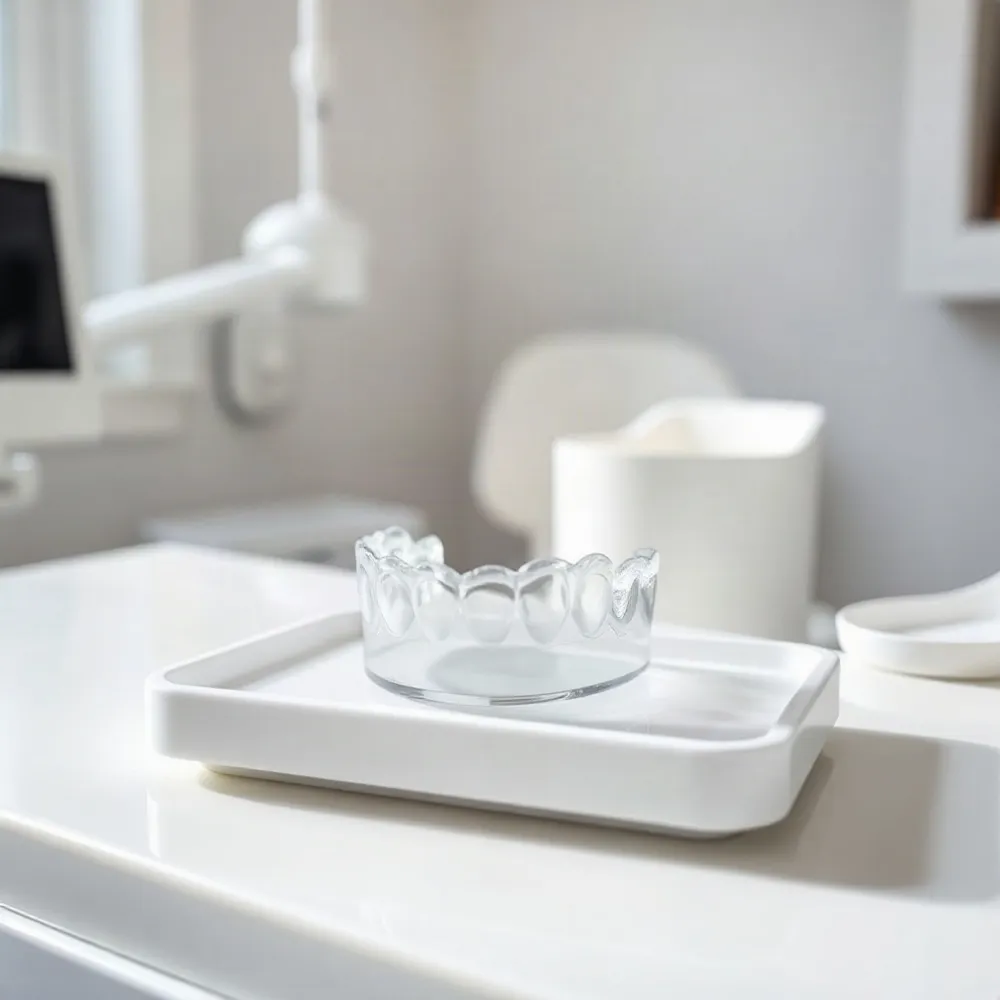
Can an FSA be used for a custom night guard for TMJ or bruxism? Yes. Custom night guards treating TMJ or bruxism are medically necessary devices. Provide an itemized invoice and, if needed, a Letter of Medical Necessity.
By planning appointments early in the plan year and keeping thorough documentation, families can maximize tax‑free savings while protecting oral health.
Cosmetic Dental and Dermatology Procedures – When Are They Eligible?
 Flexible Spending Accounts (FSAs) and Health Savings Accounts (HSAs) let you pay qualified medical expenses with pre‑tax dollars, but the IRS defines “medical care” as treatment that diagnoses, cures, mitigates, or prevents disease. Purely aesthetic work—like teeth whitening, veneers, Botox for wrinkles, or laser skin resurfacing—does not meet that definition and is therefore ineligible for reimbursement.
Medical‑necessity exceptions – A cosmetic‑looking procedure can become eligible when it corrects a functional problem, trauma, disease, or congenital abnormality. In those cases a dentist or physician must provide a Letter of Medical Necessity (LMN) that describes the condition, the required treatment, and why the procedure is medically required. The LMN, together with an itemized receipt that includes the date of service, provider name, CDT or CPT codes, and ICD‑10 diagnosis, satisfies the claim requirements for both FSAs and HSAs.
Examples –
- [Dental veneers](https://www.fsafeds.gov/explore/hcfsa/expenses?skip=60) are eligible only when they restore a cracked or severely decayed tooth or repair a congenital defect; a LMN is required.
- [Teeth whitening](https://jaxdentalarts.com/blog/maximizing-your-fsa-and-hsa-for-dental-treatment/) is generally not reimbursable unless it is prescribed to treat a disease‑related discoloration (e.g., after chemotherapy).
- Botox can be claimed for chronic migraine, TMJ disorder, or hyperhidrosis when a prescription and LMN are submitted; pure cosmetic use is excluded.
- Laser skin treatments qualify when used for medical conditions such as acne scarring, vascular lesions, or precancerous changes, again with a LMN or physician’s prescription.
IRS rules – IRS Publication 502 and IRC 213(d) explicitly exclude expenses that are solely for appearance enhancement. The “use‑it‑or‑lose‑it” rule applies to FSAs, so any eligible expense should be submitted promptly before the plan year ends or within any grace period.
Patient tip – Before scheduling any cosmetic dental procedures related work, ask your dental or dermatology office for a detailed treatment plan and, if needed, a Letter of Medical Necessity. Verify eligibility with your plan administrator and keep all receipts and documentation to avoid denied claims and to maximize your tax‑free benefits.
Documentation, Claims, and Timing for Maximum Benefit
 To get the most out of your FSA or HSA, start by gathering an itemized receipt that lists the service date, provider name, CDT or CPT code, and a clear description of the procedure. When a cosmetic‑looking treatment also restores function—such as a crown that repairs a cracked tooth—include a Letter of Medical Necessity (LMN) signed by the dentist that explains the medical condition, why the procedure is required, and how it alleviates the problem. Submit this documentation promptly; most administrators require the claim within the plan year, but many plans offer a 2½‑month grace period or a limited rollover (up to $610 for 2024) to avoid forfeiture under the “use‑it‑or‑lose‑it” rule. To stretch your pre‑tax dollars, schedule preventive cleanings, X‑rays, and necessary restorations together with any medically‑necessary cosmetic work in one visit. This consolidates coding, reduces paperwork, and maximizes the amount of treatment that can be reimbursed from your FSA/HSA, turning otherwise out‑of‑pocket costs into tax‑free savings.
Financing Options Beyond FSAs and HSAs
 When tax‑tax‑ dollars run low, many families turn to other tools to keep cosmetic‑dentistry costs manageable.
CareCredit and 0% APR credit cards – CareCredit offers promotional interest‑free periods of 6 to 12 months for qualified dental work; after the promo, a standard APR (often 20‑25%) applies. Some mainstream credit cards also provide a 0% introductory APR for 12‑18 months, allowing you to pay off the balance before interest accrues.
In‑office payment plans and Dental‑savings memberships – Many practices, including Dr. Parrella’s office in Somerville, MA, set up monthly installment plans directly with the office, eliminating third‑party fees. VantageOne give up to 50 % off preventive care and 20 % off other services, with no annual caps or waiting periods, making routine and restorative work more affordable.
Cosmetic Dentistry Grants program – Yes—there are grant programs that help cover cosmetic‑dentistry procedures. The most common is the Cosmetic Dentistry Grants (CDG) program, which is free to apply and offers partial funding of up to 25 %–30 % of the treatment cost after you complete any necessary basic dental work. To qualify, you must have a healthy mouth, receive a free oral‑health assessment from a participating dentist, and live within the program’s geographic radius (typically 60 miles of a provider). The grant is applied directly to your bill, so you do not have to repay it, and it can be combined with dental insurance for additional savings.
Combining tax‑advantaged accounts with financing – A smart strategy is to first use any remaining FSA/HSA balance for the medically‑necessary portion of a treatment, then apply a CareCredit promo or an in‑office plan for the remaining cosmetic portion. This layered approach maximizes tax‑free benefits while spreading out out‑of‑pocket costs.
Putting It All Together: A Smart Approach to Cosmetic Dentistry
When you consider a smile makeover, start by separating the eligible from the ineligible. Routine cleanings, exams, X‑rays, fluoride treatments, fillings, crowns, bridges, implants and any restorative work that repairs function are FSA/HSA‑qualified; purely aesthetic services—teeth whitening, veneers, bonding or purely cosmetic orthodontics—are not reimbursable unless a dentist provides a Letter of Medical Necessity showing a functional problem, injury or disease. Plan early: schedule preventive and restorative visits before the end of the plan year, obtain itemized receipts with CDT codes, and request any required medical‑necessity letters. Use pre‑tax FSA or HSA dollars for the qualified portion, then combine the remaining balance with interest‑free credit‑card offers, CareCredit, or in‑office financing to cover the cosmetic remainder. This strategy maximizes tax savings, avoids forfeiting pre‑tax dollars, and keeps your smile goals within budget.