Why Seasonal Oral Care Matters
Seasonal shifts change the amount of moisture in the air, directly influencing saliva production. Warm, humid summer months encourage bacterial growth, while cold, dry winter air dries the mouth, reducing saliva’s protective buffer and raising cavity risk. Maintaining a steady flow of saliva year‑round—by drinking water regularly and using a humidifier in heated indoor spaces—helps neutralize acids and wash away food debris.
Fluoride remains the cornerstone of enamel protection regardless of season. Brushing with fluoride toothpaste, using an approved fluoride mouth rinse, and receiving professional fluoride varnish or sealants during biannual cleanings reinforce enamel against acid attacks caused by dietary changes or temperature extremes.
Diet and hydration are tightly linked to oral health. Calcium‑ and vitamin‑D‑rich foods strengthen teeth, while limiting sugary or acidic snacks prevents enamel erosion. Staying well‑hydrated supports saliva production, which buffers acids and clears debris, making both diet and fluid intake essential partners in a year‑round oral‑care plan.
Winter Oral‑Care Essentials
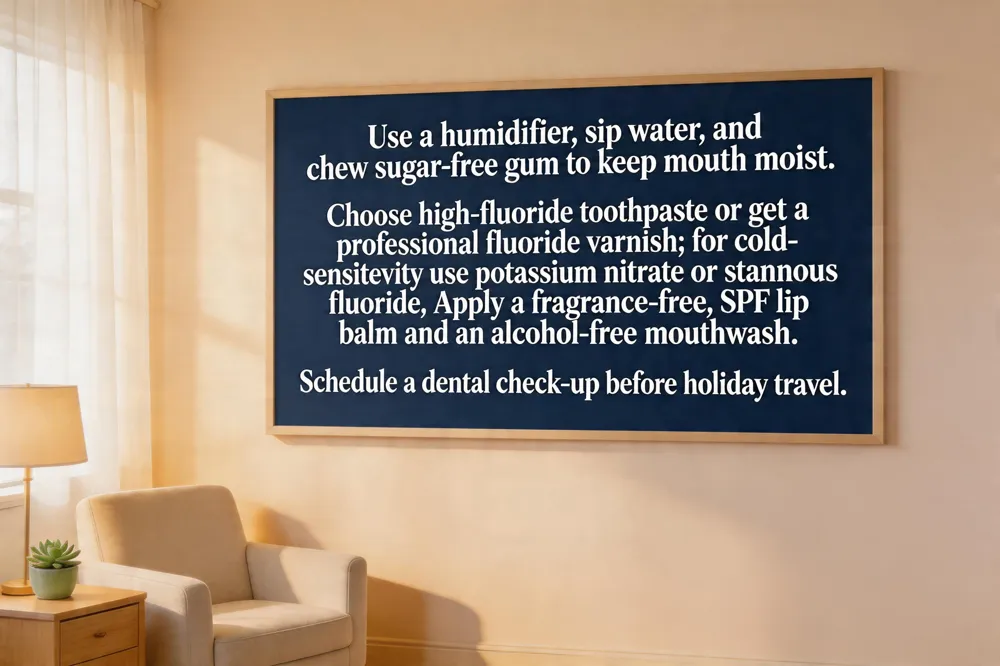 Winter’s dry indoor air and heating can shrink saliva flow, creating a dry‑mouth environment that heightens the risk of cavities and gum inflammation. Using a humidifier in the bedroom or living areas adds moisture to the air, while sipping water throughout the day and chewing sugar‑free gum keep the mouth hydrated and help neutralize acids.
Fluoride remains the cornerstone of enamel protection during these dry months; choose a toothpaste with a high fluoride concentration or ask your dentist about a professional fluoride varnish to strengthen teeth that are more vulnerable to decay. For those who experience cold‑induced sensitivity, a desensitizing toothpaste containing potassium nitrate or stannous fluoride can soothe discomfort while still delivering fluoride benefits.
Protect the lips and oral tissues with a fragrance‑free, petroleum‑based lip balm that includes SPF; this prevents chapping and shields the skin from UV rays that can be reflected off snow. Pair the lip balm with an alcohol‑free mouthwash to avoid further drying of the oral mucosa.
Finally, schedule a dental check‑up and professional cleaning before the holiday travel rush. A clean mouth reduces the chance of painful emergencies on the road and ensures any early signs of decay or gum disease are addressed promptly.
Can I kiss my boyfriend with gingivitis?
Yes, kissing can transfer saliva and the bacteria that cause gingivitis. If you have active gum inflammation, you may pass these microbes to your partner, increasing his risk of developing gum disease, especially with deep or frequent kissing. Good oral hygiene—brushing twice daily, flossing, and using an antibacterial mouthwash—helps reduce the bacterial load and lowers the chance of transmission. It’s best to treat the gingivitis first, which may involve a professional cleaning and a short course of antibacterial rinses. Until the gums are healthy, consider limiting close‑contact kissing and avoid sharing utensils or drinks to protect both of your smiles.
Summer Oral‑Care Strategies
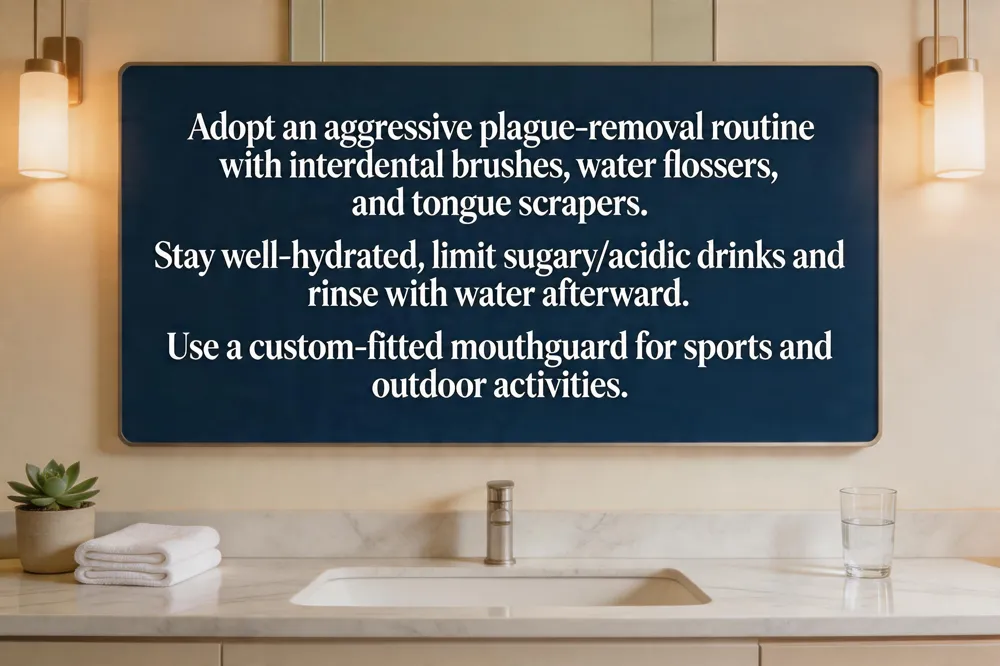 During the warm months, higher humidity creates a perfect environment for oral bacteria to thrive, so a more aggressive plaque‑removal routine is essential. Interdental brushes, water flossers, and tongue scrapers should be added to daily brushing to clean between teeth, along the gumline, and on the tongue, where bacterial colonies multiply in humid air. Staying well‑hydrated with water throughout the day dilutes sugars, supports saliva production, and helps wash away food particles; it also combats the dry‑mouth effect of indoor air‑conditioning. Limit sugary and acidic drinks—especially sports drinks, sodas, and citrus juices—and rinse the mouth with water after consuming them to reduce enamel erosion. For those who play sports or enjoy outdoor activities, a custom‑fitted mouthguard protects teeth from traumatic injuries caused by falls or impacts.
What is the 3‑3‑3 rule in dentistry?
The 3‑3‑3 rule refers to taking three 200 mg tablets of ibuprofen every three hours, for a maximum of three days, to control inflammation and dental pain.
Dental‑Hygiene Education in New York
 New York offers a rich array of dental‑hygiene programs that prepare students for licensure and a rewarding career in preventive oral health.
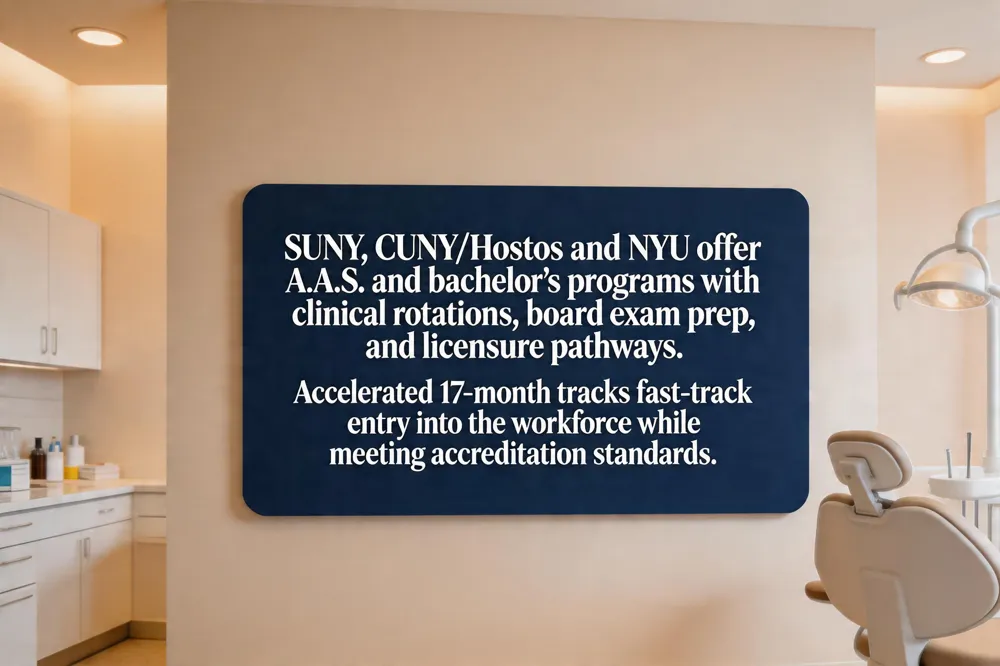
SUNY dental‑hygiene programs – The SUNY system includes accredited A.A.S. tracks at Buffalo, Stony Brook, New P York, Upstate Medical University, Orange, Broome, and Erie. Admission requires a minimum 75 % in core science courses, a pre‑admission seminar, observation form, background check, drug screen and a personal dental kit. Clinical rotations are completed in on‑campus clinics, and graduates sit for the National Board Dental Hygiene Examination and the New York State licensure exam.
CUNY and Hostos – City Tech and Hostos Community College offer A.A.S. programs that blend classroom learning with hands‑on care in community‑focused clinics. The curriculum emphasizes preventive care, oral‑health education, and service to underserved populations. Graduates earn eligibility for the National Board and NYS Clinical Board exams. Hostos admission uses a point‑ranking system based on science GPA and coursework completion.
NYU Dental‑Hygiene curriculum – NYU provides both a traditional four‑year Bachelor’s track and an accelerated A.A.S. pathway. The program is highly selective (≈30‑35 % acceptance) with an average GPA of 3.6 and DAT Academic Average of 21. Tuition is $65,622 per year plus fees, bringing total attendance costs to $78,000‑$100,000.
Accelerated 17‑month pathways – Fast‑track A.A.S. options compress coursework and clinical hours into 17 months, allowing motivated students to enter the workforce quickly while still meeting accreditation and licensure requirements.
Clinical rotations & licensure – Across programs, students spend extensive time in supervised patient‑care clinics, mastering scaling, radiography, fluoride applications, and preventive counseling. The fourth semester is often reported as the most demanding, as clinical responsibilities intensify and board‑exam preparation begins. Successful completion leads to eligibility for the National Board Dental Hygiene Examination and the New York State Clinical Board exam, paving the way for licensure and diverse career opportunities.
Everyday Oral‑Health FAQs
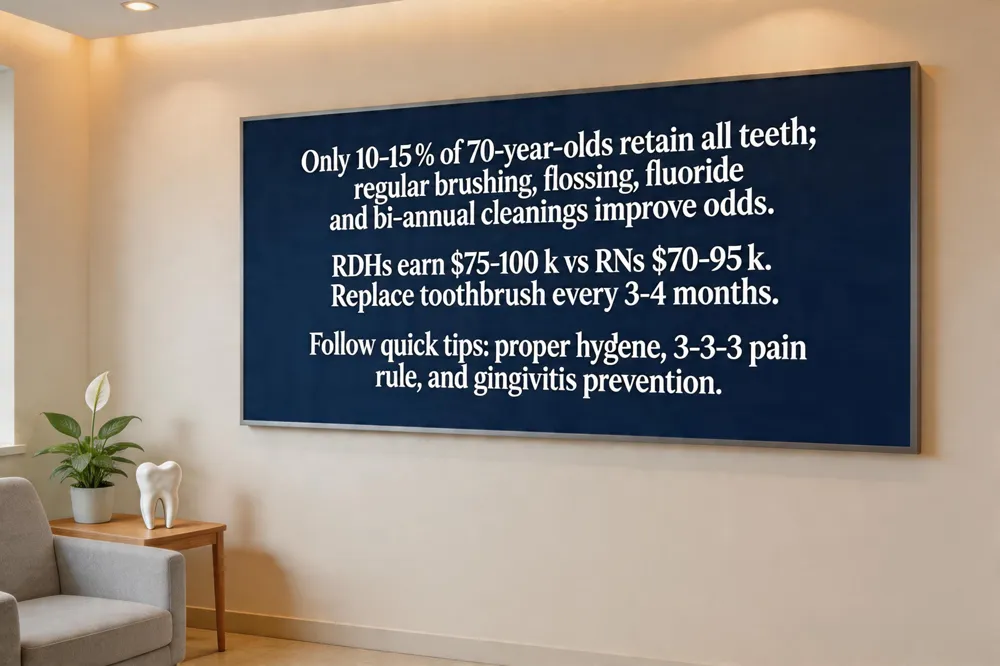 Maintaining a healthy smile is a lifelong journey, and many families wonder about the numbers and habits that keep teeth strong. How many 70‑year‑old still have all their teeth? Roughly 10–15 % of people who reach age 70 retain every natural tooth, a drop from the about 22 % at age 64. Regular brush‑and‑floss, bi‑annual dental cleanings, and fluoride use dramatically improve the odds of staying in that group—especially for seniors in Somerville who visit Dr. Parrella’s office.
Who gets paid more, RN or RDH? Dental hygienists (RDH) typically earn $75,000–$100,000 per year, while registered nurses (RN) earn $70,000–$95,000, with variations based on workplace, experience, and region.
Are you supposed to change your toothbrush every 6 months? The ADA recommends replacing your toothbrush every three to four months, or sooner if the bristles are frayed to ensure optimal plaque removal.
Additional quick tips:
- Age‑related tooth retention: Good oral hygiene, fluoride, and regular check‑ups keep more teeth for everyone, from children to seniors.
- General pain‑control rule (3‑3‑3): If you have a toothache, assess the pain level (0‑10), try home relief (salt‑water rinse, ibuprofen) for three hours, and seek professional care if it persists beyond three days.
- Gingivitis transmission and prevention: Gingivitis is not contagious, but the bacteria that cause it spread easily. Brush twice daily with fluoride toothpaste, floss or use interdental brushes, and schedule cleanings at least twice a year to keep gums healthy.
By incorporating these evidence‑based habits, families can enjoy confident, healthy smiles all year round.
Putting It All Together for a Healthy Year
A simple seasonal oral‑care checklist keeps families on track: winter – use a humidifier, sip water, choose a fluoride‑rich toothpaste; spring – add interdental brushes or a water flosser and schedule a professional cleaning; summer – stay well‑hydrated, rinse after sugary or acidic drinks, and protect lips with SPF balm; fall – switch to an alcohol‑free mouthwash and continue hydration. Regular six‑month dental visits provide thorough cleanings and professional fluoride applications that reinforce enamel when saliva flow drops in dry months or when acidic foods are common. Consistently drinking water throughout the day supports saliva production, buffers acids, and helps the body absorb calcium and vitamin D from dairy, leafy greens, and fortified foods—essential for strong teeth year‑round. Seniors benefit from early preventive care: more frequent check‑ups, alcohol‑free rinses to combat dry mouth, and tailored fluoride treatments can prevent decay and gum disease before they become serious. By integrating these habits, families enjoy a healthier smile all year long.