Introduction
Family‑run dental practices operate as small, locally owned businesses where a dentist and close family members manage day‑to‑day care. This model lets the team know each patient by name, remember detailed dental histories across generations, and tailor treatment plans to individual preferences. Because the staff often lives in the same neighborhood, scheduling is flexible and emergency appointments can be accommodated quickly, reducing stress for busy families. Community involvement is a natural extension of this personal approach: many offices sponsor school health fairs, donate supplies to local charities, and participate in Rotary, Lions Club, and Chamber events. These activities not only improve oral‑health awareness but also build trust, encouraging patients to return for preventive, cosmetic, and restorative care under one roof.
Personalized Care and Patient Loyalty in Family‑Run Practices
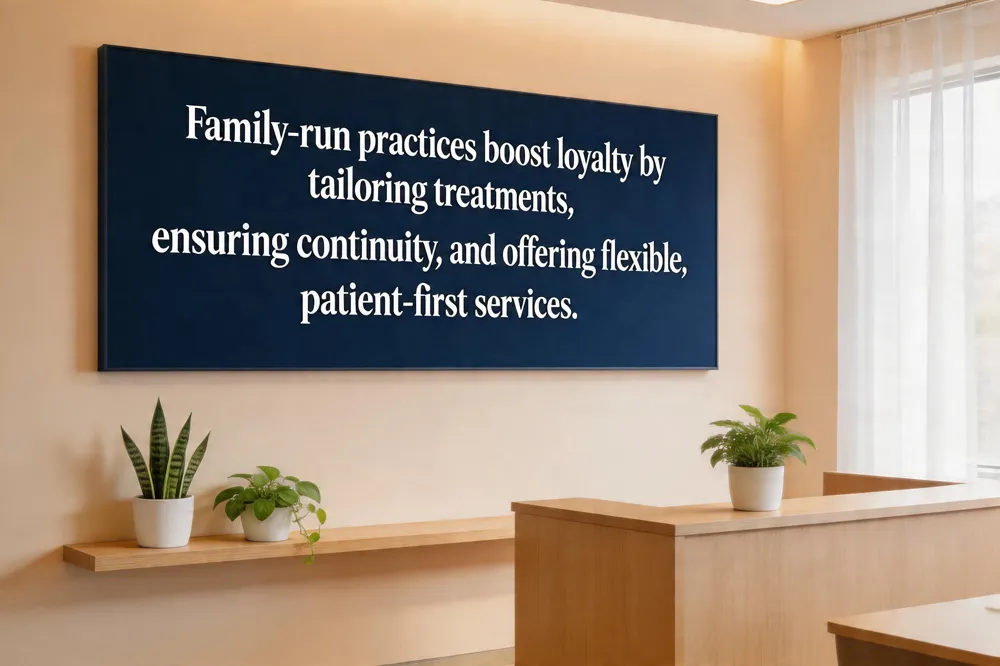 Family‑run dental offices craft treatment plans that reflect each patient’s unique dental history, lifestyle, and family dynamics. By remembering previous procedures and personal preferences, clinicians can tailor preventive, restorative, and cosmetic services to fit individual needs. This personalized approach translates into higher patient satisfaction scores—ADA surveys show family practices regularly exceed 78% excellent ratings versus 62% for corporate chains. Continuity of care across generations is a hallmark of family dentistry; children grow up seeing the same dentist, fostering trust that eases anxiety and improves adherence to oral‑health regimens. Private‑practice advantages include flexible scheduling, quicker emergency access, and payment options that prioritize patient benefit over corporate quotas.
Are private practice dentists better? Private‑practice dentists often provide more personalized, relationship‑based care because you typically see the same clinician who knows your family’s dental history and preferences. Their independent ownership lets them make treatment and technology decisions focused on patient benefit rather than corporate production quotas or standardized protocols. Because they are rooted in the local community, they can offer flexible payment options and tailor financial arrangements to fit individual budgets. This continuity and community focus can lead to stronger trust and better long‑term oral‑health outcomes for families. While “better” depends on each patient’s needs, many families find that the individualized attention of a private practice like Dr. Parrella’s makes a meaningful difference.
Can diabetics get help with dental treatment? Yes—people with diabetes often qualify for assistance that makes dental care more affordable. In Massachusetts, Medicaid (MassHealth) covers preventive and restorative services for eligible diabetic patients, and many community health centers offer sliding‑scale fees or free clinics for those with low income. Dental schools and charitable organizations also provide reduced‑cost treatment, and because diabetes is recognized as a disability under the Americans with Disabilities Act, patients can request reasonable accommodations such as extra appointment time or specialized hygiene instructions. Regular dental visits are especially important for diabetics to prevent gum disease, which can worsen blood‑sugar control. Contact our office to discuss your insurance coverage, Medicaid eligibility, or any financial‑aid programs that may apply to you.
Community‑Based Dentistry and Outreach Programs
 Community‑based dentistry, also called public‑health dentistry, focuses on promoting oral health at the population level rather than treating isolated individuals. By using epidemiological data, dentists identify community needs and implement preventive measures such as fluoride programs, school‑based sealant clinics, and oral‑health education.
School oral‑health education programs teach children proper brushing, flossing, and nutrition habits, reducing childhood cavities by up to 30% over five years (AAPD). Partnerships with local schools and youth sports teams also build trust and encourage lifelong oral‑health habits.
Free‑clinic days and senior‑care initiatives bring low‑cost or free services to underserved residents, offering cleanings, fluoride varnish, and early detection of disease. Programs like Massachusetts’ Senior Dental Assistance and community health‑center clinics improve access for older adults.
Volunteer pathways for students and professionals include free‑clinic events, mobile dental units, and school‑based screenings. Organizations such as the Boston Free Clinic, Give Kids A Smile, and local university volunteer programs welcome licensed dentists, hygienists, and pre‑dental students to provide care and gain experience.
Nutrition, Oral Hygiene, and Antibacterial Foods & Drinks
 A diet rich in natural antibacterials can dramatically improve oral health. Cheese and other dairy products supply calcium and phosphate, neutralizing acids and killing cavity‑causing Streptococcus mutans. Crunchy vegetables such as celery, apples, and carrots stimulate saliva, which washes away food particles and buffers bacterial growth. Green and black teas are packed with polyphenols—catechins—that suppress plaque‑forming microbes, while onions and sesame seeds deliver sulfur compounds and natural agents that disrupt plaque formation. For beverages, water—especially fluoridated tap water—is the most effective drink for reducing oral bacteria because it rinses debris, dilutes acids, and supplies enamel‑strengthening fluoride. Unsweetened black or green tea adds polyphenols that attack harmful bacteria without feeding them. Maintaining good hydration keeps saliva flow optimal, creating a hostile environment for bacteria and supporting the mouth’s natural defenses. Together, these foods and drinks help keep plaque low, freshen breath, and protect teeth from decay.
Educational Rules and Aesthetic Guidelines in Dentistry
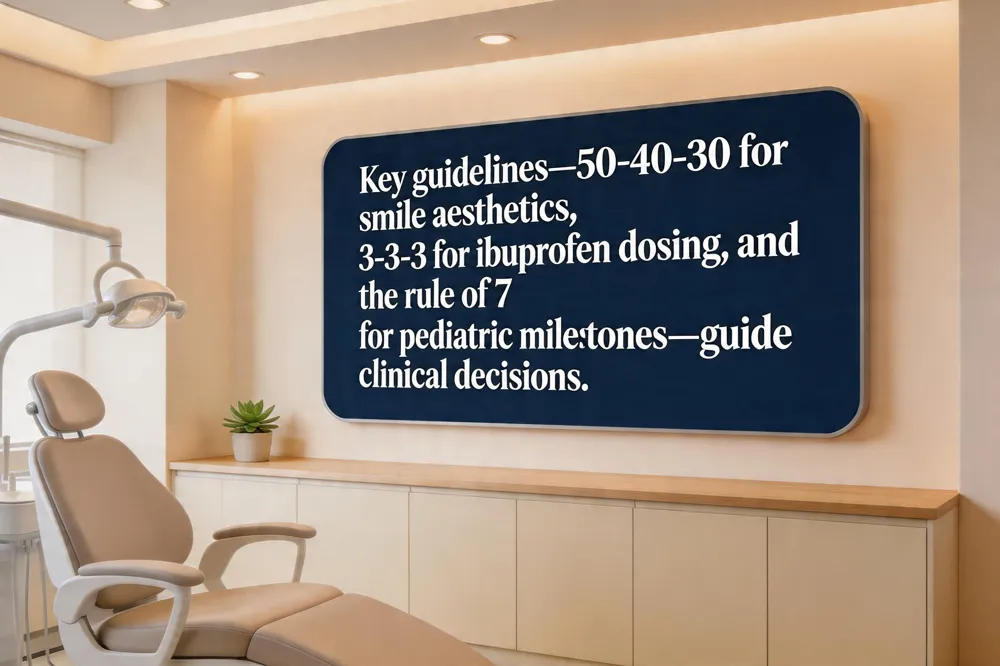 Understanding key dental guidelines helps families choose smile design and manage pain.
What is the 50‑40‑30 rule in dentistry?
The 50‑40‑30 rule is a visual proportion guide for the anterior teeth. When a smile is viewed straight on, the two central incisors should occupy about 50 % of the total width, the lateral incisors roughly 40 %, and the canines about 30 %. Dentists use it to evaluate aesthetic balance and plan veneers, crowns, or orthodontic moves that blend naturally with facial features.
What is the 3‑3‑3 rule in dentistry?
For pain control, the 3‑3‑3 rule recommends taking three 200 mg ibuprofen tablets every three hours, not exceeding three days, to reduce inflammation that commonly causes dental discomfort.
What is the rule of 7 in dentistry?
The rule of 7 guides pediatric timing: the first primary tooth appears around seven months, the first permanent tooth erupts near age seven, and an orthodontic evaluation should be completed by the seventh birthday. Monitoring supports oral health.
Broader Impact: Economic, Technological, and Professional Growth
 Family‑owned dental practices are engines of local prosperity. By hiring residents, purchasing supplies from nearby vendors, and keeping revenue in the community, a practice like Roman Dental Arts or HollowBrook Dental generates millions of dollars of indirect economic activity each year. At the same time, these offices invest in state‑of‑the‑art tools—digital imaging, intra‑oral scanners, and laser dentistry—so patients receive accurate, comfortable care without sacrificing the personal touch. The teams also lead professional outreach: dentists, hygienists, and assistants volunteer at school‑based oral‑health fairs, mentor dental students, and partner with universities such as Boston University’s Henry M. Goldman School of Dental Medicine to deliver education and free screenings. Regarding regulatory limits, dentists in the United States cannot prescribe Ambien (zolpidem), a Schedule IV medication reserved for physicians; they may, however, use nitrous oxide or benzodiazepines for procedural anxiety. For those seeking volunteer work, Houston offers programs through the Greater Houston Dental Society, the Rice Pre‑Dental Society, and mobile initiatives like Kids Tooth Team Outreach. Boston University’s dental school runs extensive community‑service projects, providing students with real‑world experience while expanding oral‑health access for underserved populations.
Conclusion
Family‑run dental practices create healthier neighborhoods by delivering personalized, comprehensive care that keeps patients of all ages on schedule and reduces emergency visits. Their deep ties to schools, sports teams, charities and local chambers translate into free screenings, oral‑health education and sponsorships that lower untreated decay rates and strengthen community bonds. Residents are invited to become part of this impact—schedule your next check‑up, refer friends, or volunteer for school‑based workshops and free‑clinic days. As technology advances and insurers expand coverage, family offices will continue to adopt digital imaging, laser dentistry and flexible financing while preserving the warm, familiar atmosphere families trust. This momentum promises broader access, higher prevention rates and a lasting legacy of oral‑health stewardship for future generations everywhere.