Understanding the Preventive Power of Dental Hygienists
Dental hygienists are the frontline of preventive dentistry, providing cleanings that remove plaque and tartar, applying fluoride varnish and sealants, and delivering education on brushing, flossing, diet, tobacco cessation, and oral‑cancer screening. By controlling bacterial biofilm, they lower the risk of cavities and gum disease, which are linked to diabetes, heart disease, and pregnancy complications. Rising focus on oral‑systemic health and expanded scope‑of‑practice laws have driven demand: the U.S. Bureau of Labor Statistics projects an 11 % growth in hygienist jobs through 2032, and community programs depend on their expertise to reach underserved groups. This shift makes hygienists essential partners in keeping families healthy.
The Core Preventive Role of the Dental Hygienist
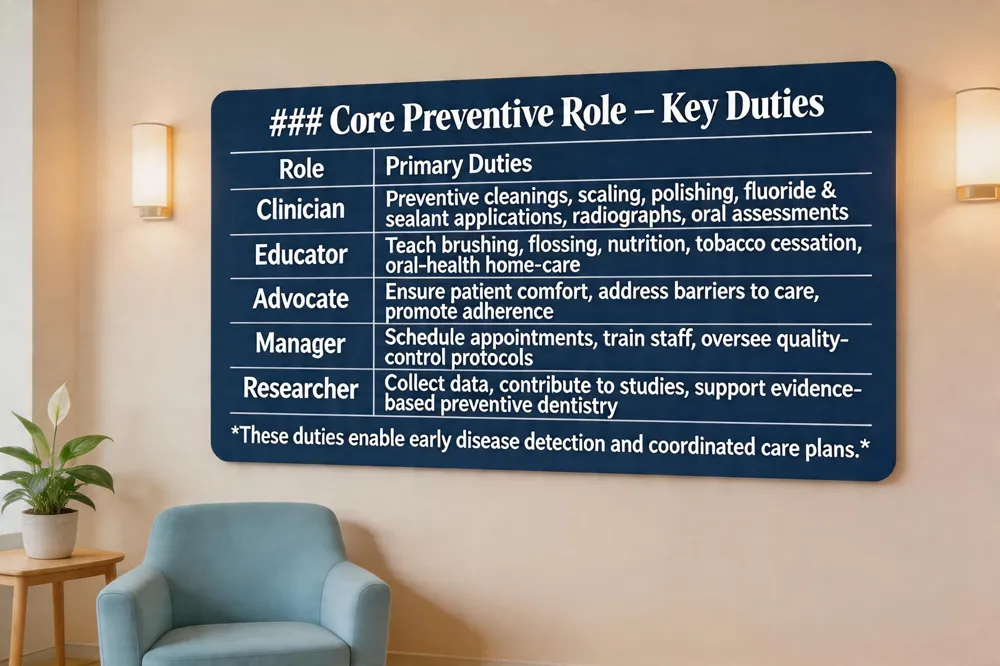
Core Preventive Role – Key Duties
| Role | Primary Duties |
|---|---|
| Clinician | Preventive cleanings, scaling, polishing, fluoride & sealant applications, radiographs, oral assessments |
| Educator | Teach brushing, flossing, nutrition, tobacco cessation, oral‑health home‑care |
| Advocate | Ensure patient comfort, address barriers to care, promote adherence |
| Manager | Schedule appointments, train staff, oversee quality‑control protocols |
| Researcher | Collect data, contribute to studies, support evidence‑based preventive dentistry |
These duties enable early disease detection and coordinated care plans.
 Dental hygienist skills
Dental hygienists blend precise clinical abilities—scaling, polishing, sealant and fluoride applications, radiograph acquisition and interpretation—with compassionate oral‑health education. Their gentle touch, clear communication, and critical‑thinking enable early disease detection and coordinated care plans.
Dental hygienist skills
Dental hygienists blend precise clinical abilities—scaling, polishing, sealant and fluoride applications, radiograph acquisition and interpretation—with compassionate oral‑health education. Their gentle touch, clear communication, and critical‑thinking enable early disease detection and coordinated care plans.
Benefits of oral hygiene Consistent brushing, flossing, and professional cleanings remove plaque, preventing cavities and gum disease. Good oral hygiene reduces systemic inflammation, lowering risks of heart disease, diabetes, stroke, and certain cancers, while also saving patients money on extensive dental work.
Definition of oral hygiene Oral hygiene is the routine practice of keeping the mouth clean by removing plaque and food debris through daily brushing with fluoride toothpaste, interdental cleaning, and regular professional exams and cleanings.
5 roles of a dental hygienist
- Clinician – preventive cleanings, fluoride, sealants, assessments. 2. Educator – teaches brushing, flossing, nutrition. 3. Advocate – ensures patient comfort and compliance. 4. Manager – oversees scheduling, staff training, quality control. 5. Researcher – contributes data to advance preventive dentistry.
What are the main duties of a dental hygienist? They examine patients, remove plaque/tartar, polish teeth, apply fluoride/ sealants, take diagnostic X‑rays, educate on home care, document findings, and communicate recommendations to the dentist.
Dental hygienist job description for resume Conducts comprehensive oral assessments, performs prophylactic cleanings, applies preventive agents, obtains radiographs, provides individualized patient education, maintains accurate records, and follows strict infection‑control protocols while supporting the dental team.
Insurance Coverage and the Economics of Prevention
Coverage & Economics Summary
| Service | Typical Coverage | Patient Cost (USD) | Notes |
|---|---|---|---|
| Routine exam, cleaning, X‑rays | 100 % (no co‑pay, deductible) | $0–$200 (varies by office) | Not counted toward annual maximum |
| Fluoride varnish & sealants | 100 % | $0 | Prevents cavities, especially in children |
| Restorative work (fillings, crowns) | Partially covered (often 80 %) | $100–$500+ | Higher out‑of‑pocket if not preventive |
| Median RDH salary (2024) | — | $94,260/yr (~$45/hr) | 7 % growth projected through 2034 |
Investing in preventive visits reduces long‑term dental expenses and systemic health risks.
 Most dental insurance plans are designed to keep mouths healthy, so they cover routine exams, cleanings, X‑rays, fluoride varnish and sealants at 100 % with no co‑pay or deductible. These preventive services usually do not count toward the annual maximum, allowing unlimited visits throughout the year. In our Somerville office a typical preventive appointment—exam, cleaning, and any needed X‑rays—costs between $100 and $200; the national average hovers around $200, and many plans cover the full amount, leaving patients little or nothing out of pocket. Regular six‑month check‑ups catch cavities and gum disease early, avoiding costly restorative or emergency work later.
The profession of dental hygiene is also financially rewarding. The U.S. Bureau of Labor Statistics reports a median annual salary of $94,260 for Registered Dental Hygienists in May 2024, translating to about $45 per hour, with a projected 7 % employment growth through 2034. This strong demand helps sustain competitive wages and career stability.
Good dental hygiene matters because plaque removal, proper brushing with fluoride toothpaste, and daily flossing prevent cavities, gum disease, and systemic inflammation. Maintaining oral health supports clear speech, comfortable chewing, a confident smile, and overall well‑being—making preventive care a smart investment in both health and finances.
Clinical Expertise and Professional Standards
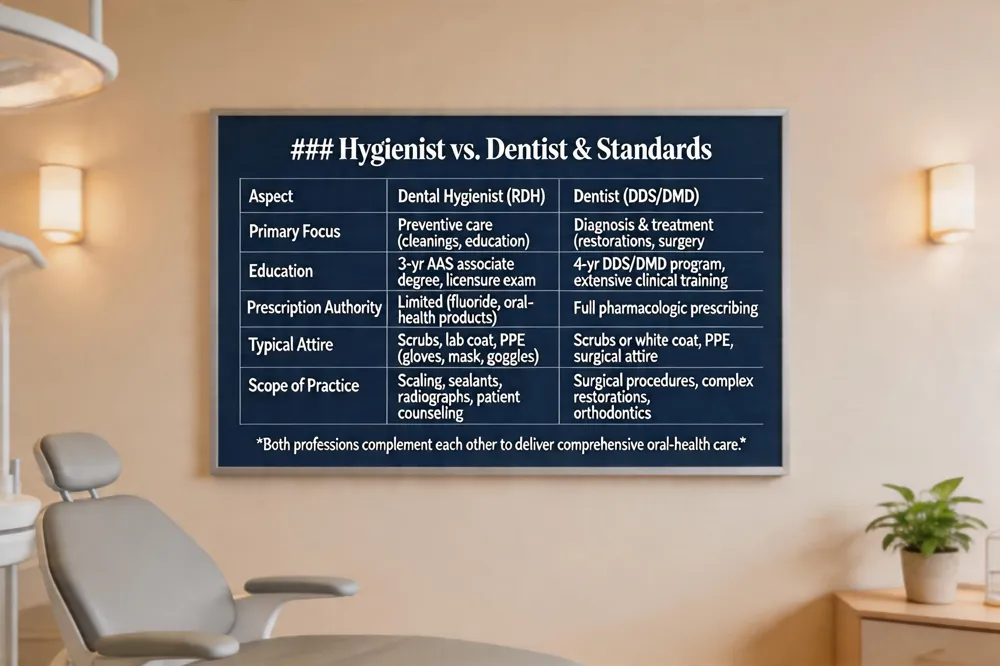
Hygienist vs. Dentist & Standards
| Aspect | Dental Hygienist (RDH) | Dentist (DDS/DMD) |
|---|---|---|
| Primary Focus | Preventive care (cleanings, education) | Diagnosis & treatment (restorations, surgery) |
| Education | 3‑yr AAS associate degree, licensure exam | 4‑yr DDS/DMD program, extensive clinical training |
| Prescription Authority | Limited (often fluoride, oral‑health products) | Full pharmacologic prescribing |
| Typical Attire | Scrubs, lab coat, PPE (gloves, mask, goggles) | Scrubs or white coat, PPE, sometimes surgical attire |
| Scope of Practice | Scaling, sealants, radiographs, patient counseling | Surgical procedures, complex restorations, orthodontics |
Both professions complement each other to deliver comprehensive oral‑health care.
 Dental hygienist vs. dentist: Hygienists focus on preventive care—professional cleanings, scaling, fluoride and sealant applications, taking X‑rays, and patient education on brushing, flossing, diet, and tobacco cessation. Dentists (DDS/DMD) diagnose disease, develop treatment plans, and perform restorative or surgical procedures such as fillings, crowns, root canals, and extractions. Both are licensed, but dentists undergo longer, broader training that includes prescription authority and complex case management. Together they provide comprehensive oral‑health care.
Dental hygienist education requirements: Entry‑level practice requires an accredited associate degree (AAS) in dental hygiene (≈3 years), prerequisite coursework, a TEAS test, and clinical experience. Graduates must pass a state licensure exam (National Board Dental Hygiene Examination and a clinical component). Many pursue bachelor’s or master’s degrees for advanced roles in public health, research, education, or administration.
What do dental hygienists wear? Hygienists wear clean scrubs, often with a lab coat, and use personal‑protective equipment—disposable gloves, surgical mask, safety glasses or face shield, and closed‑toe supportive shoes. Hair is tied back, nails trimmed, jewelry minimal, and a name tag is displayed to meet infection‑control standards while presenting a professional appearance.
Community Outreach and Public‑Health Impact
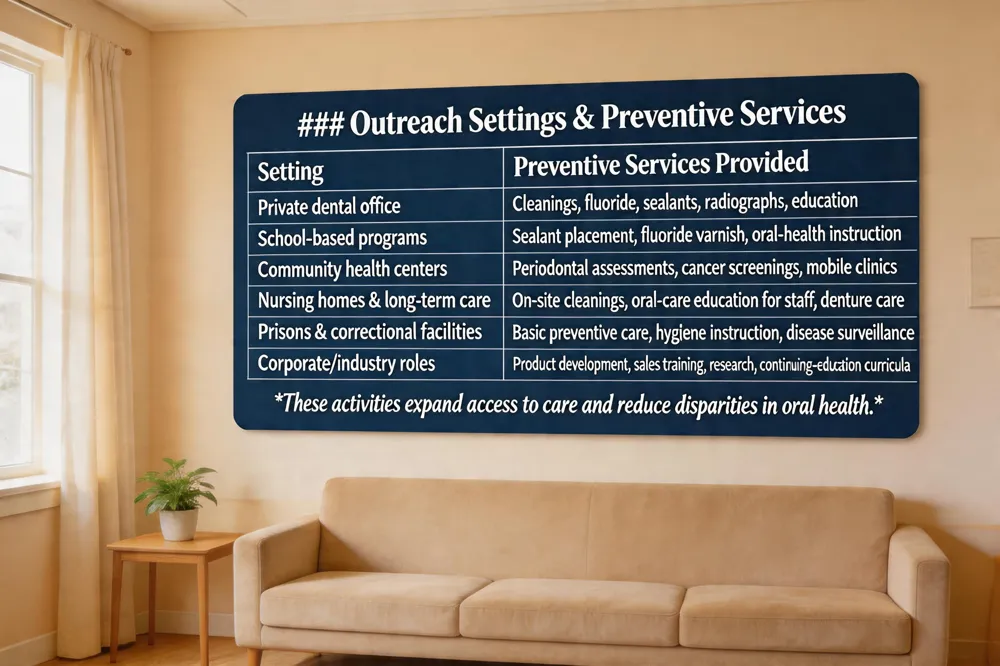
Outreach Settings & Preventive Services
| Setting | Preventive Services Provided |
|---|---|
| Private dental office | Cleanings, fluoride, sealants, radiographs, education |
| School‑based programs | Sealant placement, fluoride varnish, oral‑health instruction |
| Community health centers | Periodontal assessments, cancer screenings, mobile clinics |
| Nursing homes & long‑term care | On‑site cleanings, oral‑care education for staff, denture care |
| Prisons & correctional facilities | Basic preventive care, hygiene instruction, disease surveillance |
| Corporate/industry roles | Product development, sales training, research, continuing‑education curricula |
These activities expand access to care and reduce disparities in oral health.
 Where do dental hygienists work? Dental hygienists work in a wide range of settings, from traditional private dental offices and university dental clinics to community health centers, public‑health programs, hospitals, nursing homes, prisons, and school‑based dental programs. Many also hold corporate positions in product development, sales, research, or education for dental‑industry companies, and some teach in academic institutions or lead community‑outreach initiatives.
List of preventive dental services: In community settings hygienists provide professional cleanings that remove plaque and tartar, fluoride varnish applications, and sealant placement on molars to protect enamel. They conduct oral cancer screenings, periodontal assessments, and diagnostic X‑rays, and they deliver tailored oral‑health education on brushing, flossing, nutrition, tobacco cessation, and sugar reduction. These services are often offered through school sealant programs, mobile clinics, and health‑department fairs to reach underserved populations.
10 ways to keep your teeth healthy: Brush twice daily with a soft‑bristled toothbrush and fluoride toothpaste for two minutes, floss daily or use interdental cleaners, rinse with an antimicrobial mouthwash, limit sugary and acidic foods, stay hydrated, choose calcium‑rich foods, replace your toothbrush every three to four months, avoid tobacco, schedule regular dental check‑ups, and seek professional cleanings at least twice a year.
Causes of poor oral hygiene: Irregular or improper brushing technique, skipping daily flossing, high‑sugar diets, tobacco use, dry mouth from medications or dehydration, and neglecting routine dental visits all contribute to plaque buildup, gum inflammation, and increased cavity risk.
Oral Health as a Window to Whole‑Body Wellness
Systemic Links to Oral Health
| Systemic Condition | Oral‑Health Connection |
|---|---|
| Cardiovascular disease | Chronic gum inflammation → bacterial entry → arterial plaque formation |
| Diabetes | Periodontal disease worsens glycemic control; poor control accelerates gum disease |
| Stroke | Periodontal pathogens linked to atherosclerosis and clot formation |
| Pregnancy complications | Periodontal inflammation ↑ risk of pre‑term birth |
| Alzheimer’s disease | Oral bacteria may contribute to neuro‑inflammation |
| Respiratory infections | Aspiration of oral bacteria → pneumonia, especially in elderly |
Maintaining oral hygiene helps mitigate these systemic risks.
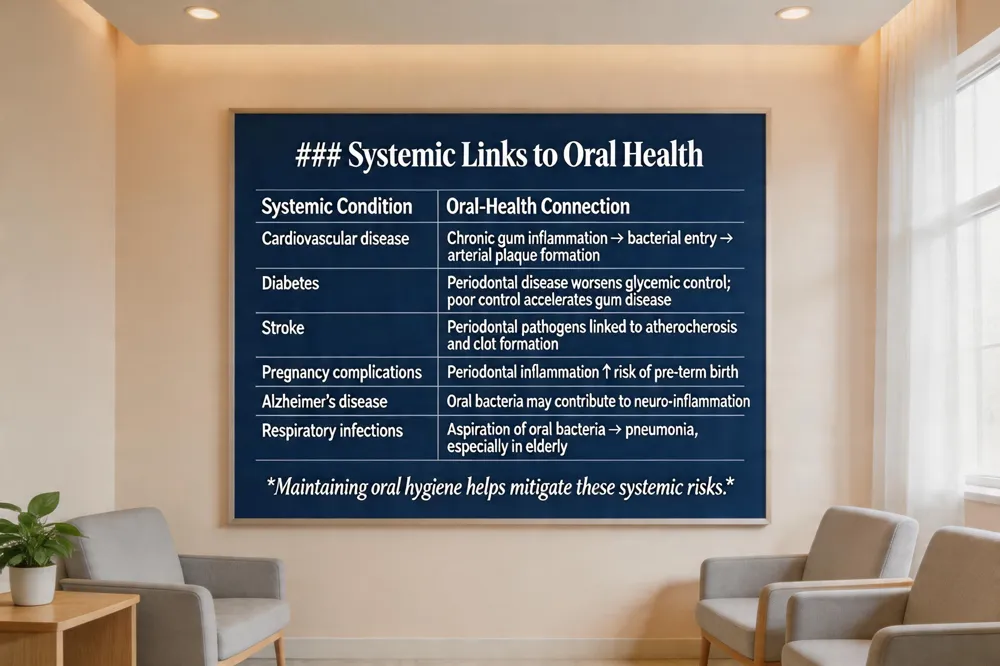 Maintaining a healthy mouth does more than protect teeth; it safeguards the whole body. Research shows that untreated gum disease can release bacteria into the bloodstream, raising the risk of heart disease, stroke, high blood pressure, diabetes complications, pneumonia, and even Alzheimer’s disease. Pregnant women with periodontal inflammation face higher odds of pre‑term birth, and kidney disease can be worsened by chronic oral infection.
Daily habits that protect both oral and systemic health are simple. Brush twice daily with fluoride toothpaste, floss each night, and drink plenty of fluoridated water or plain water to keep saliva flowing and bacteria at bay. Unsweetened black or green tea adds natural antibacterial polyphenols. Regular professional cleanings and sealant or fluoride varnish applications further reduce bacterial load and strengthen enamel.
FAQs
Diseases caused by poor dental hygiene: Neglect leads to cavities and gum disease, which can trigger cardiovascular, respiratory, metabolic, and neuro‑degenerative conditions.
Importance of oral hygiene in daily life: Consistent brushing, flossing, and cleanings prevent systemic inflammation and support nutrition, confidence, and overall vitality.
What drink kills bacteria in the mouth?: Fluoridated water and plain water are most effective; tea also helps.
Can I kiss my boyfriend if he has cavities?: Cavities aren’t contagious, but sharing saliva can spread bacteria—good hygiene and mouthwash lower the risk.
Practical Tips and Frequently Asked Questions
Quick FAQs & Practical Tips
| Question | Answer |
|---|---|
| What kills bacteria in the mouth? | Fluoridated water, plain water, and unsweetened tea (polyphenols) |
| Can I kiss someone with cavities? | Cavities aren’t contagious, but sharing saliva can spread bacteria; good hygiene reduces risk |
| 3‑3‑3 rule? | Brush 3 × day, 3 minutes each, wait 3 hours after meals before bedtime |
| Salary comparison: RN vs. RDH? | RDH: $75‑$100k/yr; RN: $70‑$95k/yr (varies by setting & experience) |
| Daily habit tip | Brush twice with fluoride toothpaste, floss nightly, use antimicrobial mouthwash, stay hydrated |
These habits support both oral and overall health.
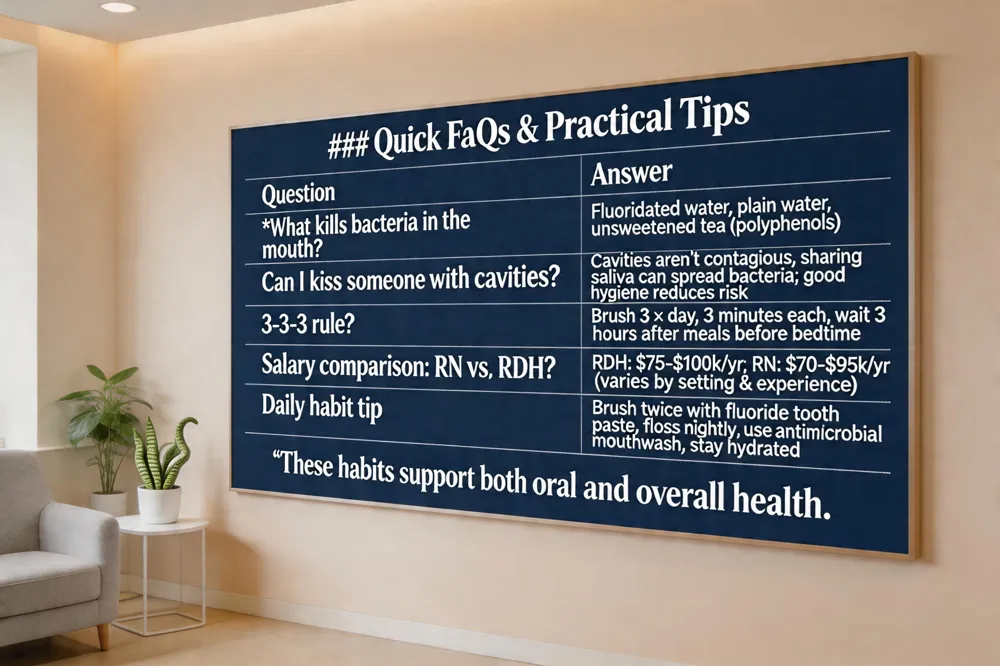 Everyday oral‑health habits: Brush twice daily with fluoride toothpaste, floss each night, use antimicrobial mouthwash, drink fluoridated water, limit sugary foods, avoid tobacco and drink alcohol in moderation. Quick rules for brushing and eating: Follow the 3‑3‑3 rule for oral hygiene—brush three times a day for three minutes, and wait three hours after meals before bedtime to protect enamel. Salary comparisons with other health professionals: Dental hygienists (RDHs) typically earn $75,000–$100,000 annually, slightly higher than many registered nurses who earn $70,000–$95,000, though pay varies by setting and experience.
Oral health tips for adults – Brush at least twice a day with fluoride toothpaste and floss daily to remove plaque and food particles. Use an antimicrobial mouthwash and drink fluoridated water to strengthen enamel and reduce bacterial growth. Limit sugary foods and drinks, avoid tobacco, and consume alcohol in moderation. Stay hydrated, chew sugar‑free gum if you have dry mouth, and manage chronic conditions such as diabetes with your dentist’s guidance. Schedule a dental check‑up and professional cleaning at least once a year—or more often if you have specific concerns—to catch problems early and maintain overall health.
What is the 3‑3‑3 rule for oral hygiene? – Brush three times a day for three minutes each session, and avoid eating or drinking (except water) for three hours before bedtime to maximize plaque removal and protect enamel.
Who gets paid more, RN or RDH? – Dental hygienists (RDHs) often earn $75,000–$100,000 annually, whereas registered nurses (RNs) typically earn $70,000–$95,000, though earnings can vary by setting and experience.
Your Smile Deserves a Preventive Partner
Regular visits to a dental hygienist are the cornerstone of lasting oral health. Each cleaning removes plaque and tartar that brushing alone can’t reach, cutting the risk of cavities and gum disease by up to 40 % and catching early signs of oral cancer or diabetes‑related gum inflammation. Hygienists also tailor diet, tobacco‑cessation, and fluoride advice to your lifestyle, turning routine care into a personalized health‑coaching experience. To keep this protective cycle moving, call your office today, ask about online scheduling, and set a six‑month reminder. Early, consistent appointments keep your smile bright and your body healthier for life.