Why Nighttime Matters
During sleep, saliva flow can drop by up to 70 %. Saliva’s natural functions—neutralizing acids, washing away food particles, and delivering minerals for remineralization—are greatly reduced. Anything left on the teeth after the day’s meals becomes a ready food source for plaque bacteria, which produce enamel‑eroding acids when the mouth is dry. By brushing, flossing and rinsing before bed, you remove that fuel and let fluoride strengthen enamel overnight. Flossing reaches the spaces between teeth that a brush cannot clean, and an alcohol‑free fluoride mouthwash adds an extra antimicrobial shield. Drinking a small glass of water before sleep helps keep the mouth moist, supporting any remaining saliva in neutralizing acids. Dental check‑ups let dentists spot demineralization and apply fluoride treatments, safeguarding smile.
Step‑by‑Step Nighttime Dental Routine
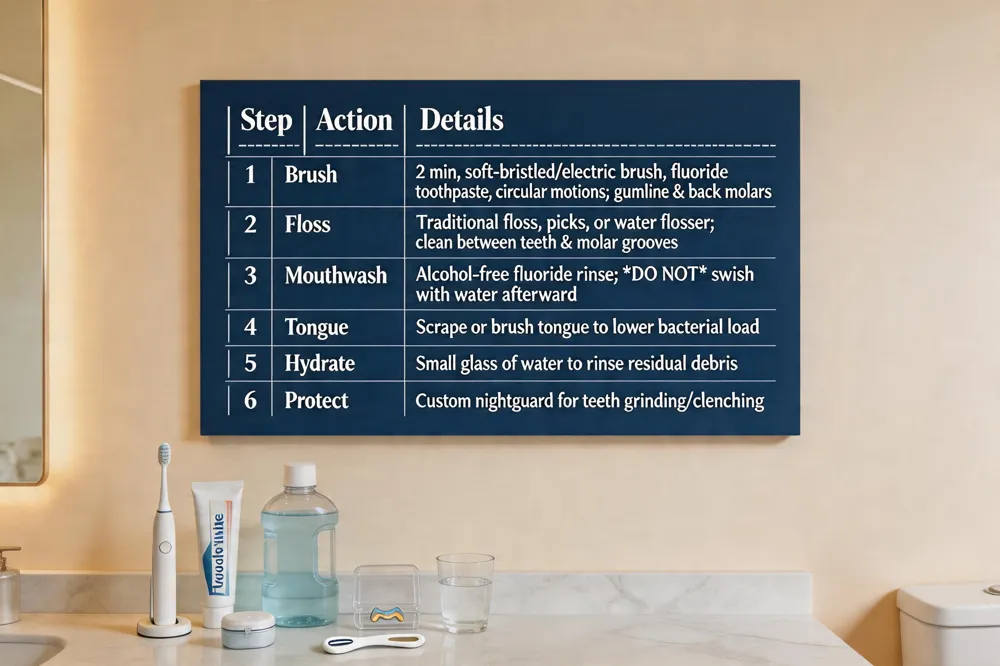
| Step | Action | Details |
|---|---|---|
| 1 | Brush | 2 min, soft‑bristled or electric brush, fluoride toothpaste, circular motions; focus on gumline & back molars |
| 2 | Floss | Traditional floss, floss picks, or water flosser; clean interproximal spaces & molar grooves |
| 3 | Mouthwash | Alcohol‑free fluoride rinse; do not swish with water afterward so fluoride stays on enamel |
| 4 | Tongue | Scrape or gently brush the tongue to lower bacterial load |
| 5 | Hydrate | Small glass of water to rinse residual debris and keep mouth moist |
| 6 | Protect | Custom‑fit nightguard if you grind or clench (bruxism) |
 What’s the best nighttime teeth routine?
Start by brushing every tooth surface for a full two minutes with a soft‑bristled or electric toothbrush and fluoride toothpaste. Use gentle circular motions, paying special attention to the gumline and the back molars where plaque loves to hide. Follow the brush with a thorough flossing step—either traditional floss, floss picks, or a water flosser—to clear interproximal spaces and the grooves of the molars. After flossing, rinse with an alcohol‑free fluoride mouthwash and do not swish with water afterward; this lets the fluoride stay on the teeth to remineralize enamel overnight. Finish the routine by scraping or gently brushing the tongue to reduce bacterial load and freshen breath. If you grind or clench, place a custom‑fit nightguard over your teeth before you lie down. Finally, sip a glass of water to rinse away any residual debris and keep the mouth moist, supporting the limited saliva flow that occurs during sleep.
What’s the best nighttime teeth routine?
Start by brushing every tooth surface for a full two minutes with a soft‑bristled or electric toothbrush and fluoride toothpaste. Use gentle circular motions, paying special attention to the gumline and the back molars where plaque loves to hide. Follow the brush with a thorough flossing step—either traditional floss, floss picks, or a water flosser—to clear interproximal spaces and the grooves of the molars. After flossing, rinse with an alcohol‑free fluoride mouthwash and do not swish with water afterward; this lets the fluoride stay on the teeth to remineralize enamel overnight. Finish the routine by scraping or gently brushing the tongue to reduce bacterial load and freshen breath. If you grind or clench, place a custom‑fit nightguard over your teeth before you lie down. Finally, sip a glass of water to rinse away any residual debris and keep the mouth moist, supporting the limited saliva flow that occurs during sleep.
How to clean mouth before bed?
- Brush – two minutes, fluoride toothpaste, cover all surfaces and gumline.
- Floss – remove food particles and plaque between teeth; a water flosser is an effective alternative.
- Mouthwash – use an alcohol‑free fluoride rinse and let it remain on the teeth without a post‑rinse water swish.
- Tongue – scrape or brush to lower bacterial load and improve breath.
- Hydrate – a small glass of water before sleep helps rinse leftovers and maintains moisture.
- Protect – wear a custom nightguard if you have bruxism.
Consistently following these steps each night dramatically reduces plaque, acid attacks, and the risk of cavities while supporting overall oral health.
The Science Behind Fluoride and Remineralization
| Fluoride Source | Mechanism | Benefit |
|---|---|---|
| Fluoride toothpaste & mouthwash | Fluoride ions combine with hydroxyapatite to form fluoroapatite (more acid‑resistant) | Strengthens enamel, promotes remineralization overnight |
| Fluoridated tap water | Continuous low‑level fluoride exposure | Ongoing protection, especially before bedtime |
| Professional fluoride varnish/gel | High‑concentration fluoride applied by dentist | Extra boost for high‑risk patients, accelerates remineralization |
| Hydroxyapatite or pre‑biotic toothpaste (fluoride‑free) | Supplies calcium & phosphate particles that integrate into enamel | Natural remineralization without excess fluoride |
| Dental sealants | Physical barrier over pits & fissures | Prevents plaque accumulation, reduces decay risk |
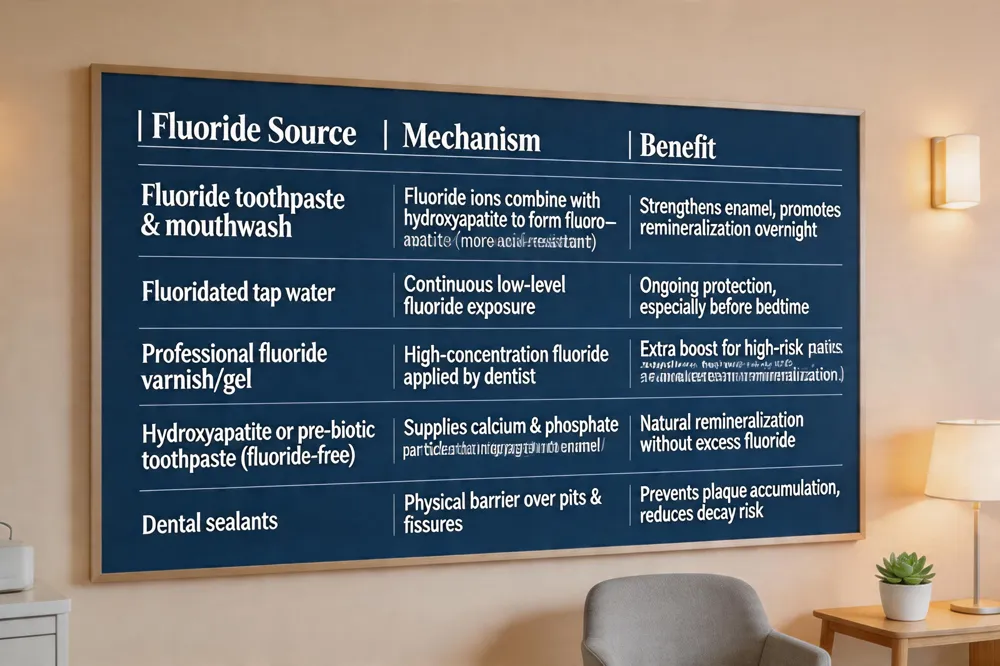 Fluoride toothpaste and mouthwash deliver fluoride ions that combine with tooth mineral to form fluoroapatite, a crystal structure far more resistant to acid attacks than natural hydroxyapatite. When you brush before bed, the fluoride stays on the enamel throughout the night, allowing it to repair early de‑mineralization while saliva flow is low. Fluoridated tap water provides a continuous, low‑level supply of fluoride in the evening, further enhancing this protective effect. For those seeking fluoride‑free options, hydroxyapatite or pre‑biotic toothpastes supply calcium and phosphate particles that can remineralize enamel without excess fluoride. Dental sealants act as a physical barrier over pit‑and‑fissure surfaces, preventing plaque from becoming trapped in grooves. Professional fluoride varnish or gel applied by a dentist gives an extra boost of fluoride, especially for high‑risk patients.
5 ways to prevent tooth decay
- Brush twice daily with fluoride toothpaste to remove plaque and strengthen enamel.
- Floss each day to clean between teeth where a brush can’t reach.
- Limit sugary and acidic foods and drinks; avoid sharing utensils that transfer cavity‑causing bacteria.
- Use a fluoride mouth rinse or ask your dentist about sealants for extra protection.
- Schedule regular dental check‑ups and cleanings for early risk assessment and preventive treatments.
How to prevent cavities naturally Brush twice daily with a soft‑bristled or electric brush, floss, and consider a fluoride‑free hydroxyapatite or pre‑biotic toothpaste. Rinse with an alcohol‑free essential‑oil mouthwash, try occasional oil‑pulling with coconut oil, chew sugar‑free xylitol gum, eat crunchy vegetables and cheese, stay hydrated, and keep up with routine dental visits.
How to prevent cavities in adults Maintain twice‑daily fluoride brushing and flossing, use a fluoride mouthwash, drink fluoridated water, and stimulate saliva with xylitol gum. Limit frequent sugary or acidic snacks, incorporate calcium‑rich foods, discuss sealants with your dentist, and attend regular check‑ups for early detection and professional fluoride applications.
Managing Stress‑Related Bruxism and Cortisol
| Factor | Impact on Teeth | Management |
|---|---|---|
| Elevated cortisol (stress) | Increases muscle tension → clenching/grinding (bruxism) | Relaxation techniques: deep‑breathing, meditation, yoga |
| Sleep disorders | Disrupted sleep patterns → more grinding episodes | Sleep hygiene, consistent schedule, possible CPAP if apnea |
| Bite misalignment | Uneven forces exacerbate wear | Orthodontic evaluation, occlusal adjustment |
| Custom‑fit nightguard | Shields enamel, prevents micro‑fractures, reduces jaw pain | Wear nightly if diagnosed with bruxism |
| Jaw muscle soreness / morning headaches | Signs of excessive grinding | Prompt dental evaluation, consider physical therapy |
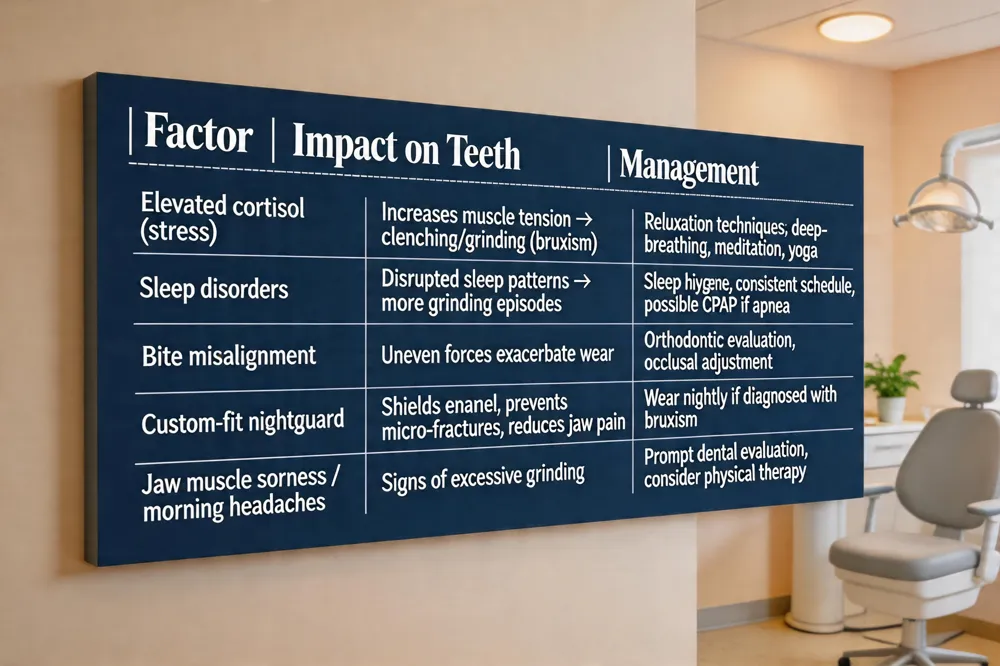 Elevated cortisol from stress can trigger unconscious teeth clenching or grinding (bruxism). While cortisol itself isn’t the direct cause, high stress levels often lead to the habit of grinding as a way to release tension. Other contributors include sleep disorders, certain medications, and bite misalignment. To lower cortisol spikes and reduce grinding, incorporate relaxation techniques such as deep‑breathing, meditation, or yoga, and maintain regular exercise and a balanced daily routine. A custom‑fit nightguard worn during sleep protects enamel from wear, prevents micro‑fractures, and reduces jaw pain associated with bruxism. If you notice sore jaw muscles, worn teeth, or morning headaches, schedule a dental evaluation. Your dentist can assess the grinding, recommend a nightguard, and discuss stress‑management strategies to safeguard your smile.
Diet, Hydration, and the Oral Microbiome
| Dietary Habit | Effect on Oral Microbiome | Practical Tip |
|---|---|---|
| High sugar/starch snacks after dinner | Fuels plaque bacteria → acid production → enamel erosion | Limit sugary/starchy foods after 6 pm; choose protein or veggies |
| Fluoridated water rinse before bed | Rinses debris, balances pH, deposits fluoride | Use a small glass of fluoridated tap water to rinse mouth |
| Chewing sugar‑free xylitol gum or crunchy veggies | Stimulates saliva, buffers acids, supplies calcium/phosphate | Chew 5‑10 min after meals or before bedtime |
| Oil‑pulling / essential‑oil mouthwash (pre‑floss) | Reduces harmful bacterial load | Perform before final fluoride rinse, not after |
| Dry mouth (xerostomia) | Decreases natural cleansing, raises cavity risk | Sip water throughout evening, avoid alcohol‑based rinses |
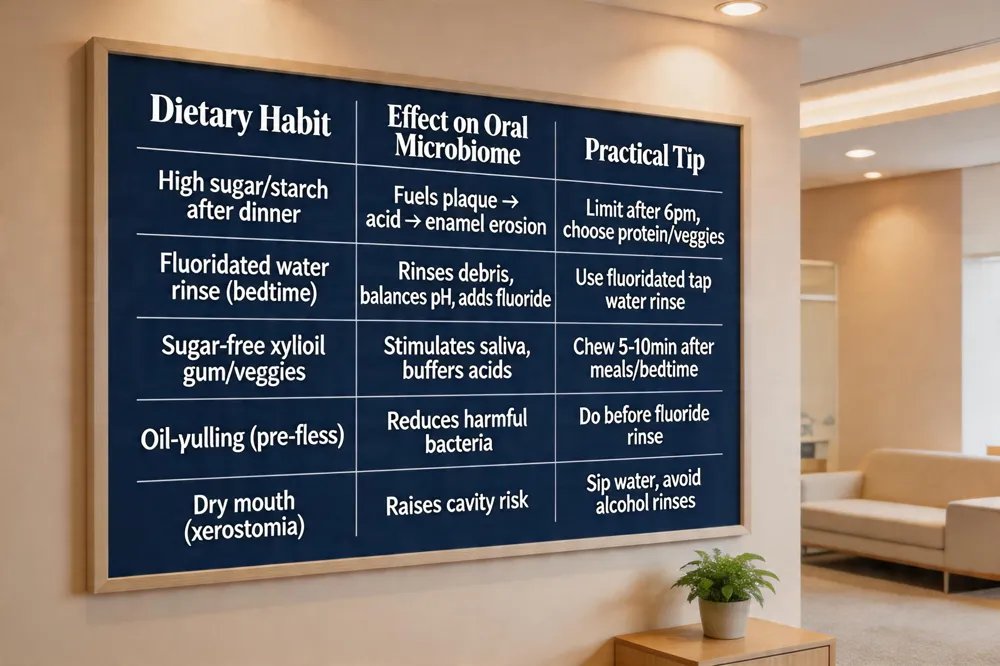 When you settle down for sleep, the mouth’s natural defenses weaken, so what you eat and drink matters more than ever. Sugar and starch are the favorite fuel for plaque bacteria; each bite provides fermentable carbs that the microbes convert into enamel‑eroding acids. By limiting sugary snacks and starchy foods after dinner, you cut the frequency of these nightly acid attacks.
Water is a simple, powerful ally. Rinsing with fluoridated tap water before bed washes away food particles, balances oral pH, and deposits fluoride that strengthens enamel. Staying hydrated also keeps saliva flowing, and saliva’s buffering capacity neutralizes any residual acids.
Chewing sugar‑free xylitol gum or munching on crunchy vegetables (carrots, celery) stimulates saliva production, which further washes away debris and supplies calcium and phosphate for remineralization. Some people find oil‑pulling or essential‑oil mouthwashes helpful for reducing harmful bacterial load, but they should be used before the final fluoride rinse.
Dry mouth (xerostomia) heightens cavity risk because saliva is the mouth’s natural cleanser.
Avoid alcohol‑based rinses and sip water throughout the evening to keep the tissues moist.
What causes cavities? Cavities develop when dental plaque—bacteria that thrive on sugars and starches—produces acids that dissolve enamel. Inadequate brushing, flossing, or rinsing leaves plaque in place, giving bacteria time to attack. Frequent sugary or acidic foods, dry mouth, deep pits, gum recession, and insufficient fluoride all contribute to demineralization that can progress into a cavity.
Can I kiss my boyfriend if he has cavities? The bacteria that cause cavities (e.g., Streptococcus mutans) can be transferred through saliva, so kissing may spread microbes. While the cavity itself isn’t contagious, it’s wise to practice good oral hygiene together and avoid kissing right after meals or sugary drinks until the cavity is treated. Once his decay is professionally cleaned and restored, kissing is safe.
Protecting Restorations: After Fillings and Sealants
| Care Step | Purpose | Instruction |
|---|---|---|
| Brush twice daily | Remove plaque around restoration margins | Soft‑bristled brush, fluoride toothpaste, 2 min, focus on gumline & edges |
| Floss before brushing | Dislodge particles from interproximal areas & restoration margins | Traditional floss, floss picks, or water flosser |
| Alcohol‑free fluoride mouthwash | Maintain fluoride on restoration surface overnight | No water rinse after use |
| Limit sugary/starchy snacks | Prevent acid attacks on weakened enamel near fillings | Avoid after dinner; choose low‑acid foods |
| Hydration | Support saliva flow for buffering | Keep a glass of water by bedside |
| Regular check‑ups (every 6 months) | Inspect restoration integrity, polish, reinforce sealants | Schedule with dentist; report sensitivity or discoloration promptly |
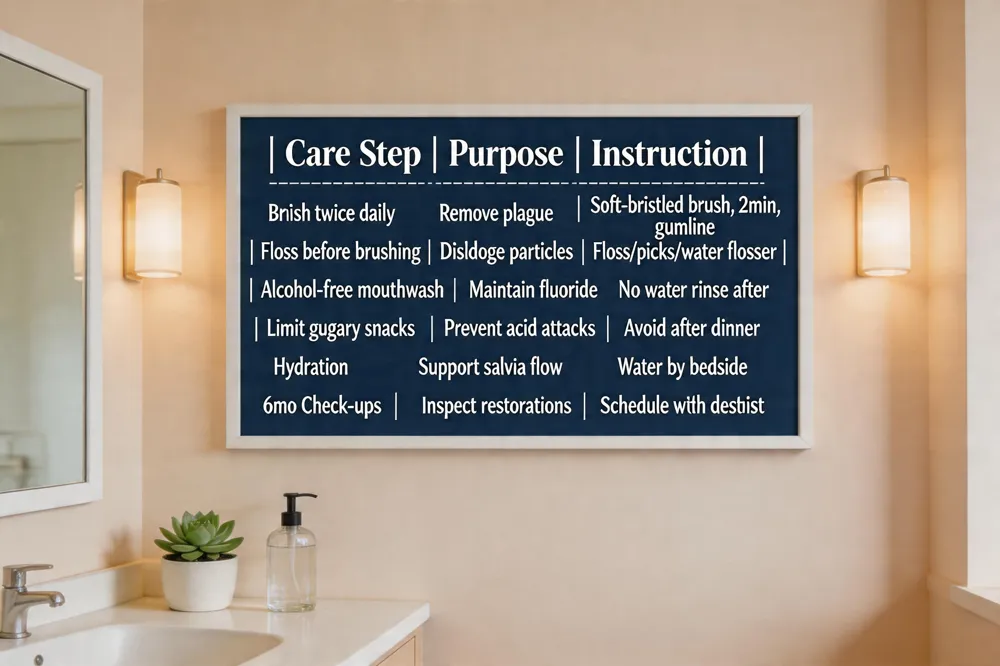 A filling or sealant is only as strong as the care you give it each night. Begin by brushing twice daily with a soft‑bristled brush and fluoride toothpaste for at least two minutes, paying special attention to the gumline and the edges of the restoration. Floss before brushing to pull food particles from between teeth and along the margin of the filling; this removes hidden plaque that could otherwise erode the bond. After brushing and flossing, rinse with an alcohol‑free fluoride mouthwash (or a prescription‑strength fluoride gel if your dentist recommends) and avoid rinsing with water so the fluoride stays on the tooth surface overnight. Limit sugary or starchy snacks, especially after dinner, because bacterial acids attack the weakened enamel around a filling. Keep a glass of water by the bedside to stay hydrated and help maintain saliva flow, which neutralizes acids while you sleep. Schedule regular check‑ups every six months for polishing, inspection, and possible sealant reinforcement, and contact your dentist promptly if you notice any new sensitivity, discoloration, or roughness near the restoration.
Quick Tips and the 3‑3‑3 Rule
| Rule Element | Recommendation | Rationale |
|---|---|---|
| Brush time | 3 minutes per session | Allows thorough coverage of all tooth surfaces |
| Frequency | 3 times a day (morning, after lunch, before bed) | Reduces plaque buildup between meals |
| Wait time after meals | ≥ 3 hours before brushing | Gives saliva time to neutralize acids and remineralize enamel |
| Toothbrush replacement | Every 3‑4 months or when bristles fray | Maintains effective cleaning, prevents bacterial buildup |
| Electric toothbrush with timer | Use for consistent 2‑3 minute brushing | Improves plaque removal compared to manual brushing |
| Nightly checklist/reminders | Brush → Floss → Rinse → Hydrate → Protect | Ensures consistent routine, reduces missed steps |
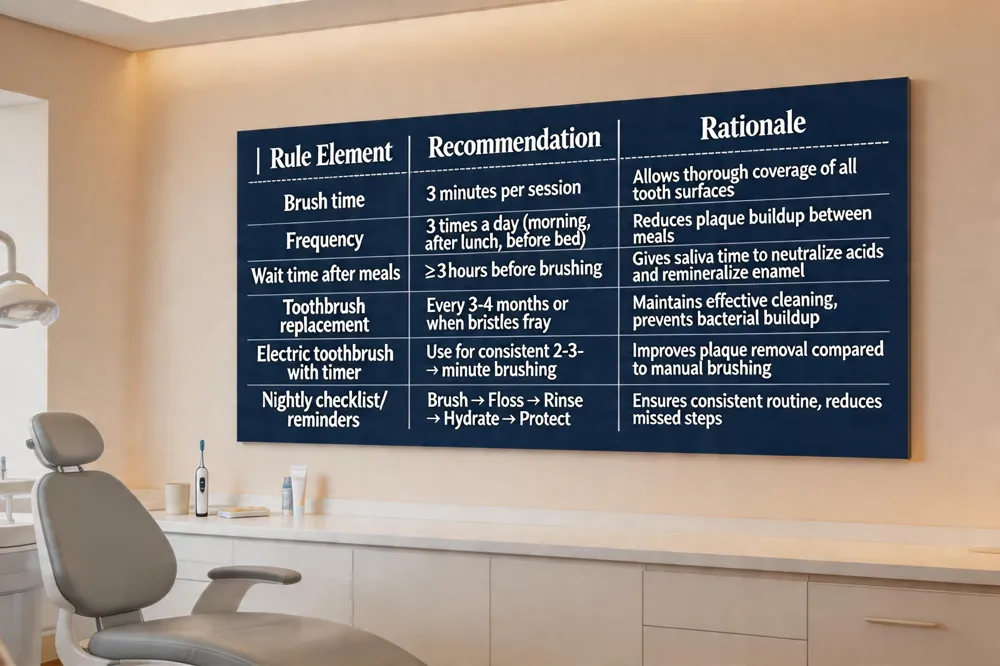 The 3‑3‑3 rule is a simple, patient‑friendly guideline: brush for three minutes, three times a day, and wait at least three hours after meals before brushing again. While not an official dental standard, it encourages thorough plaque removal and gives saliva time to remineralize enamel.
• Replace your toothbrush or electric brush head every three to four months, or sooner if the bristles look frayed.
• Choose an electric toothbrush with a built‑in timer; studies show it removes more plaque than manual brushes when used correctly.
• Use a nightly checklist or set phone reminders to keep your routine—brush, floss, rinse, stay hydrated—consistent each evening.
Stay Consistent, Stay Cavity‑Free
A solid nightly routine is the cornerstone of cavity prevention. Brush for two minutes with a soft‑bristle brush and fluoride toothpaste, covering every surface and the gumline, then floss to clear plaque from between teeth. Follow with an alcohol‑free fluoride mouthwash and a quick tongue scrape to reduce bacterial load. Finish by drinking a glass of water to keep the mouth moist and help rinse away residual sugars. Visiting Dr. Parrella’s Somerville office every six months lets the dentist spot early white‑spot lesions, apply professional fluoride, sealants, or a custom nightguard when needed. Remember, it’s the habit of nightly care—performed consistently over weeks and months—that offers the greatest protection against decay and supports overall oral health.