Why Oral Health Matters
Maintaining a healthy mouth does far more than keep your smile bright; it protects the whole body. Research shows that bacteria from plaque and gum disease can travel through the bloodstream, raising inflammation and increasing the risk of heart disease, stroke, diabetes, and even cognitive decline. By preventing periodontal infections, regular dental cleanings lower systemic inflammatory markers such as C‑reactive protein, helping the immune system focus on real threats. Good oral hygiene also reduces the chance of respiratory infections, pneumonia, and complications during pregnancy. Preventive care—brushing twice daily, flossing, and twice professional cleaning twice a year—removes stubborn tartar that home care cannot reach, catches early signs of cavities or oral cancer, and often prevents expensive restorative work later. Families who embrace these simple habits enjoy better overall wellness, fewer sick days, and greater confidence, turning routine dental visits into a cornerstone of lifelong health for the whole family.
The Oral‑Systemic Link Explained
| Mechanism | Description | Example Systemic Conditions |
|---|---|---|
| Bacterial translocation | Oral pathogens (e.g., Porphyromonas gingivalis) enter bloodstream during daily activities or when gums are inflamed, seeding distant organs and | inflammation. |
| Systemic inflammation | Inflamed gum tissue releases cytokines (IL‑6, TNF‑α) and C‑reactive protein, raising overall inflammatory markers and aggravating chronic disease processes. | Same as above; also rheumatoid arthritis, respiratory infections |
| Bidirectional risk factors | Overlapping factors (smoking, poor diet, obesity, stress) increase both periodontal and systemic disease risk. | • |
| Strategies: Oral hygiene + regular cleanings | Reduces bacterial load and systemic inflammation, improving overall health. | Improved glycemic control, lower cardiovascular risk, reduced progression of chronic diseases |
 The oral‑systemic link describes the two‑way connection between the health of your mouth—especially gums and teeth—and the health of the rest of your body. Inflammation and bacterial colonies in the mouth can travel into the bloodstream, creating a low‑grade inflammatory burden that contributes to systemic conditions such as heart disease, stroke, diabetes, Alzheimer’s disease, and even certain cancers. Conversely, chronic diseases like diabetes or cardiovascular illness can impair immune function, making gum disease more likely and worsening oral inflammation.
Two key mechanisms drive this relationship. First, bacterial translocation: pathogenic oral microbes (e.g., Porphyromonas gingivalis) can enter the circulation during everyday activities or when periodontal tissues are inflamed, seeding distant organs and triggering inflammation. Second, systemic inflammation: inflamed gum tissue releases cytokines (IL‑6, TNF‑α) and C‑reactive protein, which raise overall inflammatory markers and exacerbate chronic disease processes.
Because many risk factors—smoking, poor diet, obesity, stress—overlap for both periodontal disease and systemic illnesses, the link is bidirectional. Maintaining good oral hygiene, receiving regular professional cleanings, and treating gum disease can lower systemic inflammation, improve glycemic control in diabetics, and may reduce the risk of cardiovascular events. In short, a healthy mouth is an essential component of overall wellness and disease prevention.
Professional Cleanings: Benefits and Risks
| Benefit | Explanation |
|---|---|
| Plaque & tartar removal | Eliminates biofilm that brushing/flossing miss, reducing cavities and gum disease. |
| Early disease detection | Clinician can spot decay, gum inflammation, or oral cancer before symptoms appear. |
| Fluoride treatment | Strengthens enamel, making bacteria adhesion harder. |
| Systemic inflammation reduction | Lowered gum inflammation can improve glycemic control and cardiovascular health. |
| Risk / Discomfort | Details |
|---|---|
| Temporary sensitivity | Irritation of inflamed gums or exposed dentin can cause brief sensitivity to hot, cold, or sweet foods. |
| Mild gum bleeding & soreness | Common after scaling; usually resolves within a few days. |
| Over‑cleaning | Rarely, excessive removal can lead to enamel wear or gum recession. |
| Post‑procedure swelling | Deep periodontal work may cause short‑term swelling or discomfort. |
 Scaling and polishing remove plaque and hardened tartar that brushing and flossing miss, cutting the risk of cavities, gum disease and systemic inflammation. The procedure also lets the clinician spot early decay, gum inflammation or even oral cancer, and a fluoride treatment can strengthen enamel and make it harder for bacteria to adhere.
Cleaning can be uncomfortable because the instruments irritate inflamed gums and may expose tiny areas of dentin, leading to temporary sensitivity to hot, cold or sweet foods. Mild gum bleeding, brief soreness and a short‑term increase in tooth sensitivity are common but usually resolve within a few days.
Most professionals recommend a cleaning at least twice a year, but frequency should be balanced with individual risk factors such as diabetes, smoking or a history of periodontal disease. Patients with low risk may space visits farther apart, while high‑risk individuals benefit from more frequent care.
Is professional teeth cleaning from a dentist good or bad?
Professional cleanings are generally good because they remove plaque and tartar, reduce disease risk, and allow early detection of problems; the benefits outweigh the modest cost and short‑term discomfort.
Why does dental cleaning sometimes hurt?
Discomfort arises from gum irritation and exposure of sensitive tooth structures during scaling; the pain is usually brief and eases as the gums heal.
What are the disadvantages of professional teeth cleaning?
Temporary gum bleeding, tooth sensitivity and mild soreness are possible; over‑cleaning can cause enamel wear or gum recession, and deep periodontal work may bring brief swelling or pain. Follow post‑visit instructions to minimize these effects.
Frequency and Recommendations
| Risk Category | Recommended Cleaning Interval |
|---|---|
| Low risk (excellent hygiene, no systemic disease) | Every 12 months (optional) |
| Standard risk (average adult) | Every 6 months (ADA 2‑2‑2 rule) |
| High risk (diabetes, heart disease, smoker, history of periodontal disease) | Every 3–4 months |
| Very high risk (pregnant, immunocompromised, severe periodontitis) | Monthly or as directed by dentist |
Key points:
- The “2‑year rule” is a myth; delaying care can allow silent disease progression.
- Personalization is essential—discuss lifestyle, health conditions, and risk factors with your dentist.
- Consistent professional care complements daily brushing and flossing for optimal oral and systemic health.
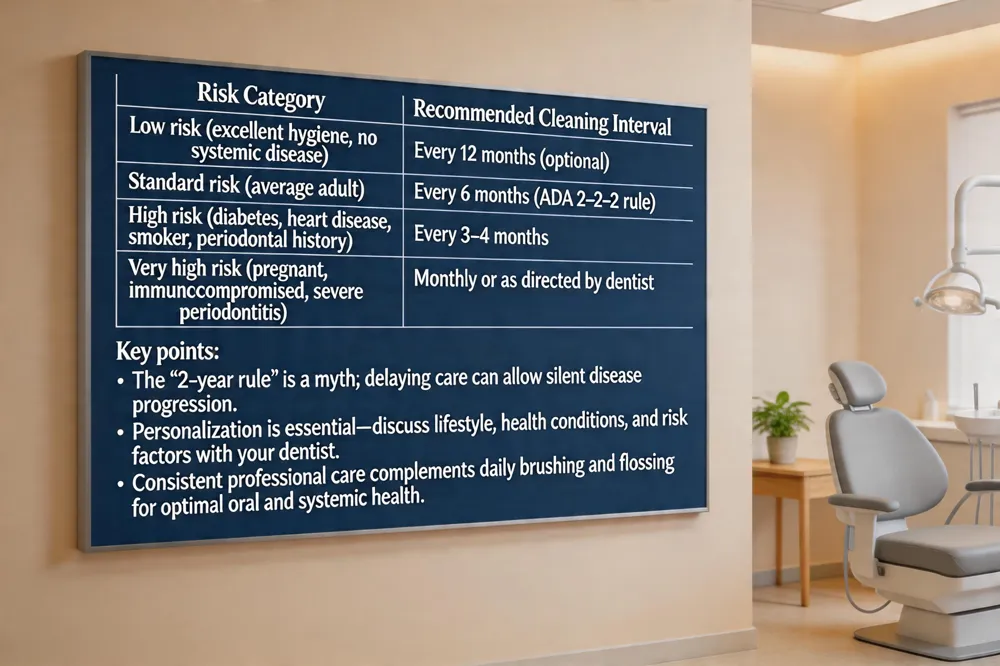 The American Dental Association’s 2‑2‑2 rule—brush twice a day for two minutes and see the dentist twice a year—remains the backbone of preventive oral care. Most patients benefit from a professional cleaning every six months, which helps remove plaque and tartar that home care can’t eliminate, reduces the risk of cavities and gum disease, and allows early detection of oral cancer or other problems. The popular “2‑year rule” is a myth; waiting that long can let decay or periodontal inflammation develop unnoticed, especially in children or those with chronic health issues. Cleaning intervals should be personalized: individuals with diabetes, heart disease, smoking habits, or a history of cavities may need quarterly or even monthly visits, while those with excellent hygiene and low risk might be fine with an annual check‑up. Discuss your health, lifestyle, and any risk factors with Dr. Parrella to tailor a cleaning schedule that keeps your smile healthy and your overall health protected.
Systemic Health Gains from Regular Cleanings
| Health Domain | Benefit of Regular Cleanings |
|---|---|
| Cardiovascular | Reduced gum inflammation lowers systemic inflammatory load, decreasing risk of atherosclerosis, heart disease, and stroke. |
| Metabolic (Diabetes) | Healthier gums improve insulin sensitivity and glycemic control, stabilizing blood‑sugar levels. |
| Respiratory | Fewer oral microbes aspirated into lungs → lower risk of pneumonia and other infections. |
| Pregnancy | Lower incidence of preterm birth and low‑birth‑weight infants due to reduced systemic inflammation. |
| Overall inflammation | Decrease in circulating cytokines (IL‑6, TNF‑α) and C‑reactive protein, benefiting any chronic inflammatory condition. |
Integrating dental check‑ups with primary‑care visits enables early detection and a holistic approach to health.
 Regular dental cleanings do more than brighten a smile—they protect the whole body. By removing plaque and tartar, cleanings prevent gum inflammation that can let harmful bacteria slip into the bloodstream. This lowers the risk of cardiovascular disease and stroke, and reduces respiratory infections that arise when oral microbes are aspirated into the lungs. For people with diabetes, healthier gums improve insulin sensitivity and glycemic control, helping to keep blood‑sugar levels stable. Pregnant women also benefit; clean gums lower the chance of preterm birth and low‑birth‑weight infants.
Oral health is tightly linked to chronic diseases. Persistent gum inflammation creates a systemic inflammatory load that can worsen conditions such as heart disease, diabetes, and rheumatoid arthritis. Bacteria from periodontitis can travel to distant organs, contributing to atherosclerosis and other complications. The relationship is bidirectional: chronic illnesses can impair oral defenses, while untreated gum disease can make chronic disease management harder. Integrating dental check‑ups with primary‑care visits enables early detection and promotes overall well‑being.
Lifestyle, Diet, and the Oral Microbiome
| Dietary Pattern | Effect on Oral Microbiome | Resulting Oral Health Impact |
|---|---|---|
| High added sugars & refined carbs | Fuels acid‑producing bacteria (Streptococcus mutans) and pathogenic P. gingivalis. | Increased cavities, gum disease, enamel erosion. |
| Acidic drinks (soda, citrus juices) | Lowers oral pH, promoting demineralization and pathogenic growth. | Enamel erosion, heightened sensitivity. |
| Fiber‑rich vegetables & fruits | Provide prebiotic substrates for beneficial bacteria (Streptococcus sanguinis). | Balanced microbiome, reduced inflammation. |
| Dairy & calcium‑rich foods | Supplies minerals for enamel remineralization; may favor health‑promoting microbes. | Stronger enamel, lower decay risk. |
| Lean protein & omega‑3 fatty acids | Supports immune function and may modulate inflammatory response in gums. | Improved gum health, reduced systemic inflammation. |
Post‑cleaning shift: After professional cleaning, the oral environment favors beneficial bacteria, while pathogenic species decline, lowering both local inflammation and systemic bacterial load.
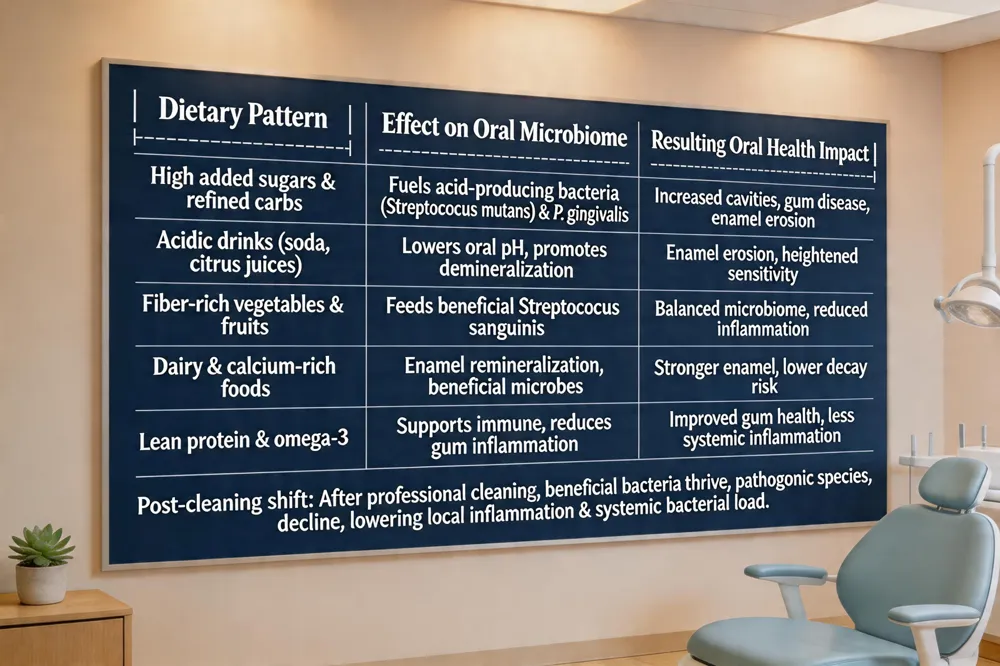 Every bite you take shapes the tiny ecosystem on your teeth and gums. Sugar‑rich and acidic foods flood the mouth with fermentable carbs and low pH, encouraging acid‑producing bacteria like Streptococcus mutans and weakening enamel, which fuels cavities and gum disease. In contrast, vegetables, fiber, dairy and lean protein provide prebiotic substrates for beneficial microbes, helping maintain a balanced oral microbiome.
Professional dental cleaning removes plaque and tartar that brushing cannot reach, disrupting the harmful biofilm. After a cleaning, the oral environment shifts toward health‑promoting bacteria (e.g., Streptococcus sanguinis) while pathogenic species such as Porphyromonas gingivalis decline, reducing inflammation and systemic bacterial load.
Which dietary patterns most disrupt oral microbiota balance? Diets high in added sugars, refined carbs and acidic drinks promote pathogenic growth and enamel erosion. What are the advantages of regular teeth cleaning? Cleanings remove plaque, prevent disease, lower systemic inflammation, freshen breath and allow early detection of serious conditions, protecting both oral and overall health.
Take the First Step Toward a Healthier You
A bright, healthy smile begins with a professional dental cleaning—schedule yours today at Dr. Parrella Family Practice. Our team believes in compassionate, family‑focused care, treating every patient as a member of our community. By removing plaque and tartar, we not only prevent cavities and gum disease but also lower systemic inflammation that can affect heart health, diabetes and even pregnancy outcomes. Regular cleanings protect the whole family and contribute to a healthier neighborhood, because a clean mouth reduces the spread of harmful bacteria. Call now to book your appointment and join a tradition of oral‑health stewardship.