Why Fluoride Matters at Every Age
Fluoride is a naturally occurring mineral that helps enamel repair after acid attacks. By pulling calcium and phosphate from saliva into enamel, it forms more‑acid‑resistant fluorapatite, reversing early lesions and making teeth harder to dissolve. Community water fluoridation, set at about 0.7 ppm, delivers fluoride to millions, cutting caries rates by roughly 25 % and narrowing oral‑health gaps. In the dental office, professionals apply concentrated gel, foam or varnish for a few minutes; the high dose stays on the surface for hours, providing a therapeutic boost that over‑the‑counter toothpaste can’t match. Beyond preventing cavities, fluoride reduces sensitivity, slows demineralization around braces or crowns, and lowers the need for costly restorations, supporting lifelong oral health for family member.
Beyond Cavity Prevention: The Broader Health Impacts of Fluoride
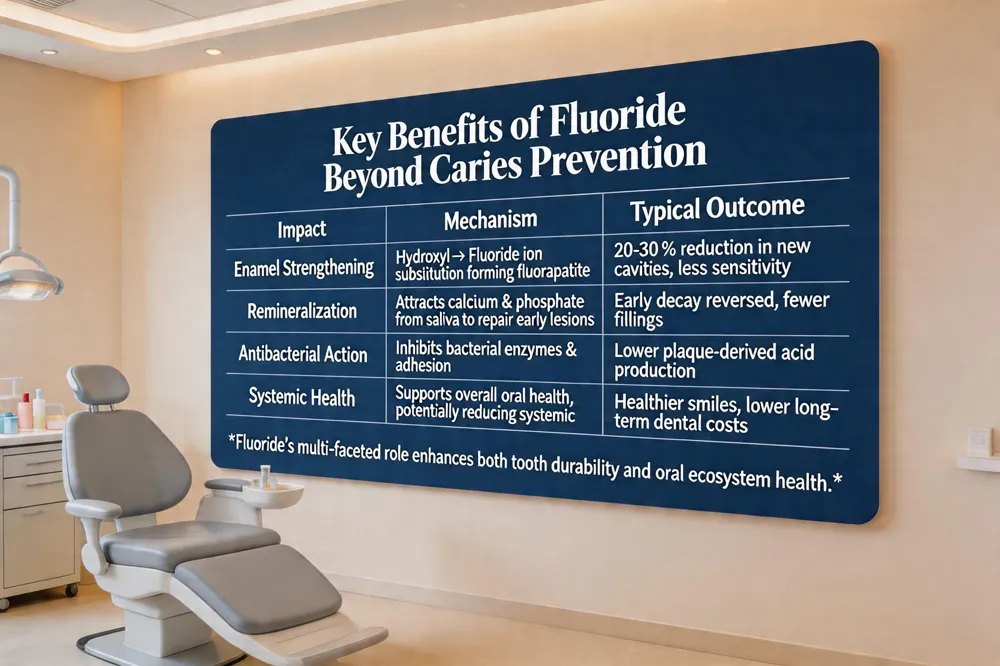
Key Benefits of Fluoride Beyond Caries Prevention
| Impact | Mechanism | Typical Outcome |
|---|---|---|
| Enamel Strengthening | Hydroxyl → Fluoride ion substitution forming fluorapatite | 20‑30 % reduction in new cavities, less sensitivity |
| Remineralization | Attracts calcium & phosphate from saliva to repair early lesions | Early decay reversed, fewer fillings |
| Antibacterial Action | Inhibits bacterial enzymes & adhesion | Lower plaque‑derived acid production |
| Systemic Health | Supports overall oral health, potentially reducing systemic inflammation | Healthier smiles, lower long‑term dental costs |
Fluoride’s multi‑faceted role enhances both tooth durability and oral ecosystem health.
 Fluoride strengthens enamel by replacing hydroxyl ions in hydroxyapatite with fluoride ions, creating the more acid‑resistant mineral fluorapatite. This crystalline substitution makes enamel harder and less soluble when plaque bacteria produce acid. At the same time, fluoride attracts calcium and phosphate from saliva, allowing these minerals to refill tiny lesions and reverse early decay.
Fluoride’s antibacterial properties further protect teeth. It interferes with bacterial enzymes, lowering the production of plaque‑derived acid and reducing the ability of cariogenic bacteria to adhere to tooth surfaces.
Using fluoride toothpaste twice daily delivers low‑level fluoride continuously to the mouth. The toothpaste replenishes fluoride in saliva, sustains remineralization, and keeps enamel resistant to acid attacks throughout the day, resulting in fewer fillings, reduced sensitivity, and stronger teeth.
Over the long term, regular fluoride exposure—through toothpaste, professional varnish, gel, or community water—supports lasting oral health. Studies show a 20‑30 % reduction in new cavities, lower sensitivity, and decreased need for costly restorations, helping families maintain healthy smiles for life.
Professional Applications: What Happens During a Routine Visit?
Snapshot of In‑Office Fluoride Treatments
| Form | Concentration (ppm) | Application Time | Primary Use |
|---|---|---|---|
| Varnish | ~22,600 ppm (5 % NaF) | ≤5 min (painted) | High‑dose, long‑release remineralization |
| Gel | ~1,000 ppm (0.1 % NaF) | 1‑4 min (tray) | Quick high‑dose exposure |
| Foam | ~1,000 ppm (0.1 % NaF) | 1‑4 min (tray) | Similar to gel, easier for some patients |
Cost & Coverage – Typical visit $20‑$55, often covered as a preventive service..\nBenefit – Reduces future restorative costs by hundreds of dollars.
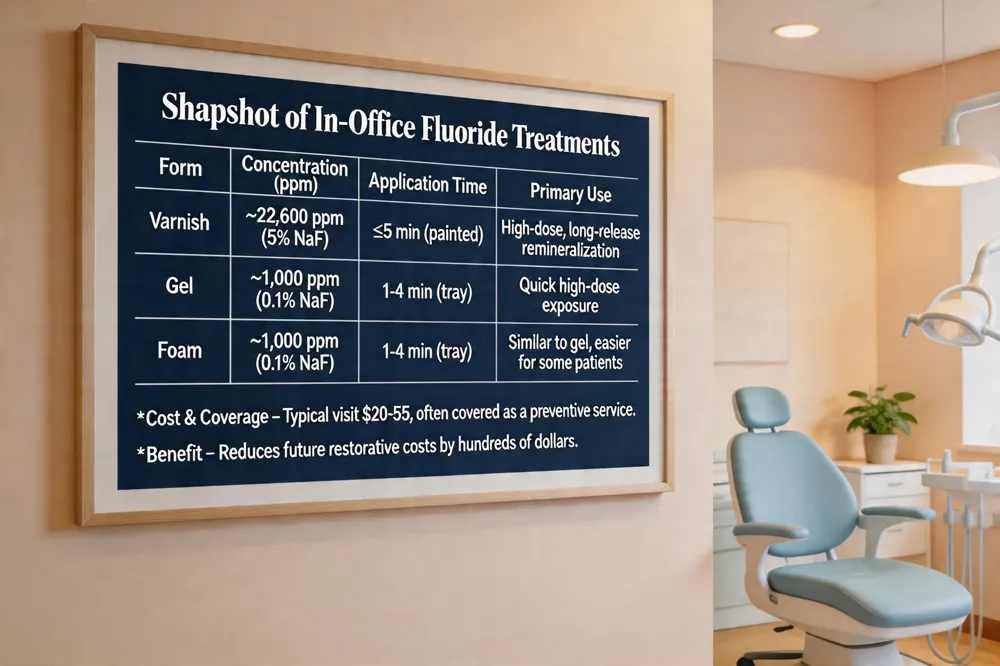 When you sit in the dentist’s chair, the clinician can apply fluoride in three common forms—varnish, gel, or foam. Varnish is a quick‑dry, high‑concentration paste (about 5 % sodium fluoride, ≈22,600 ppm) that is painted on the teeth and stays for several hours, releasing fluoride slowly to remineralize early lesions. Gel or foam is placed in a custom‑fit tray that fits over the teeth for 1‑4 minutes; the tray is then removed and the patient spits out the excess. All three applications take less than five minutes and are painless, making them an easy addition to a routine cleaning.
Professional treatments are cost‑effective: a single office visit usually costs $20‑$55 and many dental plans cover it as a preventive service. By preventing new cavities, these treatments can save patients hundreds of dollars in future restorative work.
For patients who need extra protection between visits, home‑use options such as prescription‑strength gels, foams, mouth rinses, or fluoride toothpaste are available under a dentist’s guidance. These products are applied with a tray or swished for the recommended time, then the patient avoids eating or drinking for about 30 minutes to allow optimal uptake. Even with a modest expense, regular fluoride use dramatically reduces the risk of decay and helps maintain strong, healthy enamel for the whole family.
Addressing Common Concerns and Misconceptions
Clarifying Fluoride Myths
| Concern | Evidence‑Based Answer |
|---|---|
| Brain Development Risk | No reliable link at recommended exposure (0.7 mg/L water, low‑dose toothpaste). IQ effects only at >1.5 mg/L. |
| Systemic Toxicity | CDC, ADA, WHO endorse fluoridation as a top public‑health achievement with minimal risk. |
| Dental Fluorosis | Cosmetic white streaks from excessive ingestion in early childhood; preventable with pea‑sized toothpaste amount. |
| Overall Safety | Properly controlled fluoride provides far greater benefits than its well‑understood, minimal risks. |
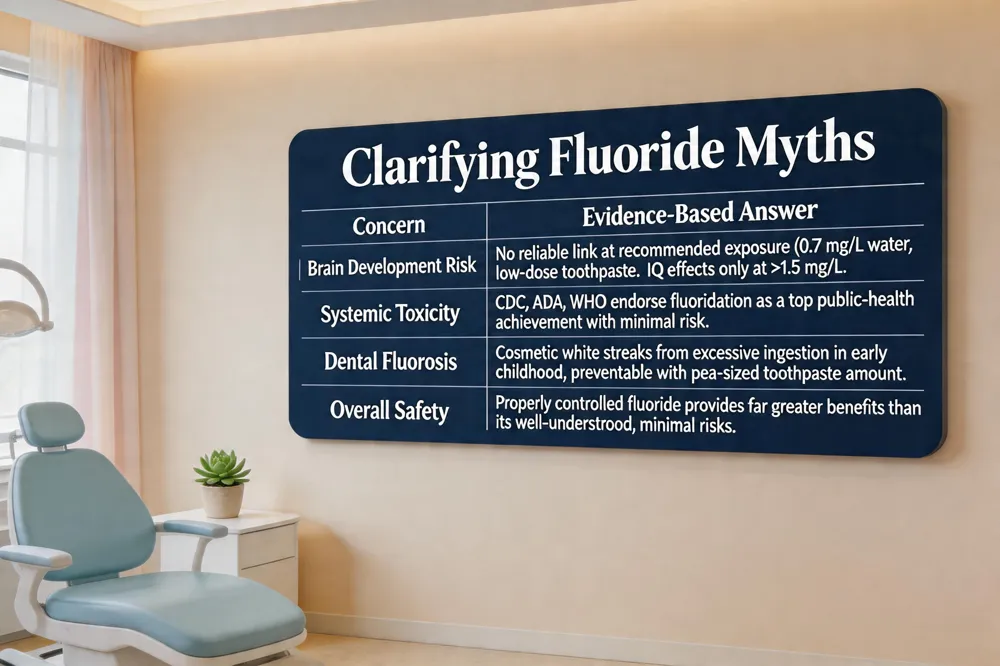 Fluoride is a naturally occurring mineral that, at the levels recommended by public‑health agencies (0.7 mg/L in community water, low‑dose toothpaste), is safe for children and adults. Extensive research, including U.S. cohort studies, shows no reliable link between these low exposures and adverse brain development; modest IQ changes are only observed at much higher concentrations (>1.5 mg/L).
The so‑called "fluoride controversy" often stems from misinformation. The CDC, ADA, and WHO all endorse fluoridation as one of the ten great public‑health achievements because it consistently reduces dental caries by 20‑40 % without serious health risks.
The primary downside is dental fluorosis, a cosmetic condition that appears as faint white streaks when excessive fluoride is swallowed during the years of tooth formation (typically under age 8). This is preventable with a pea‑sized toothpaste amount for children and supervision while brushing.
Professional fluoride treatments (gel, foam, varnish) delivered in the dental office provide a higher concentration for at‑risk patients, further strengthening enamel and reducing sensitivity, while remaining safe when applied as directed. Overall, the benefits of properly controlled fluoride far outweigh the minimal, well‑understood risks.
Special Populations and Tailored Care
Fluoride Guidance for Vulnerable Groups
| Population | Recommended Product | Reason |
|---|---|---|
| Children < 6 yr | Pea‑sized fluoride toothpaste; rice‑grain for toddlers | Minimize swallow‑related fluorosis |
| High‑Risk Adults (dry mouth, orthodontics, prior cavities) | Prescription‑strength gels/varnish every 6 mo | 25‑30 % caries reduction |
| Patients with Kidney Disease or Fluoride Sensitivity | Non‑fluoride alternatives under dentist guidance | Avoid systemic accumulation |
| General Population | 1,000‑1,500 ppm toothpaste, alcohol‑free mouthwash | Adequate daily protection |
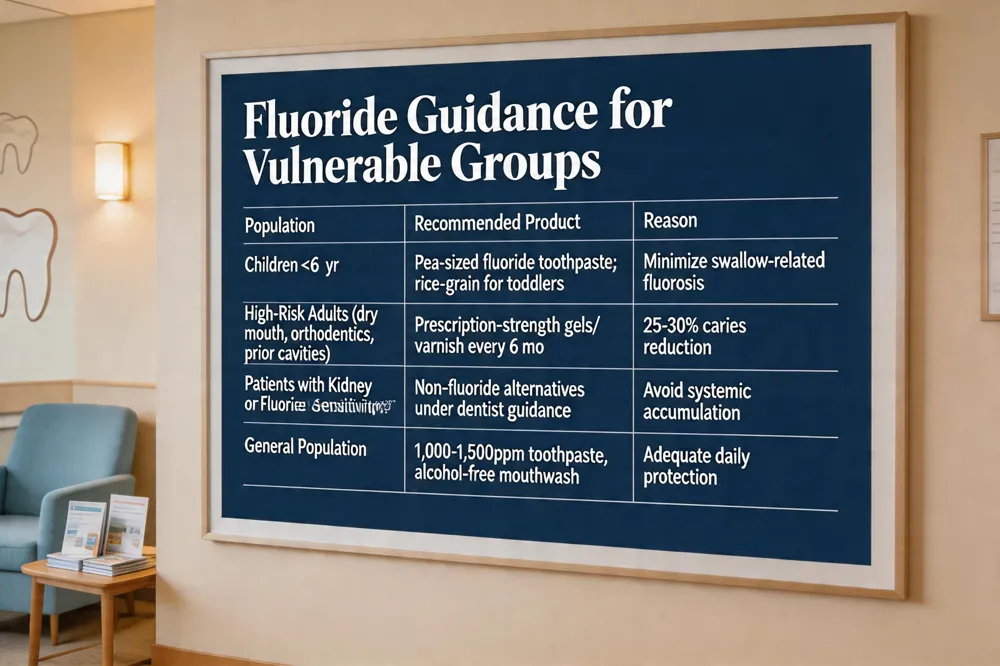 Children under six years old are especially vulnerable to dental fluorosis because their enamel is still forming. The American Dental Association and CDC advise a pea‑sized amount of fluoride toothpaste for ages 3‑6 and a rice‑grain amount for younger toddlers, and they recommend that fluoride mouth rinses be used only under professional guidance. High‑risk adults—those with dry mouth (xerostomia), gum disease, orthodontic appliances, or a history of cavities—gain extra protection from professional fluoride varnish, gel, or foam, which can reduce new caries by 25‑30 % when applied every six months.
Why avoid fluoride in toothpaste? Very young children may swallow toothpaste, increasing the risk of fluorosis and, in rare cases, systemic effects such as gut‑microbiome disruption or reduced IQ. Patients with kidney disease or specific sensitivities may also be advised to limit fluoride intake and discuss alternative, non‑fluoride oral‑care options with their dentist.
Why do dentists stop using fluoride? When a patient’s risk profile is low, systemic fluoride from water and daily toothpaste already provides adequate protection, or when excess exposure has caused fluorosis or an allergy, clinicians may discontinue topical applications to avoid unnecessary systemic absorption.
Fluoride mouthwash offers a convenient way to deliver fluoride to hard‑to‑reach areas, helping remineralize early lesions and lower cavity risk. It should be used as directed—typically by patients over six years old and preferably an alcohol‑free formula—to prevent irritation while maximizing cariostatic benefits.
Integrating Fluoride Into Daily Oral Hygiene
Daily Fluoride Routine at a Glance
| Step | Product | Frequency | Key Note |
|---|---|---|---|
| Brush | Fluoride toothpaste (1,000‑1,500 ppm) | Twice daily | Use pea‑sized amount for children |
| Floss | Non‑fluoride (optional) | Once daily | Removes plaque between teeth |
| Mouthwash | Alcohol‑free fluoride rinse | Once daily (post‑brush) | Wait ≥30 min after professional application |
| Professional Care | Varnish/Gel/Foam | Every 6 months (or as advised) | Higher concentration for remineralization |
Cost‑Effectiveness – $5‑$30 OTC products + $20‑$50 office visits save hundreds in future restorations.
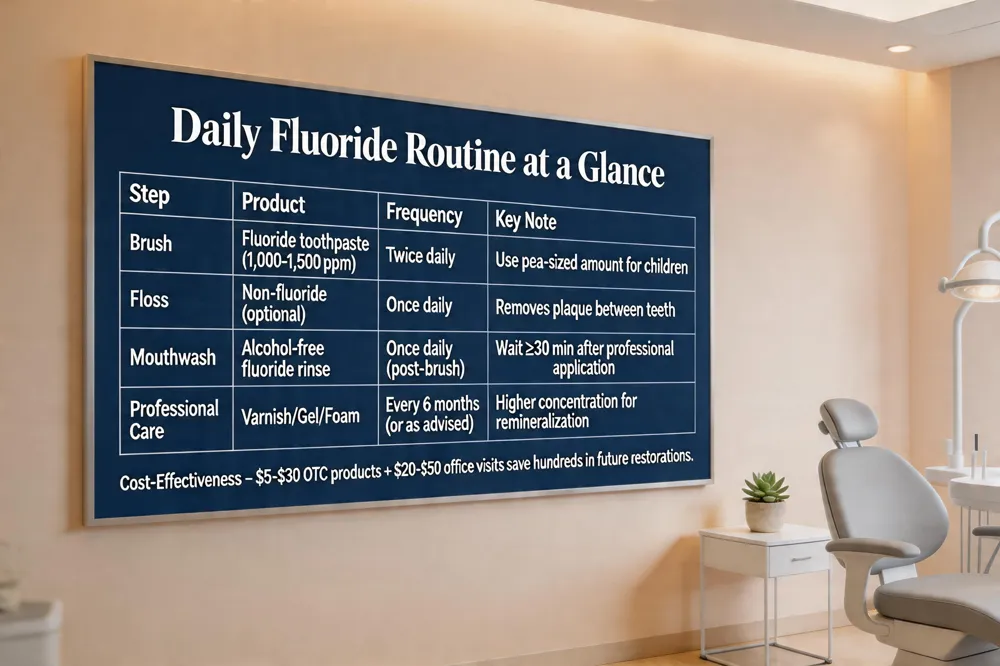 Choosing the right fluoride product starts with understanding your risk level. For most families, a fluoride toothpaste with 1,000‑1,500 ppm is sufficient for daily use, while high‑risk patients may benefit from prescription‑strength gels, rinses, or varnishes recommended by their dentist. Professional fluoride applications—gel, foam, or varnish—are applied in under five minutes during a routine cleaning and deliver a higher concentration that can remineralize early lesions and reduce new cavities by about 25‑30 %.
Balancing office and at‑home care is simple: brush twice daily with fluoride toothpaste, floss, and consider a fluoride mouthwash (alcohol‑free, used as directed) for extra protection, especially if you have braces or dry mouth. Follow your dentist’s guidance on at‑home treatments such as tray‑based gels or varnish, and avoid brushing for 30 minutes after application to maximize uptake.
Maintaining optimal exposure means consistent, low‑level fluoride from toothpaste, water (0.7 ppm), and periodic professional treatments. This approach is cost‑effective—professional visits cost $20‑$50 and often are covered by insurance, while over‑the‑counter products range $5‑$30—saving you hundreds of dollars in future restorative work.
Putting It All Together for a Healthier Smile
Fluoride does more than stop cavities – it remineralizes early lesions, dulls tooth sensitivity, and helps protect crowns, bridges and braces from acid attack. Regular professional visits let the dentist apply high‑concentration gel, foam or varnish in under five minutes, delivering a therapeutic dose that toothpaste cannot match. These quick, painless applications cut the risk of new caries by 25‑30 % and can even reverse the first signs of decay. At Dr. Parrella’s family‑run clinic in Somerville, each patient receives a personalized fluoride plan based on age, oral‑health history, dry‑mouth status and orthodontic appliances. By scheduling a check‑up every six months (or more often for high‑risk cases), families ensure lasting protection and a healthier, brighter smile.