Why Preventive Dentistry Matters
Preventive dentistry is the foundation of a healthy smile and a healthier body. Research shows that gum disease and untreated cavities are linked to heart disease, diabetes, and respiratory infections, so keeping teeth clean protects overall wellness. Early interventions—regular check‑ups, cleanings, fluoride or sealants—are far less costly than treating advanced decay or gum surgery, saving families thousands of dollars over a lifetime. For families in Somerville, a simple routine of twice‑daily brushing with fluoride toothpaste, daily flossing, and a balanced, low‑sugar diet reduces risk for every member. Community resources such as the Somerville Health Center, local dental schools, and free sealant programs make affordable preventive care accessible to all ages.
Daily Oral Hygiene: Building Strong Foundations
Daily Oral Hygiene Summary
| Step | Action | Details |
|---|---|---|
| 1 | Rinse | Use alcohol‑free antibacterial or fluoride mouthwash before flossing |
| 2 | Floss | Interdental cleaning to remove food particles and plaque |
| 3 | Brush | Soft‑bristle brush, 45° angle, gentle circular motions, 2 min, fluoride toothpaste |
| 4 | Tongue Clean | Brush or scrape tongue to reduce bacterial load |
| 5 | Final Rinse | Optional second mouthwash for fresh breath |
Key Products
- Fluoride toothpaste
- Soft‑bristle brush (replace every 3‑4 months)
- Dental floss or water flosser
- Antimicrobial mouthwash (alcohol‑free)
- Sugar‑free gum (optional)
Benefits
- Prevents cavities & gum disease
- Reduces bad breath
- Lowers systemic risk (heart disease, diabetes)
- Saves on costly dental work
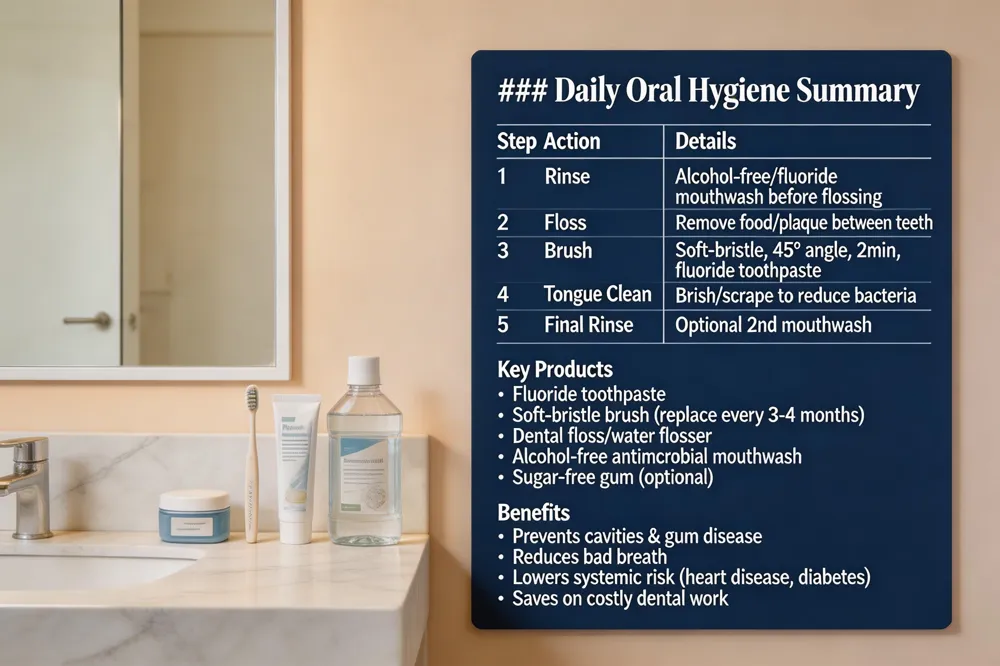 Effective brushing uses a soft‑bristle head at a 45° angle, gentle circular motions for two minutes, and a fluoride toothpaste to remove plaque and strengthen enamel. Flossing or interdental cleaning daily eliminates food particles from between teeth and below the gum line, preventing gum disease. An alcohol‑free antibacterial or fluoride mouthwash after brushing provides extra protection and freshens breath. A diet rich in calcium‑filled foods, crunchy vegetables, lean protein, and plenty of fluoridated water supports enamel health, while limiting sugary and acidic snacks reduces acid attacks. Choose ADA‑approved products—soft‑bristle brushes replaced every three to four months, fluoride toothpaste, floss, and an antimicrobial mouthwash. Sequence your routine: rinse, floss, brush all surfaces, clean the tongue, then finish with a mouthwash.
5 ways to care for your teeth: brush twice daily, floss daily, rinse with antibacterial or fluoride mouthwash, eat a balanced low‑sugar diet and stay hydrated, and see the dentist twice a year.
10 ways to keep teeth healthy: add the five steps above, replace your brush regularly, limit tobacco and alcohol, wear a mouthguard for sports or grinding, chew sugar‑free gum to boost saliva, and address any gum concerns promptly.
Oral hygiene definition: the systematic practice of keeping the mouth clean by removing plaque through brushing, flossing, and professional cleanings, which prevents cavities, gum disease, and supports overall health.
Routine order: start with a gentle mouthwash, floss, brush all surfaces for two minutes, clean the tongue, then finish with a second mouthwash rinse.
6 ways to care for your teeth: brush with fluoride toothpaste, floss daily, use fluoride mouthwash, limit sugary/acidic foods, schedule regular dental visits, and quit tobacco.
Home teeth‑care tips: brush twice daily, floss daily, stay hydrated with fluoridated water, chew sugar‑free gum, avoid tobacco/alcohol, and protect teeth with a mouthguard when needed.
Oral care products: fluoride toothpaste, soft‑bristle brush (replace every 3‑4 months), floss or water flosser, antimicrobial mouthwash, and sugar‑free gum.
Healthy teeth and gums: maintain consistent brushing/flossing, eat a low‑sugar diet, stay hydrated, avoid tobacco, and visit the dentist regularly.
Benefits of oral hygiene: prevents cavities, gum disease, bad breath, and reduces systemic risks such as heart disease and diabetes, while saving on costly dental work.
Dental tips and tricks: use a timer, brush at a 45° angle, replace brushes regularly, floss before brushing, limit sugar, stay hydrated, avoid tobacco, and keep up with biannual dental check‑ups.
3‑3‑3 rule: brush three times a day for three minutes each, finish eating three hours before bed; however, evidence‑based practice recommends brushing twice daily for two minutes.
5 proper steps for oral care: floss, brush with fluoride toothpaste, rinse with antimicrobial mouthwash, schedule professional cleanings every six months, and support oral health with a balanced diet.
2‑2‑2 rule: brush twice daily for two minutes and see the dentist twice a year.
Professional Preventive Services and Costs
Preventive Dental Services & Typical Costs
| Service | Average Cost (USD) | Common Range | Insurance Impact |
|---|---|---|---|
| Exam + Cleaning | $203 (national average) | $75‑$200 per visit | Co‑pay or reduced fee |
| Digital X‑rays | $20‑$50 | $20‑$50 | Often covered partially |
| Fluoride Varnish/Sealant | $30‑$60 | $30‑$60 | Usually covered for children |
| Professional Sealants (molars) | $30‑$60 per tooth | $30‑$60 | Covered under many plans |
Frequency
- Comprehensive exam & cleaning: every 6 months (or quarterly for high‑risk patients)
- X‑rays: annually or as needed
- Fluoride/Sealant: once per year or per dentist recommendation
Cost‑Saving Tips
- Use dental insurance co‑pays
- Seek sliding‑scale community clinics
- Keep up with bi‑annual visits to avoid expensive restorations
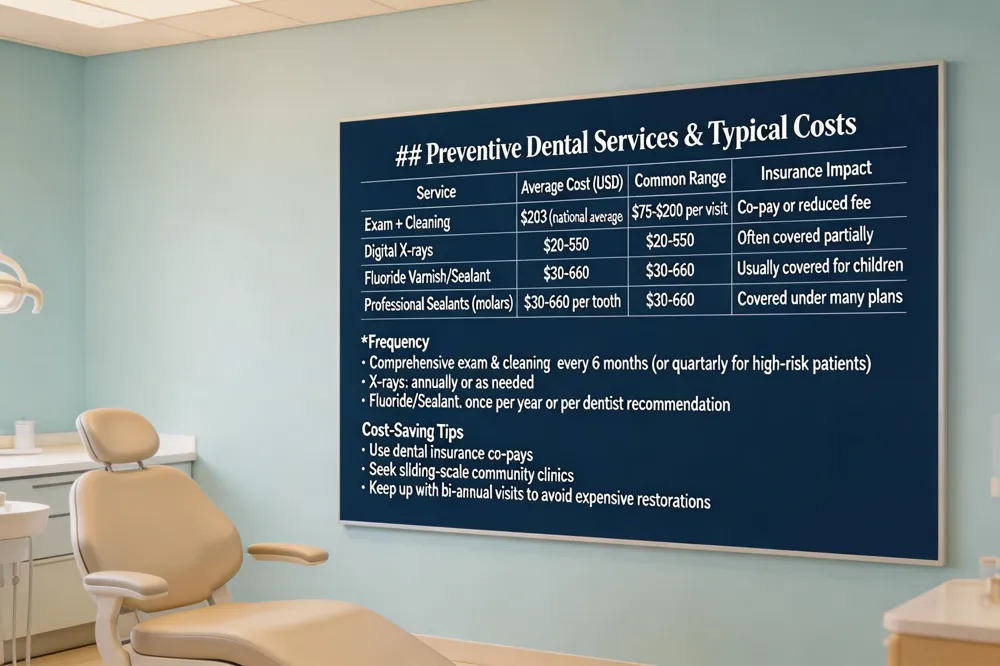 Preventive dentistry is the proactive branch of oral care that keeps teeth and gums healthy before disease starts. A typical preventive visit includes a comprehensive oral exam, professional cleaning (prophylaxis), and diagnostic digital X‑rays to spot hidden decay. Most offices add a fluoride varnish or, when appropriate, sealants on molars to strengthen enamel and block cavities. The national average for a combined exam and cleaning is about $203, but many practices charge $75‑$200 per visit; X‑rays add $20‑$50 and fluoride or sealants $30‑$60. Dental insurance usually reduces these amounts to a co‑pay or small percentage, while uninsured patients pay the full price. Regular six‑month check‑ups are a cost‑effective investment, preventing expensive restorative work later.
Primary prevention focuses on daily brushing with fluoride toothpaste, flossing, low‑sugar diets, and sealants. Secondary prevention catches early disease through exams, X‑rays, and minimal interventions like remineralization. Tertiary prevention restores damaged teeth with crowns, bridges, or implants and maintains them.
Quick tips: brush twice daily for two minutes at a 45° angle, floss before brushing, replace your brush every 3‑4 months, limit sugary snacks, stay hydrated with fluoridated water, and keep up with routine dental visits.
Targeted Preventive Treatments
Targeted Preventive Interventions
| Intervention | Purpose | Effectiveness |
|---|---|---|
| Fluoride varnish & gels | Remineralize early lesions, increase enamel resistance | Significant reduction in new caries |
| Dental sealants (molars) | Seal pits & fissures, block bacterial ingress | Up to 80 % reduction in cavities for children & high‑risk adults |
| Digital low‑radiation X‑rays | Detect hidden decay, bone loss, tooth position | Early detection, less radiation exposure |
| Oral cancer screening | Visual/tactile exam for precancerous lesions | Early stage detection improves treatment success |
Rule of Thumb
- Apply fluoride varnish at every preventive visit for high‑risk patients
- Consider sealants for all permanent molars in children and at‑risk adults
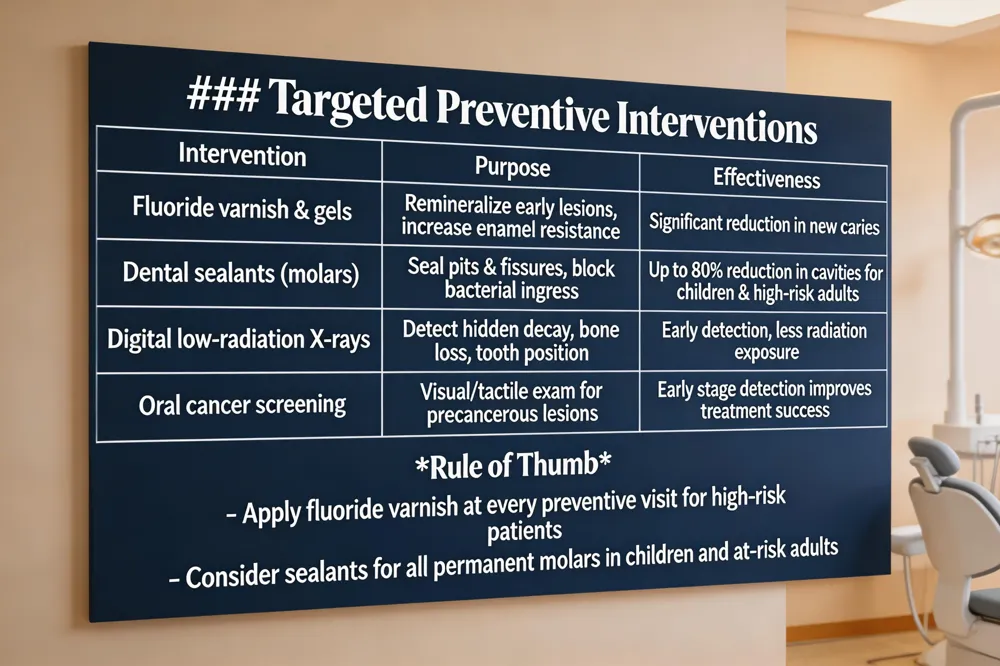 A modern preventive plan combines several targeted interventions that protect teeth before problems arise. Fluoride varnish and gels are high‑concentration fluoride applications applied in the office; they remineralize early lesions and make enamel more resistant to acid attacks. Dental sealants on molars coat the pits and fissures of back teeth, creating a barrier that can cut cavity risk by up to 80 % in children and high‑risk adults. Digital X‑rays and low‑radiation imaging provide clear pictures of hidden decay, bone loss, and tooth position while exposing patients to far less radiation than traditional film. Oral cancer screening is a quick visual and tactile exam performed at every six‑month visit, catching precancerous lesions early when treatment is most successful.
What is the 50‑40‑30 rule in dentistry? The apparent contact dimension (ACD) in an aesthetic smile is often described as 50 % between the central incisors, 40 % between the central and lateral incisors, and 30 % between the lateral incisor and canine.
Nutrition, Lifestyle, and Systemic Health
Nutrition & Lifestyle Recommendations
| Category | Recommendation | Rationale |
|---|---|---|
| Calcium‑rich foods | Dairy, leafy greens, almonds, fortified plant milks | Supports enamel remineralization |
| Crunchy vegetables | Carrots, celery, apples | Mechanical cleaning, stimulates saliva |
| Hydration | Fluoridated water throughout the day | Maintains saliva flow, neutralizes acids |
| Sugar & Acid | Limit sugary snacks, carbonated/fruit juices; wait 30 min before brushing after acidic exposure | Reduces acid attacks and enamel erosion |
| Tobacco & Alcohol | Quit smoking; moderate alcohol consumption | Lowers gum disease, oral cancer, and healing delays |
| Chewing gum | Sugar‑free gum after meals | Stimulates saliva, buffers acids |
Systemic Benefits
- Improved cardiovascular health
- Better diabetes management
- Reduced risk of certain cancers
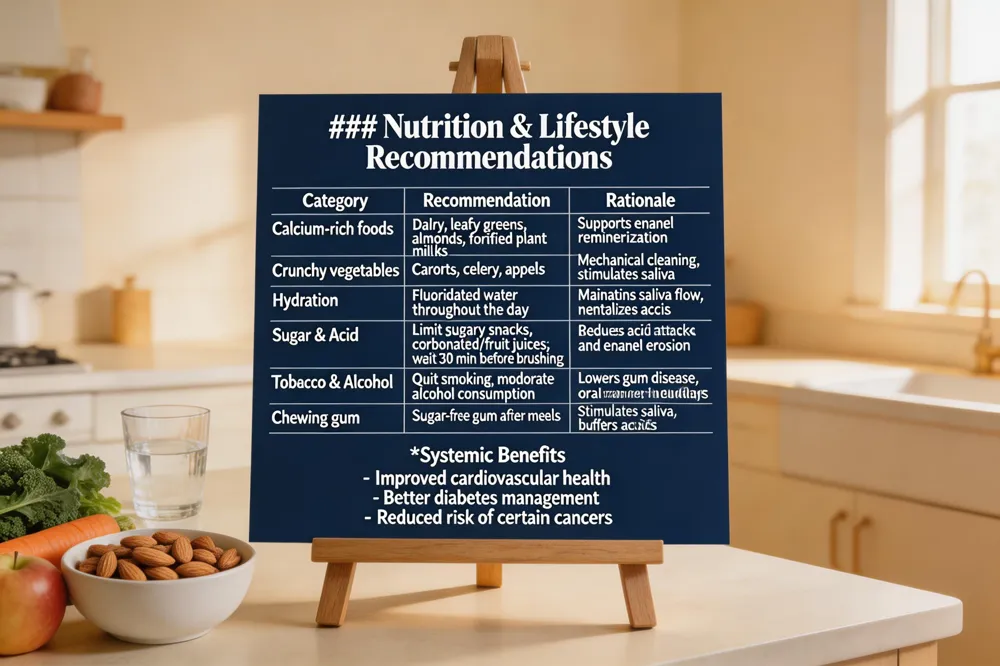 Good nutrition and lifestyle choices are essential for a healthy smile and overall wellness. Frequent exposure to sugary foods and acidic drinks fuels plaque bacteria and erodes enamel, so limit snacks, rinse with water, and wait 30 minutes before brushing. Calcium‑rich foods such as dairy, leafy greens, and crunchy vegetables help remineralize teeth and strengthen gums. Tobacco use and excessive alcohol increase the risk of gum disease, oral cancer, and delayed healing; quitting or moderating these habits dramatically improves oral and systemic health. Keeping vaccinations up‑to‑date, especially HPV, reduces the chance of oral and throat cancers. Regular dental visits, twice‑daily brushing with fluoride toothpaste, daily flossing, and adequate hydration with fluoridated water complete a preventive routine that protects teeth, gums, and the body. In addition, chewing sugar‑free gum stimulates saliva, which neutralizes acids and supports enamel repair and promotes fresh breath.
Special Populations and Community Care
Tailored Care for Specific Groups
| Population | Key Preventive Actions | Notes |
|---|---|---|
| Children | Sealants on all permanent molars, fluoride varnish, regular check‑ups | Often covered by insurance; high impact on cavity reduction |
| Pregnant Women | Brush twice daily with fluoride toothpaste, floss, professional cleaning each trimester | Hormonal changes increase gum inflammation; protects mother & baby |
| Elderly (nursing homes) | Gentle step‑by‑step oral care routine, soft brush or foam swab, denture cleaning, hand hygiene for caregivers | Prevents aspiration pneumonia, maintains nutrition |
| Community‑care patients | Affordable cleanings, sealants, fluoride at primary‑care clinics (e.g., Mountain Family Health Centers) | Reaches >24,000 patients; integrates oral & overall health |
Implementation Tips
- Train staff on proper technique for frail elders
- Provide education on home care for parents
- Coordinate with obstetricians for prenatal oral health guidance
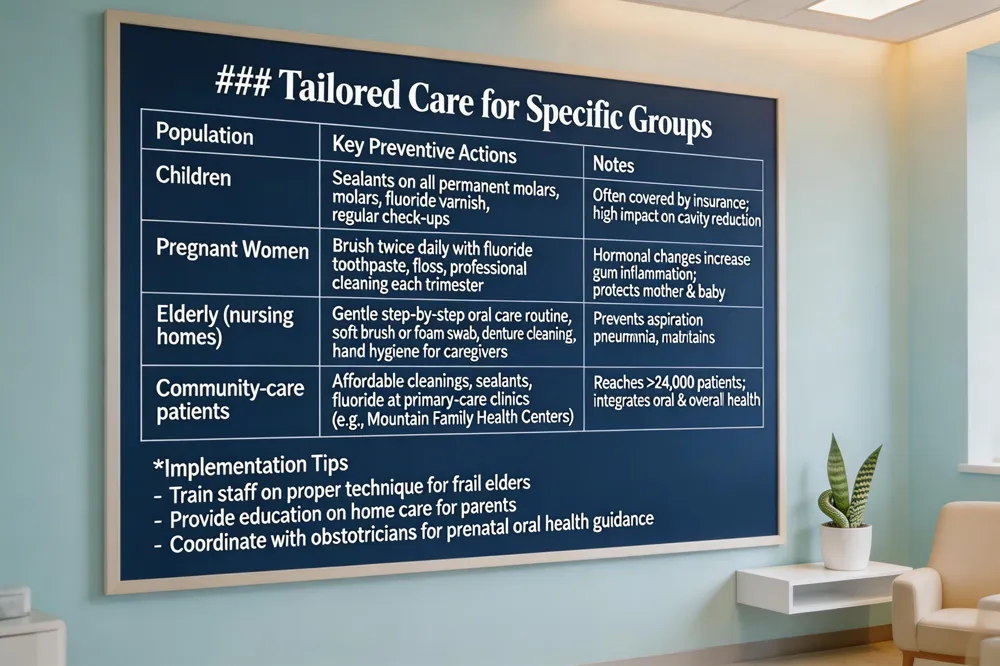 Children benefit greatly from dental sealants, which coat the pits of molars and can cut cavity risk by up to 80 %—a simple, painless procedure often covered by insurance. Pregnant women should maintain meticulous oral hygiene because hormonal changes increase gum inflammation; brushing twice daily with fluoride toothpaste, flossing, and professional cleanings help protect both mother and developing baby. For elderly residents in nursing homes, a gentle step‑by‑step oral‑care routine is essential: 1) Gather supplies—gloves, soft brush or foam swab, non‑abrasive toothpaste, water or mouthwash, basin, towel, linen bag. 2) Perform hand hygiene, introduce yourself, explain the procedure, and position the resident with the head elevated. 3) Don gloves, brush all tooth surfaces and tongue, allowing rinses after each quadrant; use a denture brush if needed. 4) Assist rinsing, wipe the mouth, dispose of gloves, and clean equipment. 5) Perform hand hygiene again, check comfort, document findings, and ensure safety. Community health centers, such as Mountain Family Health Centers, integrate affordable preventive dental services—including cleanings, sealants, and fluoride treatments—into primary care, reaching over 24,000 patients and reinforcing the link between oral health and overall wellness.
Putting It All Together: A Practical Checklist
Practical Preventive Checklist
Daily Routine
| Action | Frequency |
|---|---|
| Brush (soft‑bristle, fluoride) | 2× per day, 2 min each |
| Floss or interdental brush | 1× per day |
| Alcohol‑free antibacterial mouthwash | After brushing (optional) |
| Hydration with fluoridated water | Throughout the day |
| Sugar‑free gum (after meals) | As needed |
| Avoid tobacco/alcohol | Ongoing |
Professional Visit Schedule
| Visit Type | Frequency | What’s Done |
|---|---|---|
| Comprehensive exam + cleaning | Every 6 months (or quarterly for high‑risk) | Exam, prophylaxis, digital X‑rays, fluoride/sealant if needed |
| Periodontal maintenance | Every 3‑6 months for gum disease | Deep cleaning, scaling, root planing |
| Orthodontic review (if applicable) | As directed by orthodontist | Adjustments, oral hygiene reinforcement |
Budgeting Tips
| Strategy | How It Saves Money |
|---|---|
| Use dental insurance co‑pays | Reduces out‑of‑pocket cost for cleanings and fluoride |
| Community health centers | Sliding‑scale fees, often lower than private practices |
| Preventive focus (low‑sugar diet, regular brushings) | Avoids costly fillings, root canals, extractions |
| Ask about bundled preventive packages | Some offices offer annual preventive bundles at a discount |
Bottom Line
- Consistent daily care + bi‑annual professional visits = long‑term oral health and lower overall health costs.
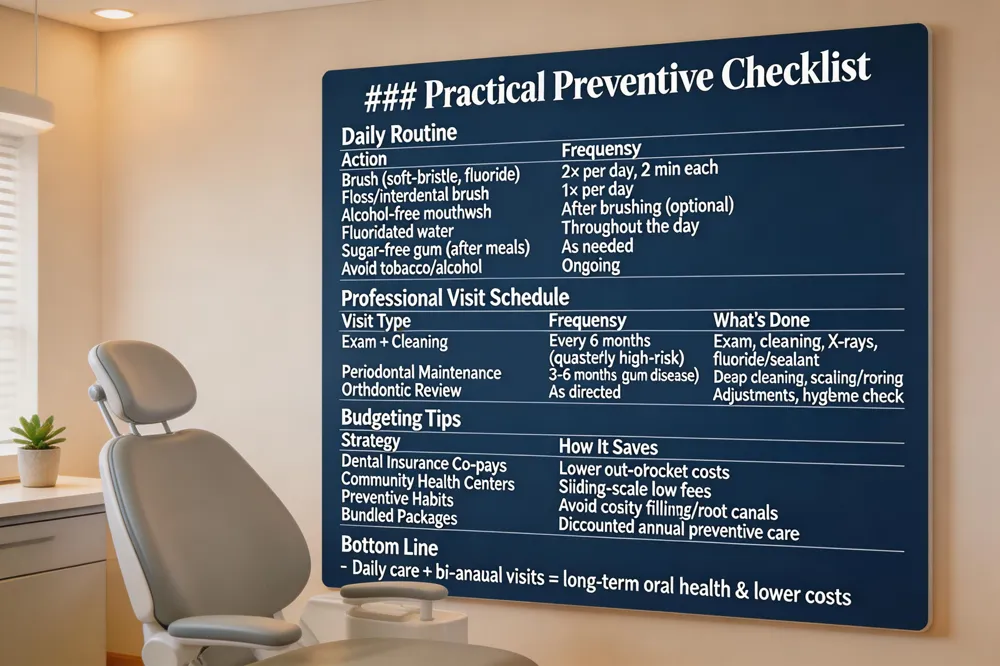 Creating a simple, sustainable preventive plan helps families keep smiles healthy without breaking the bank.
Daily routine summary – Brush twice a day for two minutes with a soft‑bristle brush and fluoride toothpaste, positioning the bristles at a 45‑degree angle and using gentle circular motions. Replace the brush every three to four months. Floss (or use interdental brushes) daily to clear plaque from between teeth and below the gum line, and finish with an alcohol‑free antibacterial mouthwash if desired. Limit sugary snacks and acidic drinks, choose water and calcium‑rich foods, and stay hydrated to support saliva’s natural cleaning action.
Professional visit schedule – Schedule a comprehensive dental exam and professional cleaning every six months; high‑risk patients (history of cavities, diabetes, smoking) may need quarterly visits. During these appointments, the dentist will take digital X‑rays, apply fluoride varnish or gel, and assess whether sealants are needed on molars.
Budgeting for preventive care – Take advantage of most dental insurance plans that cover twice‑yearly cleanings, fluoride treatments, and sealants for children. For families without coverage, ask the dental office about sliding‑scale fees or community health centers such as Mountain Family Health Centers, which offer affordable preventive services. Investing in routine care now can save $8‑$50 for every dollar spent, by avoiding costly fillings, root canals, or extractions later.
Your Path to a Lifetime of Healthy Smiles
Maintaining a bright, healthy smile rests on five proven habits: brush twice daily with a soft‑bristled, fluoride‑packed brush for two minutes, floss every night, limit sugary and acidic foods, visit the dentist for professional cleanings and exams every six months, and protect vulnerable molars with sealants or fluoride treatments. Consistent home care removes plaque before it hardens, while regular office visits catch early signs of decay, gum disease, or oral cancer. By committing to these practices you empower yourself and your family to enjoy lasting oral health and reduce the risk of costly restorative work. Dr. Parrella’s Somerville office welcomes you to schedule a preventive exam today, where our caring team will tailor a personalized plan and keep your smile thriving for years to come. We look forward soon.