The Digital Revolution in the Dental Chair
For decades, dental X-rays were synonymous with a familiar, somewhat cumbersome process: biting down on a piece of sharp film, waiting for it to be developed in a chemical bath, and hoping the image came out clearly enough for diagnosis. This traditional method, used since the early 1900s, was the standard for nearly a century. Its reign ended with a quiet revolution that began in 1987 with the introduction of digital radiography to dentistry. This shift wasn't merely an equipment upgrade; it was a fundamental reimagining of how dental imaging is captured, viewed, and utilized for patient care.
A Leap Forward in Technology
This revolutionary change moves away from physical film and chemical processing. Instead, digital X-rays use a small, thin electronic sensor or a reusable phosphor plate placed comfortably in a patient's mouth. When the X-ray machine is activated, a small burst of radiation creates an image that is transmitted instantly to a computer monitor. This single technological leap—replacing film and chemicals with digital sensors and computers—unlocks a cascade of improvements that directly benefit patient safety, comfort, and the clinical decision-making process.
Transforming the Patient Experience
This digital shift fundamentally alters the dental appointment. Gone are the long waits for film development and the need for bulky, uncomfortable film holders. The process is now remarkably fast and comfortable. The image appears on screen within seconds, transforming the nature of the consultation. Instead of a future follow-up, the dentist can immediately review and discuss the findings with you, using the clear, adjustable image as a visual aid. This real-time collaboration fosters understanding and trust, making you an active participant in your own oral health journey from the very moment the image is captured.
Paving the Way for Modern Dentistry
The move to digital imaging is the essential foundation for today's advanced dental care. It provides the immediate, high-quality visual data required for precise diagnosis and sophisticated treatment planning. By setting this new standard for speed, clarity, and safety, the digital revolution in the X-ray chair has paved the way for everything from 3D Cone Beam CT scans for implant surgery to AI-assisted diagnostics, which we will explore next.
| Technology Era | Year of Introduction | Core Imaging Medium | Image Availability | Primary Safety Concern |
|---|---|---|---|---|
| Traditional X-Rays | Early 1900s | Silver-Oxide Film | After chemical development (minutes) | Higher radiation dose, chemical handling |
| Digital X-Rays | 1987 | Electronic Sensor / Phosphor Plate | Instantly on computer screen (seconds) | Significantly reduced radiation exposure |
| Key Change Driver | Impact on Patient Care | Impact on Dental Practice |
|---|---|---|
| Elimination of Film Processing | No wait for results; immediate discussion and diagnosis | Saves significant daily working time (approx. 30 mins/day) |
| Digital Image Capture | Images can be enlarged, enhanced for clarity; easier to see issues | Enables electronic storage, sharing, and integration with other digital systems |
| Drastic Radiation Reduction | Up to 90% less exposure, enhancing safety for all ages | Aligns with modern safety standards and reduces long-term liability |
| Electronic Data Management | Easy sharing with specialists; secure, permanent record | Eliminates physical storage needs and film/chemical costs |
Safety First: Drastically Reduced Radiation Exposure
The Core Safety Advantage
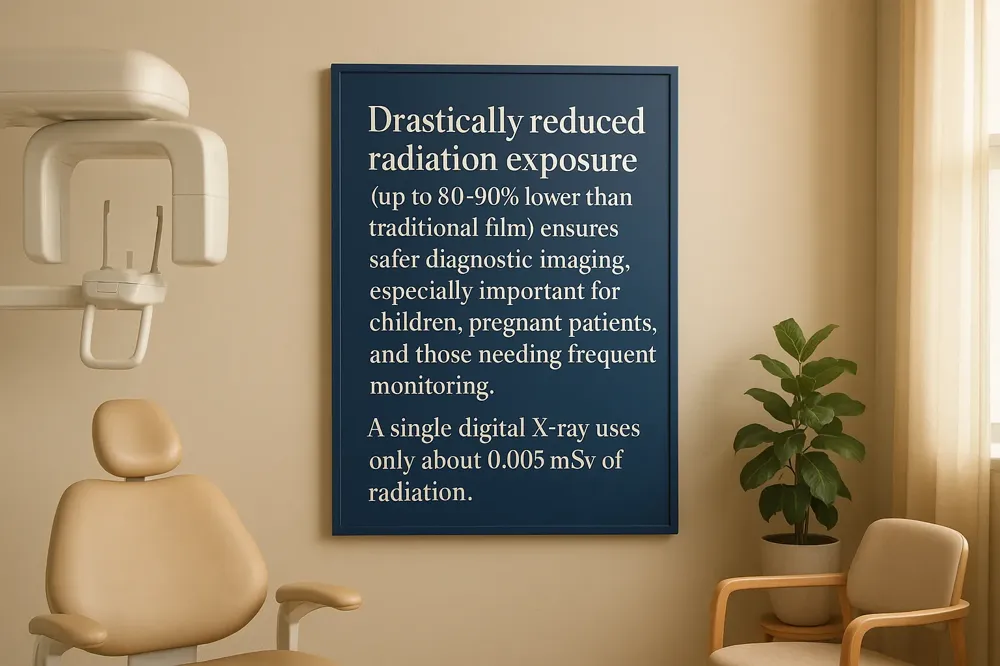
Digital X-ray technology fundamentally enhances patient safety by significantly reducing radiation exposure. While all diagnostic X-rays use low doses, digital systems are engineered to be far more efficient than traditional film. They use electronic sensors to capture the image, which are much more sensitive to radiation than film. This means the machine needs to emit a much smaller burst of X-rays to create a clear picture.
Quantifying the Radiation Reduction
Studies consistently show that digital dental X-rays reduce radiation exposure by up to 80% compared to traditional film-based methods. To put this in perspective, a single digital intraoral X-ray exposes a patient to about 0.005 millisieverts (mSv) of radiation. This drastic reduction is a primary reason why dental practices are rapidly adopting this modern technology.
Protecting Sensitive Patients
This lower radiation dose is especially important for specific patient groups. Children are more sensitive to radiation, so minimizing exposure during their developmental years is a priority. For pregnant patients, dental organizations state that X-rays are safe with appropriate shielding, but the significantly lower dose from digital systems provides extra reassurance. Patients who require frequent monitoring, such as those with gum disease or a history of cavities, also benefit greatly from this cumulative dose reduction.
Everyday Radiation Comparisons
Understanding the minimal amount of radiation from a digital dental X-ray is helpful. The average person is exposed to about 3.0 mSv of radiation annually from natural sources like radon gas and cosmic rays. A single digital dental X-ray (0.005 mSv) is far less than many common experiences:
| Source of Radiation | Approximate Dose (mSv) | Comparison to One Digital Dental X-ray |
|---|---|---|
| Cross-Country Flight | 0.04 mSv | About 8 times higher |
| One Chest X-ray | 0.10 mSv | About 20 times higher |
| One Mammogram | 0.40 mSv | About 80 times higher |
| Annual Background (Natural) | 3.00 mSv | About 600 times higher |
This context helps demystify dental X-rays and confirms that their diagnostic benefit far outweighs the minimal risk, especially with modern digital systems.
Addressing Patient Concerns
What are the primary advantages of digital X-rays compared to traditional film X-rays? A primary advantage is dramatically improved patient safety. Digital X-rays reduce radiation exposure by 80% to 90% compared to traditional film X-rays. This reduction is significant for patients requiring frequent imaging, children who are more sensitive to radiation, and pregnant patients. For perspective, a single digital dental X-ray exposes a patient to about 0.005 mSv of radiation, which is far less than a chest X-ray (0.1 mSv), a cross-country flight (0.04 mSv), or annual natural background radiation (about 3.0 mSv). This makes it one of the safest diagnostic imaging options available.
A Commitment to Modern Safety Standards
The adoption of digital radiography reflects a practice's commitment to using the safest available technology. Regulatory bodies like the American Dental Association provide guidelines to ensure that the benefits of necessary X-rays always outweigh any potential risks. With digital systems, dentists can obtain the critical diagnostic information they need while providing families with the highest standard of care and peace of mind.
Unmatched Clarity & Diagnostic Power
Superior High-Resolution Image Quality
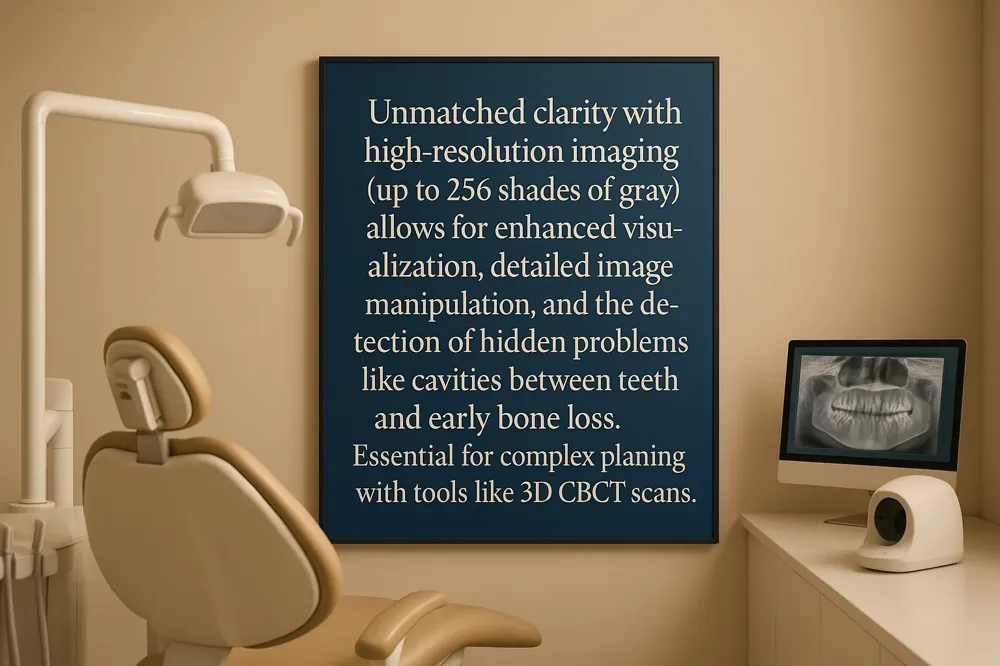
Digital X-rays produce images of exceptional quality. Unlike traditional film, which offers around 25 shades of gray, digital radiographs can display up to 256 shades. This high-resolution imaging provides superior clarity and detail, revealing the fine structure of teeth, bones, and surrounding tissues.
Ability to Enhance, Zoom, and Adjust Contrast for Better Diagnosis
One major advantage is the ability to manipulate images after they are captured. Dentists can digitally adjust brightness, enhance contrast, and zoom in on specific areas. This allows for a closer examination of subtle details, making it easier to spot very small issues that might be missed on a static film image, enabling more efficient appointments and real-time assessment.
Detecting Hidden Problems: Cavities Between Teeth, Early Bone Loss, Infections
This enhanced visual power is critical for detecting problems that are not visible during a regular visual exam. Digital X-rays excel at revealing cavities hidden between teeth, early-stage bone loss from gum disease, infections at the tooth root, and cracks within teeth. They are also used to check for issues like impacted teeth, cysts, and tumors.
Use in Complex Treatment Planning (Implants, Orthodontics, CBCT Scans)
For complex procedures, digital imaging is indispensable. Cone Beam Computed Tomography (CBCT) scans provide detailed 3D images of the jawbone, teeth, nerves, and sinuses. This technology is crucial for planning dental implant placement, orthodontic treatment, and oral surgery, ensuring precision and improving outcomes.
| Diagnostic Capability | Key Benefit | Example Applications |
|---|---|---|
| High Resolution | Reveals fine structural details | Spotting microfractures, subtle enamel wear |
| Image Manipulation | Enhances visibility of soft contrasts | Detecting early cavities, minor bone changes |
| Hidden Problem Detection | Shows what the eye cannot see | Finding decay between teeth, root infections |
| 3D Imaging (CBCT) | Provides comprehensive anatomical view | Planning implants, evaluating jaw issues |
Speed, Efficiency, and Enhanced Patient Experience
Instant Image Availability Eliminating Wait Times
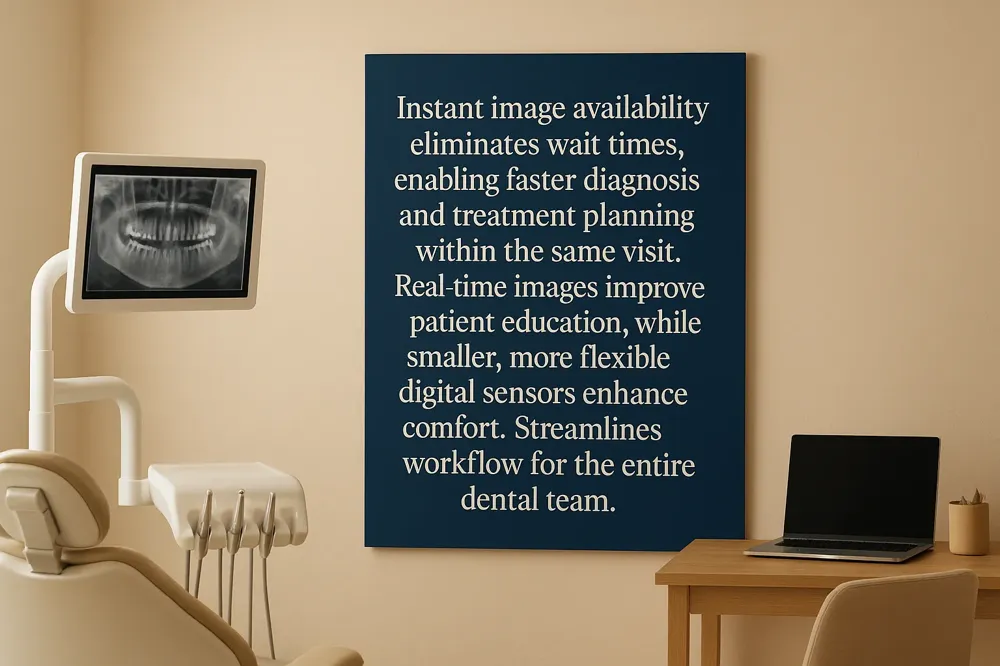
Unlike traditional film X-rays that require a time-consuming chemical development process, digital radiographs are captured and displayed on a computer screen almost instantly. This eliminates waiting periods that once extended appointments and caused patient anxiety. The image is ready for review in seconds, transforming the pace of the diagnostic process.
Faster Diagnosis and Treatment Planning During the Same Visit
The immediate availability of digital images enables dentists to assess a patient's oral health in real-time. There is no need to schedule a separate consultation after film is developed. Dentists can promptly identify issues like cavities, bone loss, or infections and begin formulating a treatment plan right away during the same appointment.
This efficiency leads to quicker interventions and can significantly reduce the overall treatment timeline. It also maximizes the value of each visit, saving patients from making extra trips for diagnoses that are now completed on the spot.
How Real-Time Images Improve Patient Education and Involvement
Digital technology turns the computer monitor into a powerful educational tool. Dentists can display the high-resolution X-ray images and use software to zoom in, adjust contrast, or highlight areas of concern. This visual aid helps patients see exactly what the dentist sees, making complex conditions easier to understand.
When patients can visualize a cavity between teeth or the placement of an impacted wisdom tooth, they become more informed and engaged participants in their care. This collaborative approach builds trust and leads to better acceptance of recommended treatments.
Comfort Improvements with Smaller, More Flexible Digital Sensors
Patient comfort during X-ray procedures has improved with modern digital sensors. These electronic pads are typically smaller, thinner, and have rounded edges compared to the rigid, bulky film packets used in the past. Their more flexible design makes them easier to position in the mouth.
For many patients, especially those with a strong gag reflex or a small jaw, this design difference makes the experience noticeably more comfortable. The procedure is also faster, further reducing any potential discomfort.
Streamlined Workflow for the Dental Team
Adopting digital X-rays creates a more efficient workflow for the entire dental practice. The elimination of chemical processing saves staff time previously dedicated to handling and developing film. Images are digitally captured, stored, and retrieved with a few clicks.
This streamlined system reduces administrative tasks, minimizes the risk of lost physical films, and allows for seamless sharing of records with specialists via email when referrals are needed. The cumulative time saved enhances the practice's ability to serve patients effectively.
| Topic | Patient Benefit | Practice Benefit |
|---|---|---|
| Instant Image Viewing | No waiting for results, reduced anxiety. | Immediate diagnosis, shorter appointment times. |
| Real-Time Discussion | Visual understanding of dental issues. | Improved patient communication and trust. |
| Sensor Comfort | More comfortable experience during imaging. | Easier positioning, fewer patient adjustments. |
| Electronic Workflow | Quick access to past records for comparison. | Efficient storage, sharing, and data management. |
The Connected, Eco-Friendly Practice
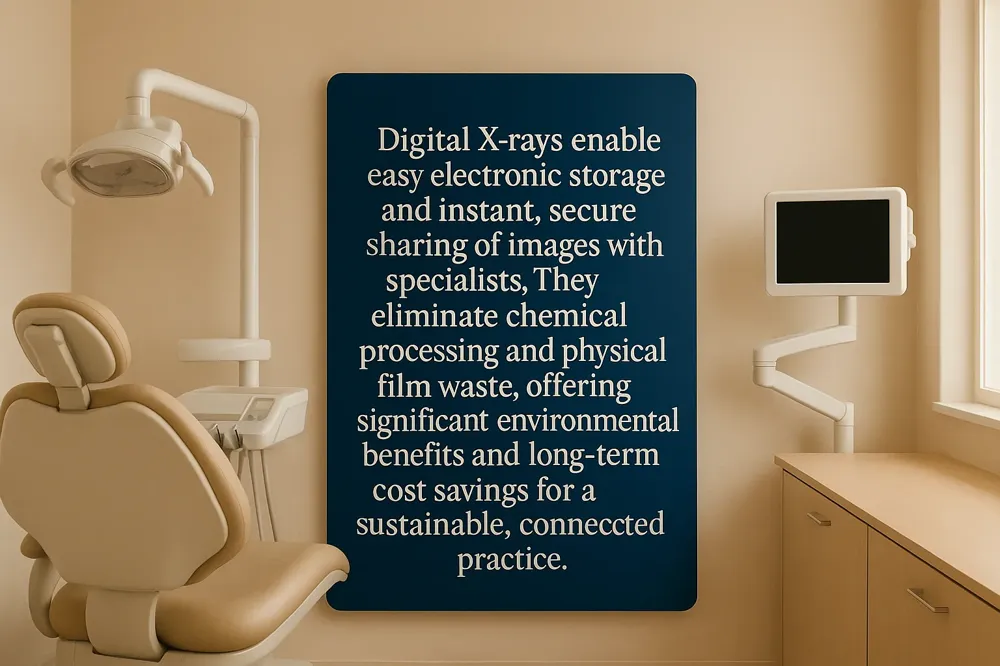
Easy digital storage and retrieval of patient records
Digital imaging creates electronic files instead of physical film. These are stored securely on office computers or in cloud-based dental X-ray storage. This makes finding a patient's past X-rays for comparison quick and simple. There's no risk of lost or damaged films, and it reduces the need for bulky physical storage space.
Secure, instant sharing of images with specialists for coordinated care
When a specialist's opinion is needed, digital X-rays can be shared immediately. Dentists can email X-rays to specialists directly to an orthodontist, oral surgeon, or periodontist within seconds. This secure sharing of digital X-ray insights with patients and transferable digital X-ray files facilitates faster referrals and better-coordinated treatment plans, keeping your care moving forward without delay.
Elimination of chemical processing and physical film waste
Traditional X-rays require chemical developers and fixers to process the film. Digital radiography completely removes this step. There are no chemical tanks to maintain and no hazardous waste to dispose of, making the in-office environment cleaner and safer for staff and patients.
Environmental benefits of a paperless and chemical-free system
By going digital, a dental practice significantly reduces its environmental footprint. The system eliminates the need for single-use film packets, plastic packaging, and the toxic chemicals used in development. This shift supports a more sustainable, eco-friendly digital x-rays in dental care approach to modern healthcare.
Long-term cost savings despite initial investment
While digital X-ray equipment requires an upfront investment, it leads to savings over time. Practices no longer pay for film, chemicals, or physical storage solutions. The increased efficiency—like avoiding retakes and faster appointments—also contributes to better practice economics.
| Operational Aspect | Digital X-Ray Benefit | Key Environmental Impact |
|---|---|---|
| Image Development | Instant; no chemicals | Eliminates hazardous waste |
| Record Storage | Electronic files on servers and digital dental records tracking | Reduces physical storage needs |
| Sharing & Referrals | Secure email in seconds | Cuts down on paper and transport |
| Long-term Costs | Saves on film & supplies | Less consumable waste overall |
| Patient Experience | Faster, more informed visits | Supports sustainable healthcare |
Looking Forward: AI and the Future of Precision Care
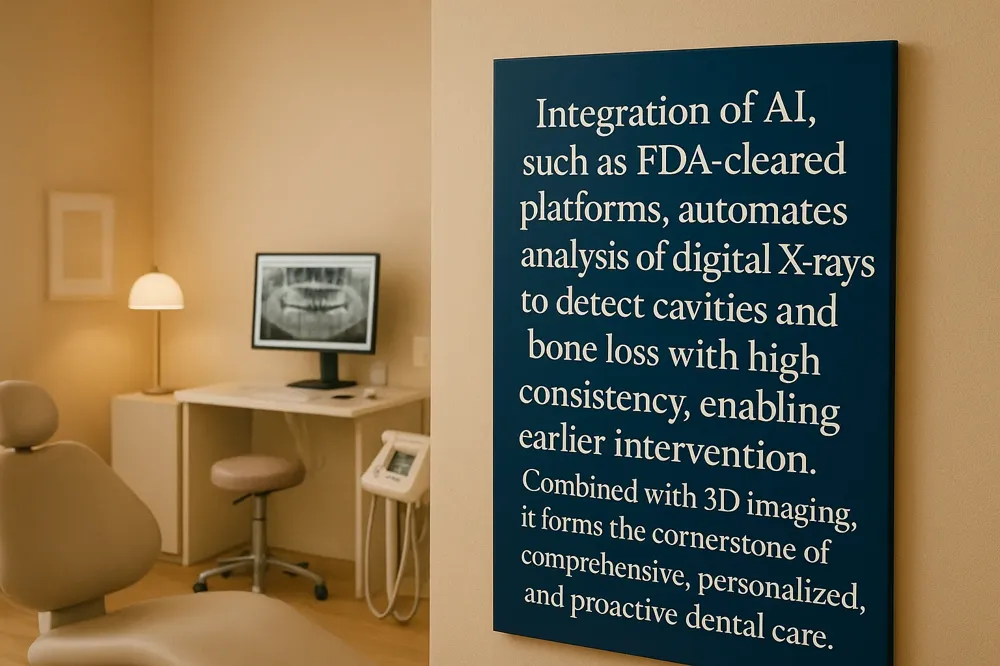
Integration of Artificial Intelligence (AI) for Image Analysis
Building on digital X-ray systems, artificial intelligence (AI) is emerging as a powerful diagnostic aid. AI platforms like Overjet analyze digital radiographs in real-time, using artificial intelligence (AI) algorithms in dental X-ray analysis to identify and flag areas of potential concern. This technology integrates seamlessly with existing digital imaging and practice management software, minimizing disruption to clinical workflows. Its adoption marks a significant trend in modern dental diagnostics.
How AI Aids in Detecting Cavities, Bone Loss, and Other Issues
AI enhances the interpretation of digital X-rays by automating the detection of common issues. For instance, Overjet's platform, which has FDA clearance for both caries detection and bone level quantification, can provide visual overlays on X-ray images. These overlays highlight subtle cavities, early signs of periodontal bone loss, and other abnormalities that might be missed or require longer to identify manually. This automated analysis supports earlier and more consistent detection of hidden dental issues.
The Role of AI in Enhancing Diagnostic Consistency and Early Detection
The primary advantage of AI lies in its consistency. It offers a standardized, analytical second opinion on every X-ray, reducing diagnostic variability. By flagging potential problems early—sometimes before symptoms appear—it enables a more proactive, preventive approach to care. This helps dentists create timely, personalized treatment plans, ultimately improving long-term patient outcomes and oral health.
The Bigger Picture: Digital X-Rays as a Cornerstone of Comprehensive, Personalized Care
Digital X-ray technology, now augmented by AI, forms the foundation of modern, patient-centered dentistry. It provides the high-resolution imaging necessary for accurate diagnosis and detailed treatment planning, from simple fillings to complex implants. When combined with other tools like 3D CBCT scans and intraoral cameras, it allows for a comprehensive assessment of a patient's unique oral history and current needs, fostering trust through clear communication and compassionate care.
| Technology Component | Primary Function | Impact on Patient Care |
|---|---|---|
| Digital X-ray Sensors | Capture high-resolution images with low radiation | Enables immediate diagnosis with enhanced patient safety |
| AI Analysis Software | Automates detection of cavities, bone loss | Increases diagnostic consistency for early intervention |
| Cloud-Based Storage | Securely stores and shares digital X-ray images | Facilitates specialist collaboration and long-term monitoring |
| 3D Imaging (CBCT) | Creates detailed 3D views of bone and teeth | Allows precision in treatment planning for implants and surgeries |
A Commitment to Advanced, Patient-Centered Care
Why Digital X-Rays Are Revolutionary
Digital X-ray technology represents a profound shift in dental diagnostics. It moves far beyond simply taking pictures. The combination of significantly lower radiation exposure, instantaneous image availability, and superior diagnostic clarity fundamentally changes the patient experience and treatment outcomes. This isn't just an incremental improvement; it's a new standard of care that prioritizes safety, efficiency, and precision.
Personalizing Care for Your Family
Our practice integrates this advanced technology into a philosophy of personalized, family-focused care. Clear, immediate images allow us to show you exactly what we see, transforming a complex diagnosis into a visual, understandable discussion. For children, the significantly lower radiation dose provides peace of mind. For everyone, the ability to track subtle changes in your dental history over time means care plans are uniquely tailored to you, helping to prevent recurring issues and protect your long-term oral health.
Investing in Your Long-Term Health
Our commitment to using the best available tools is an investment in your well-being. Digital radiography provides the detailed insights necessary for truly preventive care, from spotting a tiny cavity between teeth to planning a precise dental implant. This technology supports our goal of catching problems early and crafting effective, conservative treatments, aiming to preserve your natural smile for as long as possible.
Experience the Benefits with Us
We invite you and your family to experience the difference modern diagnostics make. From the comfort of smaller sensors to the clarity of discussing your X-rays in real time, every aspect is designed with your care in mind. Schedule your next visit to see how our commitment to advanced, patient-centered technology contributes to a superior and more trustworthy dental experience.
| Core Patient Benefits | Key Technology Features | Connection to Our Care Philosophy |
|---|---|---|
| Up to 90% less radiation exposure | Electronic sensors & instant imaging | Prioritizes safety, especially for kids & frequent imaging |
| Immediate diagnosis & discussion | Images appear on screen in seconds | Fosters understanding & collaborative treatment planning |
| Clearer views for accurate care | High-resolution images with adjustable contrast | Enables early detection & personalized, preventive plans |
| Comfortable, efficient visits | Smaller, more flexible digital sensors | Focuses on a positive, family-friendly patient experience |
| Easy tracking of oral health over years | Secure digital storage & easy image comparison | Supports long-term health management & trustful relationships |