A New Era for Dental Imaging
Dental radiography began in the early 1900s with silver‑oxide film plates that required dark‑room processing and exposed patients to relatively high radiation doses. By the 1990s, electronic sensors emerged, and over the next two decades they replaced film in most offices. The shift to digital sensors matters because the sensors capture X‑ray photons more efficiently, cutting radiation exposure by 70‑90 % while delivering sharper, higher‑contrast images that can be enlarged, adjusted, and stored instantly. For patients, this means safer, quicker visits, less discomfort from bulky film holders, and clear visual explanations of their oral health. Clinicians gain faster diagnosis, streamlined workflow, electronic record‑keeping, and the ability to share images with specialists—all of which improve treatment planning and overall care quality. It also supports AI analysis, enhancing early detection and personalized care.
Radiation Safety and Dose Reduction
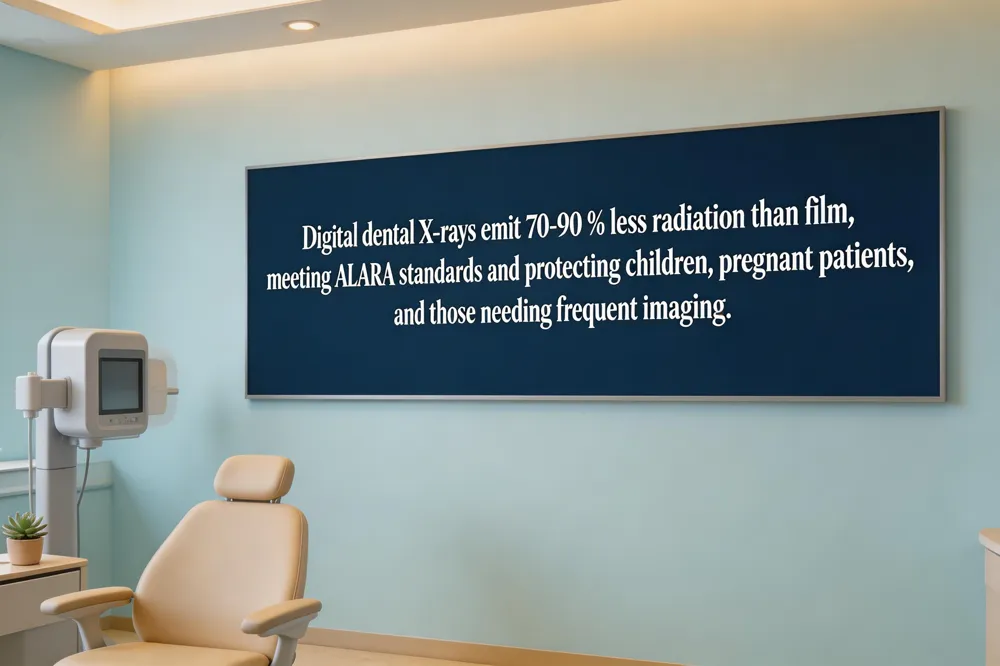 Digital dental X‑rays deliver a fraction of the radiation of traditional film images—typically 70‑90 % less. A single intra‑oral digital exposure (periapical or bite‑wing) is about 0.001–0.005 mSv (1–5 µSv), far below the average annual background dose of ~3 mSv. Panoramic scans provide a larger view and emit roughly 0.01 mSv (10 µSv) per image, while low‑dose cone‑beam CT (CBCT) stays under 0.1 mSv (100 µSv) for small‑to‑medium scans. These numbers meet the ALARA (As Low As Reasonably Achievable) principle, meaning the dose is kept as low as possible while still obtaining clinically useful information. Children, pregnant patients, and those needing frequent imaging benefit most from the reduced exposure; lead aprons and thyroid collars further protect sensitive tissues. The American Dental Association and FDA endorse digital radiography as safe for routine care, and dentists limit imaging to justified cases—often one bite‑wing per year and a panoramic only when needed—ensuring patient safety while preserving diagnostic accuracy.
Types of Digital X‑Rays and Their Diagnostic Benefits
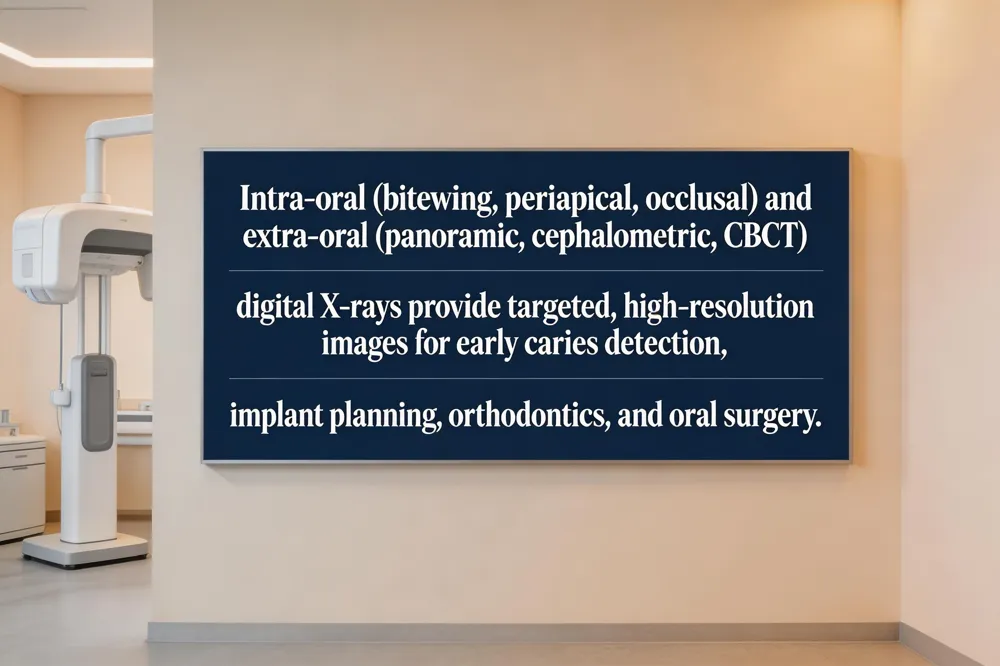 Digital dental radiography includes several intra‑oral and extra‑oral formats, each tailored to specific diagnostic needs. Intra‑oral bitewing X‑rays capture the crowns of adjacent teeth, making them ideal for spotting interproximal cavities and early bone loss during routine cleanings. Periapical X‑rays, which show the entire tooth from crown to root and the surrounding bone, are essential for evaluating root‑area infections, abscesses, and the success of root‑canal therapy. Occlusal images provide a broad view of the floor of the mouth, useful for assessing large lesions or erupted teeth.
Extra‑oral options expand the field of view: panoramic X‑rays give a full‑mouth overview for detecting impacted teeth, jaw fractures, and sinus involvement; cephalometric radiographs support orthodontic treatment planning by mapping skeletal relationships; and cone‑beam computed tomography (CBCT) delivers 3‑D volumetric data for precise implant placement, complex root‑canal mapping, and oral‑surgery navigation.
Answering common patient questions: a periapical X‑ray is an intra‑oral image that visualizes the entire tooth and root area, helping diagnose localized pain or swelling. For families in Somerville, MA, Dr. Anthony P. Parrella’s practice offers digital X‑rays with up to 90% less ionizing radiation, instant high‑resolution images, and seamless electronic storage—your “digital dental X‑ray near me.” Most U.S. dentists now use digital radiography (≈ 66‑70 % of practices), because it reduces radiation, speeds diagnosis, and eliminates chemical waste.
Cost, Accessibility, and Patient Experience
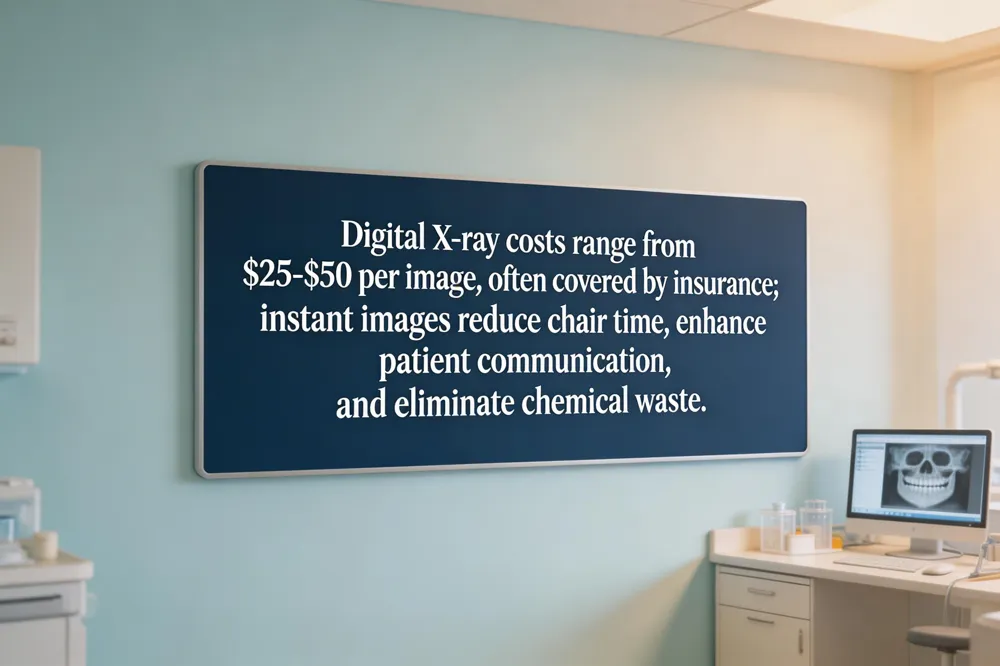 At Dr. Parrella’s Somerville office a single periapical X‑ray typically costs $30‑$50, while a full‑mouth series (FMX) runs $80‑$120. Bitewing images, taken every six to twelve months for routine check‑ups, are $25‑$45 each. Most dental insurance plans cover preventive X‑rays in full or require only a modest co‑pay, so out‑of‑pocket costs are often lower than the national range of $50‑$120 for basic intraoral to comprehensive scans.
Digital X‑rays are superior to film: they use up to 90 % less radiation, produce high‑resolution, adjustable images, and appear instantly on a screen. This instant view lets us discuss findings with you in real‑time, enhances early detection of decay, bone loss, and root‑canal issues, and eliminates the wait for chemical processing.
Digital imaging also supports precise detection of cavities, assessment of periodontal health, orthodontic planning, and three‑dimensional CBCT for implants. Images are stored securely in your electronic record, making comparison over time easy and enabling seamless sharing with specialists.
Conveniently located in Somerville, our practice offers a patient‑friendly workflow: comfortable, lightweight sensors, reduced chair‑time, and a streamlined insurance billing process, ensuring high‑quality care is accessible to local families.
Integration with Modern Dental Technology and Workflow
 [Digital X‑rays] are now a cornerstone of modern dental practice, seamlessly linking imaging to electronic health records (EHR) and cloud storage. Once captured, the high‑resolution image is uploaded to a secure, HIPAA‑compliant server where it can be accessed instantly by the dentist, the patient, and any authorized specialist. This electronic workflow eliminates film, reduces paperwork, and speeds up treatment planning.
AI‑assisted detection tools analyse each radiograph within seconds, flagging early caries, bone loss or periodontal pockets and suggesting treatment options. The AI output is stored alongside the image in the patient’s electronic health records, allowing dentists to track changes over time and collaborate with orthodontists, oral surgeons or insurers through encrypted portals.
Because images are digital, they can be shared instantly with specialists, insurance carriers or to via secure cloud links, cutting referral turnaround from days to minutes. The overall impact on practice efficiency is profound: appointments are shorter, diagnostic confidence is higher, and patients enjoy a transparent, patient‑centered experience.
Can dental X‑rays be sent electronically? Yes – modern offices transmit radiographs through encrypted email, secure cloud portals or PACS, ensuring rapid, protected collaboration.
Dental digital x ray near me – Dr. Anthony P. Parrella’s Somerville, MA office offers state‑of‑the‑art [Digital X‑rays] imaging with instant EHR integration. Call (617) 555‑1234 to schedule.
What are the new dental technologies in 2026? AI‑driven diagnostics, intra‑oral scanners with chair‑side milling, guided CBCT‑based implant surgery, cloud‑based practice‑management platforms, and LED‑based cosmetic whitening.
What is the latest technology in dental laboratory? Fully [Digital X‑rays] workflows using high‑resolution intra‑oral scans, 3‑D printing, high‑speed milling of zirconia and hybrid ceramics, and rapid production of dentures and orthodontic appliances.
Balancing Benefits, Limitations, and Clinical Judgment
 Digital radiography offers lower radiation dose (up to 80‑90 % less), instant images, adjustable contrast, zoom, and Electronic storage, which speeds diagnosis, reduces chemical waste, and lets us show you the picture in real time. The wide dynamic range decreases repeat exposures and helps detect early decay, bone loss, and hidden infections. However, the technology requires a significant upfront investment in sensors, software, and ongoing maintenance, which can raise fees. Intra‑oral sensors are bulkier than film and may trigger gag reflex in sensitive patients, and fragile sensors need careful handling. Unnecessary X‑rays, even with low dose, add cumulative radiation exposure, can produce false‑positive findings, and increase cost without therapeutic benefit—especially for children, pregnant patients, and those needing frequent imaging. Therefore, we reserve radiographs for situations where the image will directly influence treatment planning. Looking ahead, AI‑assisted analysis and dose‑monitoring software promise even safer, more accurate imaging, but responsible use will always require clinical judgment, proper training, and adherence to ALARA principles for every family patient.
Looking Forward with Confidence
Digital X‑rays give patients up to 90% lower radiation, crystal‑clear high‑resolution images that can be instantly enhanced, ensuring safer, more accurate diagnoses and quicker treatment planning. At Dr. Parrella’s Somerville office we embrace this patient‑centered technology, and we invite you to schedule a digital imaging appointment today for your health.