A Deeper Look at Gum Health
Scaling and root planing (SRP) is a deep, nonsurgical cleaning that removes plaque and tartar above and below the gumline, then smooths tooth roots to aid gum re‑attachment. Unlike routine prophylaxis, which only treats supragingival deposits, SRP tackles subgingival disease. Nearly 47% of U.S. adults over 30 have some form of periodontal disease, so early SRP can halt progression, preserve bone, and protect overall health.
Understanding Deep Cleaning: Definitions and Indications
Key Points – Understanding Deep Cleaning
| Aspect | Description |
|---|---|
| Scaling vs. Prophylaxis | Scaling (therapeutic) removes plaque & tartar above & below gumline; prophylaxis removes only visible plaque & supragingival calculus. |
| When SRP is Indicated | Periodontal pockets > 4 mm, clinical attachment loss, radiographic bone loss, persistent swelling/bleeding/tenderness, halitosis. |
| n Procedure Steps | 1️⃣ Local anesthesia 2️⃣ Hand/ultrasonic supragingival & subgingival scaling 3️⃣ Root planing (smooth root surfaces) 4️⃣ Antimicrobial rinse or fluoride 5️⃣ Post‑care instructions. |
| Pre‑treatment Signs | Red, swollen gums; easy bleeding; deep pockets. |
| Post‑treatment Signs | Mild tenderness & temporary sensitivity; reduced bleeding; shallower pockets; firmer tissue within 1‑2 weeks. |
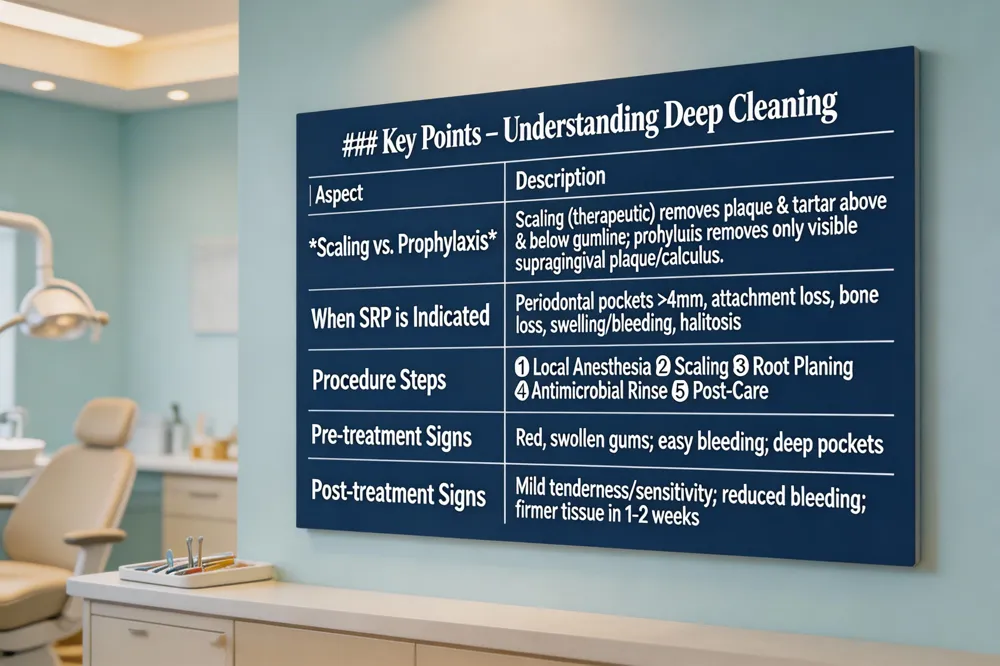 Scaling and cleaning prophylaxis are not the same. Scaling is a therapeutic procedure that removes plaque and tartar both above and below the gumline, often the first step of a deep cleaning to treat early gum disease. Routine prophylaxis cleans only visible plaque, surface stains, and supragingival calculus and is performed every six months.
When is scaling and root planing needed? SRP is indicated when periodontal pockets exceed 4 mm, when clinical attachment loss or bone loss is evident, or when gums remain swollen, bleeding, or tender despite diligent home care. Deep pockets, radiographic bone loss, and persistent halitosis also signal the need for SRP, which serves as the first‑line nonsurgical therapy.
Scaling and polishing of teeth involves ultrasonic or hand scalers to remove hardened plaque, followed by polishing to smooth enamel and eliminate stains, leaving a brighter, healthier smile.
The periodontal cleaning procedure begins with local anesthesia, then hand or ultrasonic scaling to debride supragingival and subgingival deposits. Root planing smooths the root surfaces, promoting gum re‑attachment. An antimicrobial rinse or fluoride may be applied, and post‑care instructions include gentle brushing, flossing, and a soft‑food diet.
Before SRP, gums are often red, swollen, and bleed easily; deep pockets are present. After treatment, patients may feel mild tenderness and temporary sensitivity, but within a week or two bleeding decreases, pocket depths shrink, and the tissue feels firmer—signs of healthier gums.
Benefits, Risks, and the Necessity of Deep Cleanings
Benefits, Risks & Necessity of SRP
| Category | Details |
|---|---|
| Clinical Benefits | • Eliminates bacterial reservoirs • Reduces inflammation • Shrinks pockets • Promotes gum re‑attachment • Improves breath & lowers bone‑loss risk • Supports systemic health (heart, diabetes, respiratory). |
| Common Risks | • Temporary gum irritation, bleeding, swelling • Tooth sensitivity to temperature or sweets (usually resolves in a few days). |
| Rare Complications | Infection, allergic reaction to anesthetic, significant gum recession. |
| When Recommended | Pockets ≥ 3‑4 mm, persistent bleeding/inflammation, deep pockets unreachable by routine cleanings. |
| When Not Needed | Healthy gums, no pockets – routine prophylactic cleaning is sufficient. |
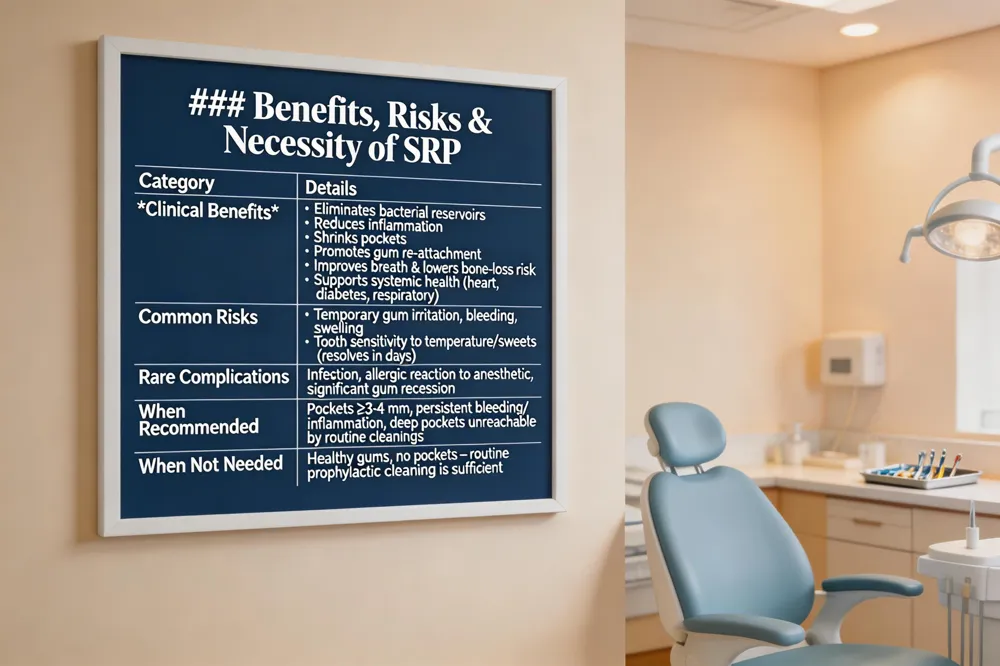 Scaling and root planing (SRP) is the first‑line, non‑surgical treatment for mild to moderate periodontitis. By removing plaque and calculus from above and below the gumline and smoothing the tooth roots, SRP eliminates bacterial reservoirs, reduces inflammation, shrinks periodontal pockets, and allows gum tissue to re‑attach. Clinically, this translates into less bleeding, fresher breath, lower risk of bone loss, and a decreased chance of tooth loss. It also supports overall health by limiting the spread of oral bacteria that can affect the heart, diabetes, and respiratory systems.
Potential risks are generally mild: temporary gum irritation, bleeding, swelling, and tooth sensitivity to hot, cold, or sweet foods are common and resolve within a few days with gentle oral care and OTC analgesics. Rare complications include infection, allergic reaction to local anesthetic, or significant gum recession, which your dentist will discuss beforehand.
Dentists recommend SRP when pockets exceed 3‑4 mm, bleeding or persistent inflammation is present, or when deep pockets harbour bacteria that routine cleanings cannot reach. If the gums are healthy and no periodontal pockets exist, a regular prophylactic cleaning is sufficient; unnecessary deep cleaning adds cost, discomfort, and may disrupt the protective biofilm.
Patient autonomy is essential. Before any SRP, the clinician reviews the examination findings, explains the benefits and risks, and obtains informed consent. This collaborative approach ensures that the decision to proceed aligns with your oral‑health goals and overall well‑being.
The Procedure Experience: Who Performs It and What to Expect
Procedure Experience Overview
| Element | Information |
|---|---|
| Provider | General dentist (e.g., Dr. Anthony P. Parrella) for mild‑to‑moderate disease; periodontist referral for advanced cases. |
| Timeline | 1️⃣ Oral exam & X‑rays 2️⃣ Local anesthetic injection 3️⃣ Supragingival & subgingival scaling 4️⃣ Root planing 5️⃣ Optional antimicrobial rinse/antibiotics. |
| Session Length | Two half‑mouth appointments (~1 hour each) OR full‑mouth per quadrant (60‑90 min). |
| Patient Sensation | Numbness → pressure, not sharp pain; post‑anesthetic mild soreness, tenderness, temporary temperature sensitivity. |
| Post‑Procedure Care | OTC pain relievers, warm salt‑water rinses, soft‑food diet; follow‑up every 3‑4 months. |
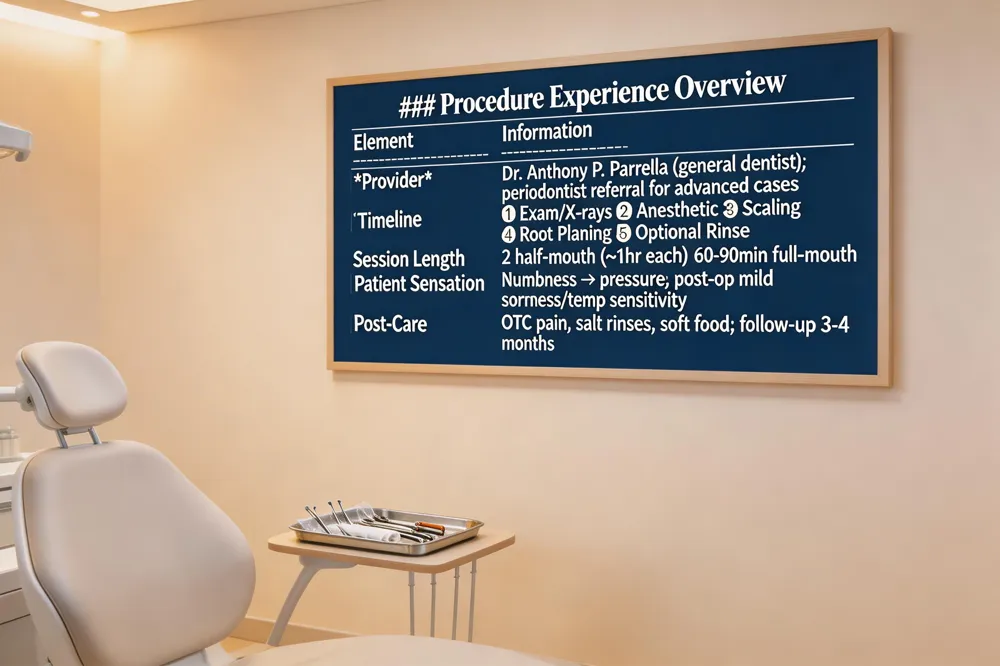 Scaling and root planing (SRP) can be performed by a general dentist or a specialist. A general dentist, such as Dr. Anthony P. Parrella in Somerville, is fully qualified to treat mild‑to‑moderate gum disease. During the routine exam the dentist assesses pocket depth, administers local anesthesia, and uses hand or ultrasonic scalers to remove plaque and tartar, followed by root planing to smooth the tooth roots. If the disease is advanced, extensive bone loss, or requires surgical intervention, the dentist will refer the patient to a periodontist for specialized care.
The treatment follows a clear timeline: (1) oral exam and X‑rays, (2) local anesthetic injection, (3) scaling of supragingival and subgingival deposits, (4) root planing to smooth the roots, and (5) optional antimicrobial rinse or antibiotics. Most patients receive the care in two half‑mouth appointments, each lasting about an hour; a full‑mouth session can take 60‑90 minutes per quadrant.
Because the gums are numbed, patients feel pressure rather than sharp pain during the procedure. After the anesthetic fades, mild soreness, tenderness, or temporary temperature sensitivity is normal and usually resolves within a few days. Over‑the‑counter pain relievers, warm salt‑water rinses, and a soft‑food diet help manage any post‑procedure discomfort. Follow‑up visits every 3–4 months ensure healing and prevent recurrence.
Recovery, Maintenance, and Financial Considerations
Recovery, Maintenance & Financials
| Aspect | Details |
|---|---|
| Immediate Recovery | Mild swelling, tenderness, occasional bleeding for 1‑3 days; manage with acetaminophen, soft‑bristled brushing, soft diet, salt‑water rinses (3×/day), avoid smoking. |
| Long‑Term Maintenance | SRP typically a one‑time treatment per area; professional cleaning every 6 months; heightened monitoring for smokers or uncontrolled diabetics. |
| Cost (U.S.) | $185‑$444 per quadrant (average ≈ $242); full mouth (4 quadrants) $800‑$1,200. |
| Insurance | Many plans cover medically necessary SRP; additional fees may apply for X‑rays, anesthesia, follow‑ups; financing options (CareCredit) often available. |
| Patient Rights | Right to decline SRP; dentist must explain risks of untreated disease (bleeding, bone loss, tooth loss) and alternatives. |
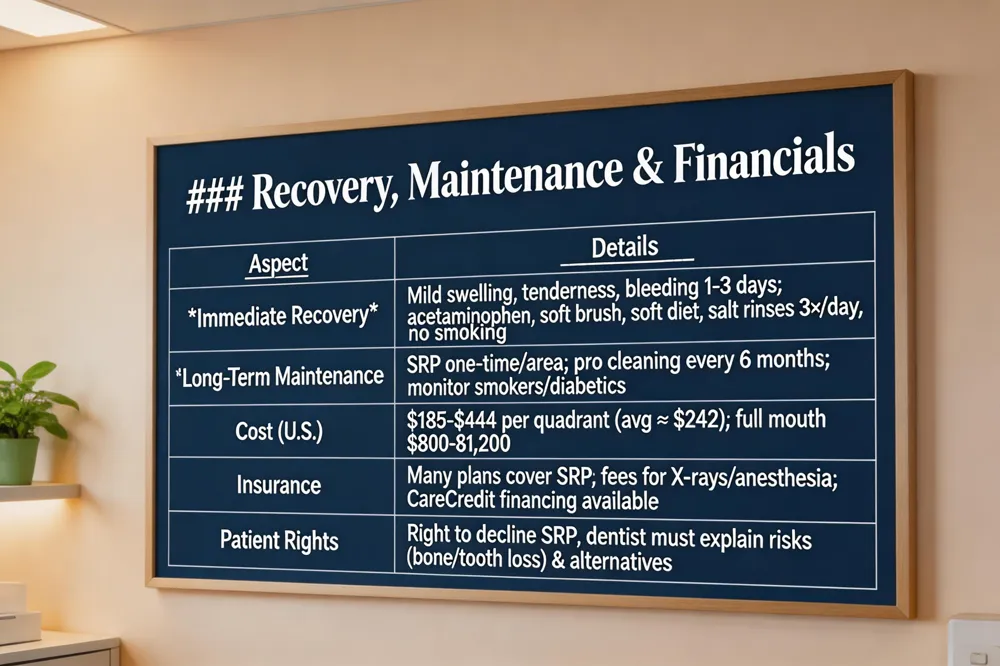 After scaling and root planing (SRP), most patients notice mild swelling, tenderness, and occasional gum bleeding for the first few days. These symptoms usually subside within one to three days. To stay comfortable, take an over‑the‑counter pain reliever such as acetaminophen as needed, brush gently with a soft‑bristled toothbrush, and wait at least 24 hours before flossing. Stick to a soft, cool diet (e.g., mashed potatoes, soups) and avoid sticky, hard, crunchy, spicy, or acidic foods until your gums feel better. Rinse three times daily with a warm salt‑water solution (½ tsp salt per 8 oz water) to promote healing, and refrain from smoking for several days. Contact the office promptly if bleeding, pain, or swelling persists beyond a week.
Most patients need SRP only once for each affected area. Regular professional cleanings—typically every six months—combined with diligent daily oral hygiene help keep gums healthy and prevent repeat deep cleanings. Those with risk factors such as smoking or uncontrolled diabetes may require more frequent evaluations.
In the United States, SRP costs $185‑$444 per quadrant (average ≈ $242). A full‑mouth treatment (four quadrants) ranges from $800‑$1,200. Many dental insurance plans cover a portion when the procedure is medically necessary; additional fees may apply for X‑rays, anesthesia, or follow‑up visits. Without insurance, the same price range applies, and offices often offer financing or CareCredit.
You have the right to decline SRP. Your dentist will explain the risks of untreated gum disease—including increased bleeding, pocket formation, bone loss, and possible tooth loss—and any alternatives. An informed decision is essential, and Dr. Parrella’s team is happy to discuss concerns and options with you.
Protecting Your Smile Through Informed Care
Deep cleaning halts gum disease, preserves teeth; at Dr. Parrella’s we tailor care. Call today for a periodontal evaluation now.