Why Early Detection of Gum Issues Matters
Nearly half of U.S. adults over 30 show signs of gum disease, making it the leading cause of tooth loss. Detecting inflammation early—when gums are red, swollen, or bleed during brushing—allows simple, reversible treatment such as professional cleaning and improved home care. Prompt intervention halts progression to periodontitis, preserving bone and preventing costly surgery. The foundation of early detection is consistent oral hygiene: brush twice daily with a soft‑bristle toothbrush, floss or use interdental cleaners every day, rinse with an antibacterial mouthwash, quit tobacco, and schedule dental check‑ups at least twice a year. These habits keep plaque away and protect gums before damage occurs.
Recognizing Early Signs of Gum Disease
 Early gum disease often shows up as red, swollen, or tender gums that bleed when you brush or floss, persistent bad breath, and a puffy appearance. The most common cause of gum swelling is plaque that hardens into tartar, irritating the gum tissue and leading to gingivitis; other triggers include an abscessed tooth, cracked roots, hormonal changes, ill‑fitting dentures or braces, and systemic factors such as diabetes, smoking, and certain medications.
Fastest way to heal swollen gums – Schedule a prompt evaluation and deep cleaning with Dr. Anthony P. Parrella while practicing gentle at‑home care: rinse with warm salt‑water (½ tsp in 8 oz) 2–3 times daily, brush softly with a soft‑bristled toothbrush twice a day, use an antibacterial mouthwash, and apply aloe vera gel or turmeric paste to reduce inflammation. If swelling persists beyond a few days, seek urgent dental care.
Effective at‑home treatments – Warm salt‑water rinses, gentle hydrogen‑peroxide rinses, oil pulling with coconut oil, and cold compresses can quickly calm swelling. Maintain diligent flossing, avoid tobacco and sugary foods, and keep oral hygiene consistent.
What causes gum swelling around teeth? – Primarily plaque buildup and gingivitis, but also abscesses, cracked teeth, hormonal shifts, medications, ill‑fitted appliances, and systemic conditions like diabetes and smoking.
When Swelling Targets a Single Tooth in the Back
 Why is my gum swollen around one tooth in the back? Localized swelling near a single back tooth is usually the result of trapped plaque, food debris, or a small infection such as an abscess. A cracked or loose tooth, an impacted wisdom tooth, or early‑stage gingivitis can also cause the gum to puffy and tender. Poor flossing habits, an over‑contoured filling, or hormonal changes may further irritate the tissue. Because the exact cause cannot be diagnosed visually, a thorough intra‑oral exam and an X‑ray at a periodontist (e.g., Dr. Maria Parrella) are essential to pinpoint the problem and plan appropriate care.
How to treat swollen gums in the back of the mouth? Begin with gentle warm‑salt‑water rinses (½ tsp salt in 8 oz warm water) several times daily. Brush the area with a soft‑bristled brush using circular motions and floss carefully to remove debris. An antimicrobial mouthwash such as chlorhexidine may be used as directed. If swelling persists, schedule a professional cleaning, scaling and root planing, or antibiotics with your periodontist to address any underlying infection or periodontal pocket.
How can I relieve gum pain at home? Rinse with warm salt water, apply a cold compress or warm damp cloth to the cheek for 15‑20 minutes, and consider a dab of clove oil or aloe vera gel on the sore spot. Over‑the‑counter ibuprofen or an oral anesthetic gel can manage discomfort. If pain lasts more than a few days, see a dentist promptly.
Professional Periodontal Therapy Explained
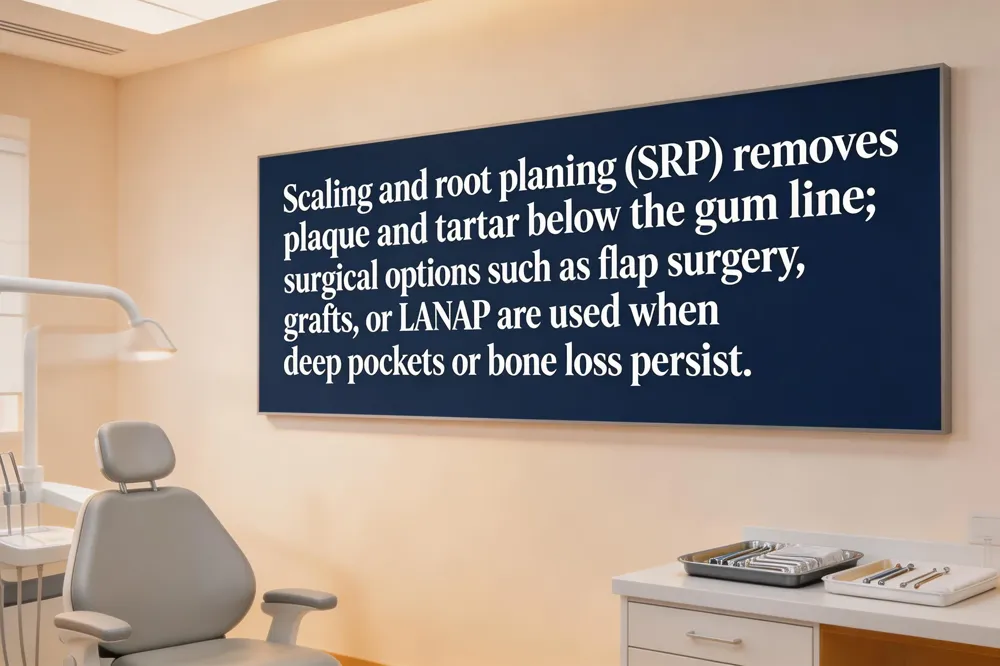 Professional scaling and root planing (SRP) is the cornerstone of non‑surgical periodontal therapy. During SRP the dentist or hygienist removes plaque and hardened tartar from both above and below the gum line and smooths the root surfaces so that gum tissue can re‑attach. This deep cleaning often stops the inflammation of gingivitis and prevents its progression to periodontitis.
Non‑surgical therapies include SRP together with adjunctive measures such as antimicrobial mouth rinses, localized antibiotics, and patient‑specific oral‑hygiene instructions. When pockets remain deep or bone loss is evident, surgical options—pocket‑reduction flap surgery, bone or tissue grafts, guided tissue regeneration, or laser‑assisted new attachment (LANAP)—are employed to restore supporting structures.
Gingivitis reversal is achievable when the bacterial biofilm is eliminated. Treatment begins with a professional cleaning, followed by a personalized home‑care plan: brush twice daily with fluoride toothpaste, floss daily, use an antibacterial rinse, quit tobacco, and attend regular check‑ups. With diligent care, the gums heal and disease is halted.
Managing Gum Disease at Home
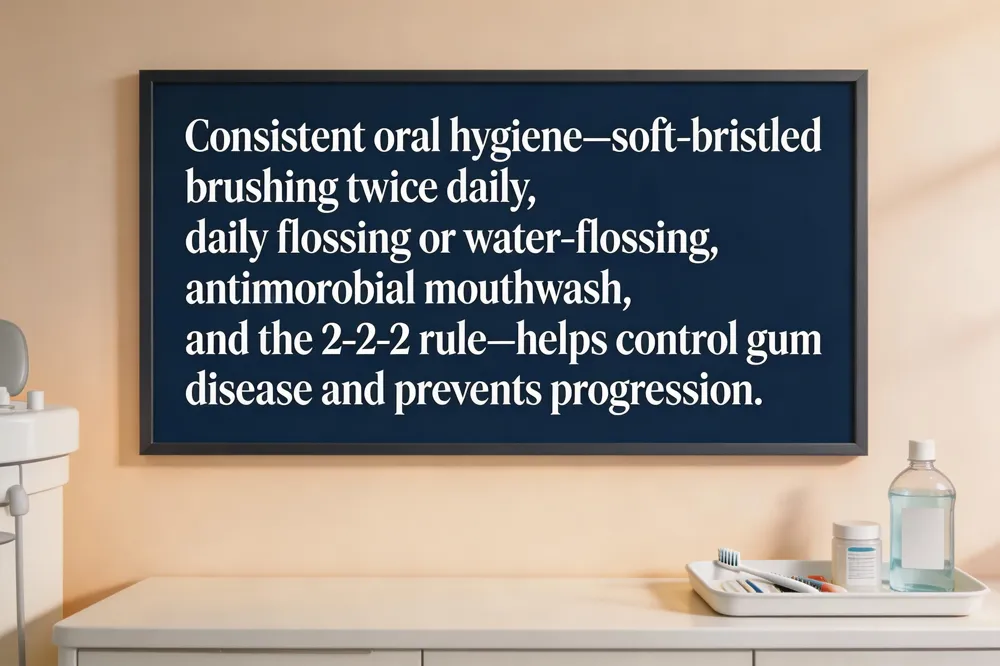 Self‑managed gum disease control begins with diligent oral hygiene. Brush twice a day with a soft‑bristled, fluoride toothpaste, floss or use a water flosser daily, and finish with an antimicrobial mouthwash to reduce plaque below the gum line. Eat a balanced diet rich in vitamin C, calcium, and whole grains while limiting sugary snacks and drinks that feed harmful bacteria. Over‑the‑counter antibacterial gels or therapeutic rinses can help control inflammation and keep gums moisturized.
The 2‑2‑2 rule for teeth is a simple, three‑part guideline: brush twice daily for two minutes each session and see your dentist twice a year for a professional cleaning and exam. This routine removes plaque, ensures thorough cleaning of all tooth surfaces—including the gumline—and allows early detection of decay or gum disease.
When to seek professional care: monitor for persistent bleeding, swelling, receding tissue, or a painful bump. If any of these signs continue, promptly schedule a professional cleaning and evaluation. Even with diligent self‑care, regular dental check‑ups remain essential to prevent progression to periodontitis.
Systemic Connections and Why Periodontal Care Matters
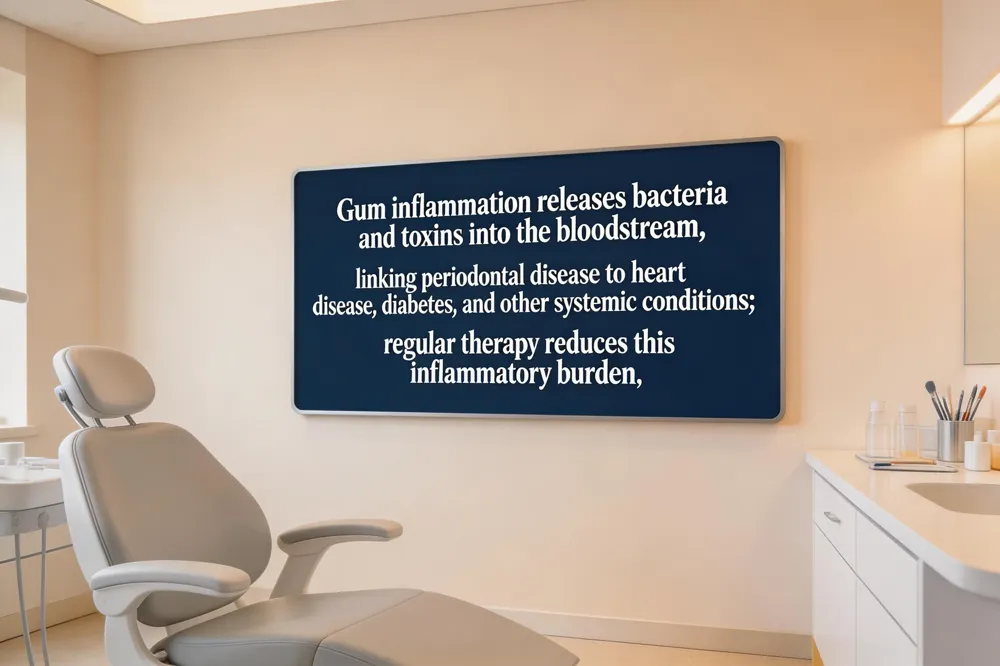 Periodontal disease is more than a local oral problem; it creates chronic inflammation that can affect the whole body. The bacteria that cause gum infection release toxins and inflammatory mediators that enter the bloodstream, contributing to systemic conditions such as cardiovascular disease and diabetes. Studies show that regular periodontal therapy—especially deep cleanings like scaling and root planing—lowers oral bacterial load, reduces gum inflammation, and can improve markers of systemic inflammation. For patients with heart disease, better gum health is linked to a modest reduction in atherosclerotic risk, while diabetic individuals often experience improved blood‑sugar control after consistent periodontal maintenance. In addition to protecting the teeth and supporting bone, ongoing therapy helps keep the body’s inflammatory burden in check, supporting overall health. Routine check‑ups, professional cleanings every three to six months, and diligent home‑care are essential steps for families who want to safeguard both their smiles and their long‑term well‑being.
Meet Dr. Anthony P. Parrella – Your Local Periodontist
 Dr. Anthony P. Parrella, DMD, is the founding dentist and owner of Madison Periodontics, a family‑run practice in Somerville, MA. After earning his DDS at New York University School of Dentistry and completing a periodontal residency at the University of Pennsylvania, he returned to the Boston area in 1995 and has been serving local families for over two decades. The practice offers a full suite of periodontal services – scaling and root planing, osseous surgery, connective‑tissue grafts, bone grafting, crown lengthening, and dental implants – all performed with a gentle, patient‑focused approach. Dr. Parrella’s office is known for its warm, community‑oriented atmosphere; staff members greet patients by name, and the practice participates in local health fairs and school‑based oral‑health programs. By combining expert care with a personal touch, the team helps Somerville residents maintain healthy gums and confident smiles.
Take the First Step Toward Healthy Gums
Start your journey to healthier gums by booking a professional evaluation. A dental team will examine your gums, measure pocket depths, and take X‑rays to detect early inflammation or bone loss. Follow their recommendations and schedule regular cleanings every three to six months. At home, brush twice a day with a soft‑bristle brush, floss daily, and rinse with an antibacterial mouthwash to keep plaque below the gum line. Stay informed about the signs of gum disease—bleeding, swelling, bad breath, or recession—so you can act promptly. Consistent care and early detection protect your smile and overall health and support your confidence.