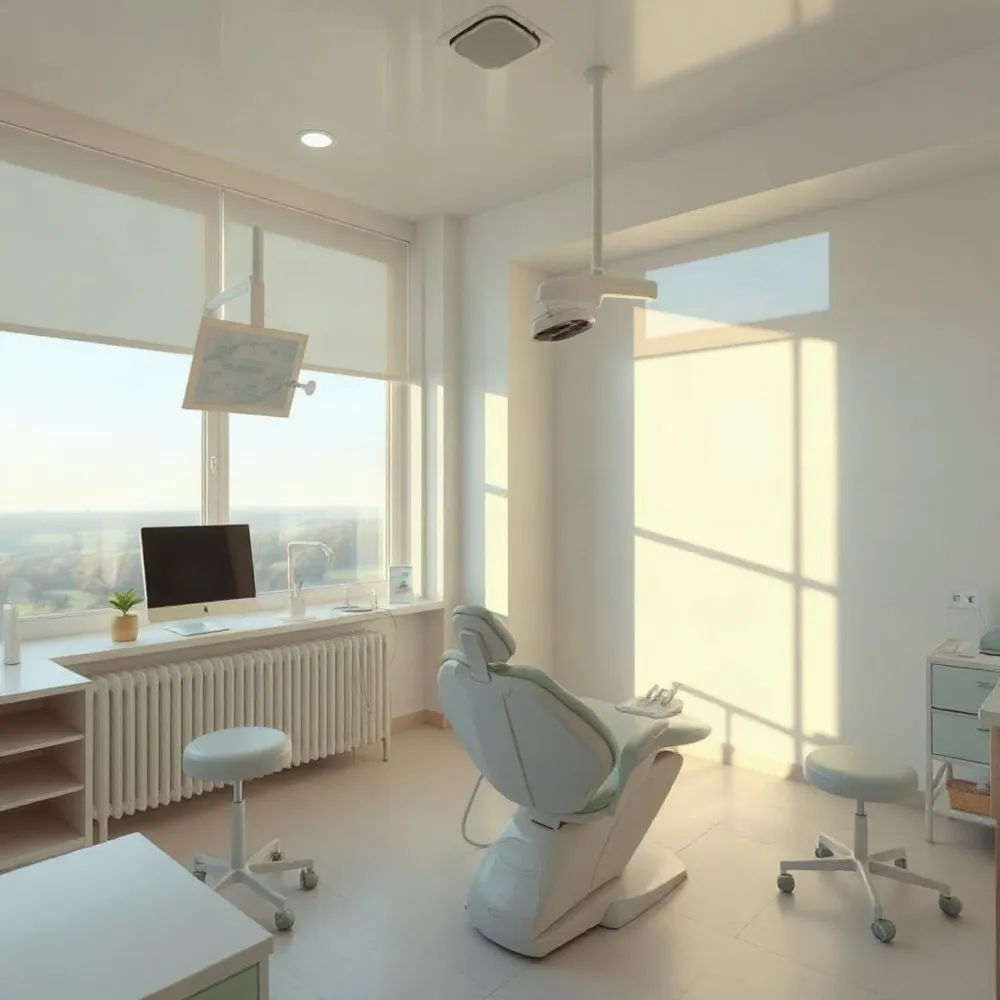
A New Vision for Dental Care
At Dr. Anthony P. Parrella’s family‑run practice in Somerville, MA, care is built around you and your family. Real‑time digital tools—instant X‑rays, intra‑oral cameras, and AI‑driven quality checks—provide clear, radiation‑light images the moment they are taken, allowing the dentist to explain findings on a screen and involve you in every decision. The practice embraces cutting‑edge technology such as CBCT 3‑D imaging, iTero Snapshot, and Primescan scanners, which shorten appointments, reduce repeat exposures, and enable precise implant or orthodontic planning. By partnering with local schools, community health events, and eco‑friendly workflows that eliminate hazardous film chemicals, the office demonstrates a lasting commitment to the health and well‑being of the Somerville community and ensures visit feels comfortable and personalized for each patient.
Modern Dental Imaging Technologies
 Modern dental imaging has moved from bulky film to sleek, high‑resolution digital intra‑oral sensors that capture images instantly with up to 90 % less radiation. These solid‑state sensors let dentists adjust contrast and brightness on the fly, revealing early cavities, bone loss, and subtle pathologies that film often missed. Panoramic radiography (OPG) expands the view to the entire jaw and facial structures in seconds, ideal for screening, assessing impacted teeth, or monitoring orthodontic progress. For complex cases, cone‑beam CT (CBCT) delivers three‑dimensional, low‑dose scans that map bone quality, nerve pathways, and sinus anatomy, enabling precise implant placement and root‑canine evaluation. Real‑time intra‑oral cameras complement X‑rays by showing live, high‑definition images of soft‑tissue health, enhancing patient education and shared decision‑making. The newest leap is AI‑driven analysis, exemplified by platforms like Imagecheck and Overjet, which automatically flag over‑exposure, cone cuts, and early caries, providing color‑coded annotations that boost diagnostic confidence and streamline workflow. Together, these technologies give Dr. Anthony P. Parrella’s family‑run practice in Somerville faster, safer, and more accurate tools for personalized, preventive, and restorative dental care.
The Dental Mirror: A Small Tool with Big Impact
 What type of mirror do dentists usually use to clearly see the images of their teeth?
Dentists most commonly use a small, round mouth mirror with a slightly concave surface. The concave shape concentrates and reflects the light from the dental unit, producing a brighter, magnified view of the teeth and surrounding tissues. This design allows clinicians to see fine details on posterior and lingual surfaces that are otherwise difficult to visualize. Modern versions often have a front‑surface coating to eliminate double images and improve clarity. The mirror’s handle is ergonomic and the head can be swapped for different sizes, but the concave, front‑surface mirror remains the standard tool for clear intra‑oral observation.
Concave Mouth Mirror
The gentle inward curve focuses the light beam, enhancing illumination in hard‑to‑reach areas and providing a modest 2‑3× magnification that helps detect early caries or subtle cracks.
Front‑Surface Coating
A silvered front‑surface coating prevents the secondary reflection that creates ghost images, delivering crystal‑clear visuals and reducing diagnostic confusion.
Ergonomic Design
Handles are contoured for a comfortable grip, minimizing hand fatigue during long procedures. Many mirrors feature interchangeable heads, allowing clinicians to select the optimal size for pediatric or adult patients.
Clinical Visibility
Together, the concave shape, front‑surface coating, and ergonomic handle give dentists reliable, high‑definition visibility, supporting precise, minimally invasive treatments and fostering patient trust through transparent communication.
OPG vs RVG: Understanding Panoramic and Digital X‑Rays
 Orthopantomogram (OPG) and Radiovisiography (RVG) are complementary imaging tools that together give dentists a full picture of oral health. An OPG is a panoramic X‑ray that rotates around the head to capture a single, wide‑angle image of the entire mouth, showing all teeth, the upper and lower jaws, bone, and sinus structures. It is especially useful for evaluating impacted or missing teeth, assessing jawbone density, detecting fractures or lesions, and planning orthodontic, implant, or oral‑surgery procedures. RVG, on the other hand, refers to digital intra‑oral radiography where a small sensor is placed inside the mouth to record high‑resolution X‑ray images of individual teeth or specific sites. Compared with traditional film, RVG delivers instant images, adjustable contrast and brightness, and far lower radiation exposure—up to upto 90 % less than film‑based X‑rays. Clinically, RVG excels at detecting early caries, root‑canal morphology, and the fit of restorations, while OPG provides the broader skeletal context needed for treatment planning. Both modalities adhere to ALARA principles, but RVG’s sensor technology typically results in the lowest dose for localized examinations, whereas an OPG’s dose is higher but still reduced compared with older panoramic film techniques, making them safe for routine use in families and pediatric patients.
The Rule of 7: Guiding Children’s Oral Health
 The Rule of 7 in dentistry is a practical guideline that helps families and clinicians schedule key milestones in a child’s oral‑health journey. It recommends that a child’s first dental examination occur by age 7, at which point most of the 20 primary (baby) teeth should have been exfoliated and the first permanent molars—often called the "six‑year molars"—should have erupted. This timing provides a clear transition point from primary to permanent dentition, allowing the dentist to assess the health of newly erupted molars, identify early caries, and reinforce brushing and flossing habits before permanent teeth become vulnerable.
During the first visit, the dentist evaluates the pattern of primary tooth loss (primary tooth exfoliation) and checks that the permanent molars are emerging correctly. Preventive care timing is then customized: fluoride varnish, sealants on the newly erupted molars, and oral‑hygiene education are introduced early to reduce decay risk. By adhering to the Rule 7, parents ensure that any orthodontic issues are spotted promptly, that the child’s bite develops properly, and that a foundation of good oral health is established for the years ahead. This child‑centered approach supports smoother dental development and builds confidence in the dental team.
Navigating Insurance for CBCT Scans
 Dental insurance policies vary, but many PPO plans—especially those from carriers such as Delta Dental—provide coverage for cone‑beam computed tomography (CBCT) when the scan is deemed medically necessary. Typical scenarios that qualify include implant planning, orthodontic assessment, complex endodontic cases, and evaluation of trauma or pathology. To secure reimbursement, the dentist must submit the appropriate CDT code (e.g., D0210 for a full‑mouth series, D0230 for a limited series, or D0272 for a CBCT scan) along with a detailed clinical justification that explains why the three‑dimensional image is essential for the proposed treatment. Insurance companies often require prior authorization, so a prompt request from the dental office can prevent delays.
Patients should review their policy’s exclusions; scans performed solely for cosmetic purposes or purely investigational research are frequently denied. Even when covered, patients are usually responsible for a co‑pay, deductible, or coinsurance portion, which can vary based on the plan’s design. If a standard medical policy is in place, coverage may be limited to trauma‑related imaging, making a dedicated dental plan the more reliable route for elective CBCT procedures. Understanding these nuances helps families in Somerville plan for costs and avoid unexpected out‑of‑pocket expenses.
State‑of‑the‑Art Imaging Right Here in Somerville
 When you search for "Dental imaging near me," Dr. Anthony P. Parrella’s family‑run office in Somerville, MA offers a complete, in‑house imaging suite that eliminates the need to travel to a specialty center.
In‑house digital sensors: The practice uses state‑of‑the‑art electronic intra‑oral sensors that capture high‑resolution X‑rays instantly. These solid‑state sensors reduce radiation exposure by up to 90 % compared with traditional film, are safe for children and pregnant patients, and allow real‑time contrast adjustments for early detection of cavities and bone loss.
Panoramic X‑ray: A full‑mouth panoramic unit provides a quick, 360° view of the jaws, teeth, and surrounding structures. The image appears on screen within seconds, giving Dr. Parrella a comprehensive overview for diagnosis and patient education during the same appointment.
CBCT scanner: The on‑site cone‑beam computed tomography (CBCT) delivers three‑dimensional images with radiation doses far lower than conventional CT. This low3‑D view is essential for precise implant planning, orthodontic monitoring, TMJ assessment, and complex surgical cases. Results are available instantly, allowing the dentist to discuss treatment options and show the patient a visual model of their oral anatomy.
Patient convenience: Because all imaging is performed in the office, appointments are shorter, repeat exposures are minimized, and patients receive a clear visual explanation of their oral health. Schedule a visit by calling (617) 718‑0740 and experience fast, accurate, and low‑radiation imaging just minutes from your home.
Real‑Time Imaging in Action: Fluoroscopy and C‑Arm CT
 X‑ray fluoroscopy is a classic example of real‑time imaging, producing a continuous live view of internal structures as the X‑ray beam moves. In dentistry, fluoroscopic systems such as C‑arm CT can display three‑dimensional images instantly, helping clinicians guide procedures like implant placement with precise, dynamic feedback. Modern C‑arm CT uses flat‑panel detectors and automated exposure control, keeping the effective dose low (≈ 0.25 mSv for a 5‑second head scan), which aligns with the ALARA principle and is comparable to or lower than many cone‑beam CT protocols. This low‑radiation, real‑time capability lets the dentist monitor pilot drill positioning and implant insertion in the same appointment, reducing the risk of nerve injury, sinus perforation, or improper angulation. Because each frame is captured and projected in milliseconds, the clinician can adjust technique on the fly, shortening chair time and improving treatment accuracy. Patients benefit from a safer, faster workflow and can see the live images on a monitor, which enhances understanding of the procedure and builds confidence in their care.
From Snapshot to Smiles – The Future Is Now
Digital imaging tools such as iTero™ Snapshot, intra‑oral cameras, and real‑time AI‑driven X‑ray QA empower Dr. Parrella’s Somerville practice to deliver truly personalized care. Instant 3‑D scans and AI flagging of cavities let the team tailor treatment plans on the spot, while patients watch their own anatomy on a screen, fostering trust and informed decision‑making. The reduced radiation dose of digital X‑rays and the waste‑free workflow protect children, pregnant patients, and the environment. Community outreach benefits, well, family‑friendly, vibrantschool periented population that thrives on quick, accurate diagnoses and preventive education. Together, these technologies transform routine visits into collaborative, health‑focused experiences that keep families smiling.