Introducing Painless Gum Treatment
Gum disease, or periodontal disease, begins as inflammation (gingivitis) that can progress to deeper tissue loss, bone damage, and tooth loss if untreated. Traditional treatment usually involves scaling and root planing followed by flap surgery, which requires incisions, sutures, and often a week or more of recovery with noticeable bleeding, swelling, and discomfort.
Laser‑assisted periodontal therapy offers a minimally invasive alternative. A focused diode, Nd:YAG, or Er:YAG laser selectively vaporizes diseased tissue, coagulates blood vessels, and sterilizes the pocket in real time. Because the laser seals nerve endings and cuts without cutting, patients typically feel only a mild warming sensation and can often for local anesthesia or a light spray. The procedure eliminates the need for sutures, reduces intra‑operative bleeding, and cuts recovery time to 24‑48 hours for most people.
Families are increasingly choosing laser gum treatment for its painless experience, faster return to daily activities, and lower risk of post‑operative infection. The technology also promotes faster tissue regeneration and can be used for both therapeutic and cosmetic needs, such as gum‑line reshaping. As research continues to support its safety and efficacy, laser therapy is becoming a trusted option for patients who want effective gum care without the pain and downtime of traditional surgery.
Understanding Swollen Gums and Home Relief
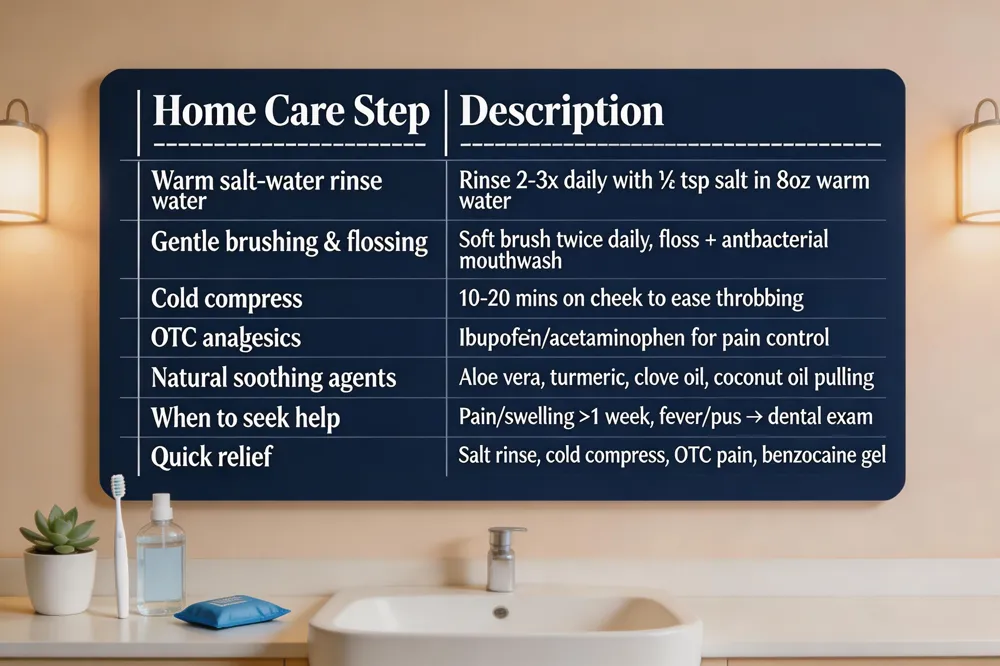
| Home Care Step | Description |
|---|---|
| Warm salt‑water rinse | Rinse 2‑3 times daily with ½ tsp salt in 8 oz warm water to reduce inflammation and draw out infection. |
| Gentle brushing & flossing | Use a soft‑bristled toothbrush twice daily, floss daily, and an antibacterial mouthwash; avoid aggressive scrubbing. |
| Cold compress | Apply to cheek for 10‑20 minutes to ease throbbing. |
| OTC analgesics | Ibuprofen or acetaminophen for pain control. |
| Natural soothing agents | Aloe vera gel, turmeric paste, clove oil, or brief oil‑pulling with coconut oil (apply a few minutes). |
| When to seek help | Persistent redness, pain, bleeding, or swelling > 1 week; fever, pus, or foul taste → schedule dental exam. |
| Quick relief options | Warm salt‑water rinse, cold compress, OTC analgesic, topical benzocaine gel (e.g., Orajel). |
 Swollen gums around a single back tooth often signal a localized infection or irritation. Plaque buildup, an early cavity, a dental abscess, a cracked tooth, or an erupting wisdom tooth can all provoke inflammation. Trauma from a hard bite or trapped food may cause similar swelling. Because the condition can progress to deeper infection or bone loss, a prompt dental exam is advisable.
Home Care Steps
- Rinse twice‑to‑three times daily with warm salt water (½ tsp salt in 8 oz warm water) to reduce inflammation and draw out infection.
- Brush gently twice a day with a soft‑bristled toothbrush, floss daily, and use an antibacterial mouthwash; avoid aggressive scrubbing.
- Apply a cold compress to the cheek for 10‑20 minutes to ease throbbing.
- Over‑the‑counter pain relievers (ibuprofen or acetaminophen) can control discomfort.
- Natural soothing agents—aloe vera gel, turmeric paste, clove oil, or a brief oil‑pulling with coconut oil—may be applied for a few minutes.
When to Seek Professional Help If redness, pain, bleeding, or swelling persist beyond a week, worsen, or are accompanied by fever, pus, or a foul taste, schedule a dental appointment. A clinician can assess for gum disease, abscesses, or other issues and may recommend laser‑assisted periodontal therapy, which offers precise tissue removal, reduced bleeding, and faster healing with minimal discomfort.
Quick Relief Options
- Warm salt‑water rinse.
- Cold compress.
- OTC analgesic.
- Topical benzocaine gel (e.g., Orajel) for temporary numbness.
Maintaining diligent oral hygiene and regular check‑ups remains the cornerstone of preventing recurrent gum swelling and pain.
Laser Gum Therapy Side Effects and Safety
| Effect | Typical Duration | Notes |
|---|---|---|
| Mild discomfort/tingling during procedure | During laser activation | Normal sensation; not painful. |
| Slight swelling | 24‑48 hours, may persist up to 1 week | Resolves with OTC pain relievers. |
| Light bleeding | Immediate, stops within minutes | Laser cauterizes vessels. |
| Temporary discoloration | Few days | Fades as tissue heals. |
| Increased tooth sensitivity (hot/cold) | Few days to a week | Manage with desensitizing toothpaste. |
| Rare gum recession | Up to a week | Usually minimal and resolves. |
| Rare complications (infection, scarring) | Varies | Prompt reporting to dentist essential. |
| Safety protocols | – | FDA‑cleared lasers, protective eyewear, calibrated settings, local anesthesia, strict sterilization. |
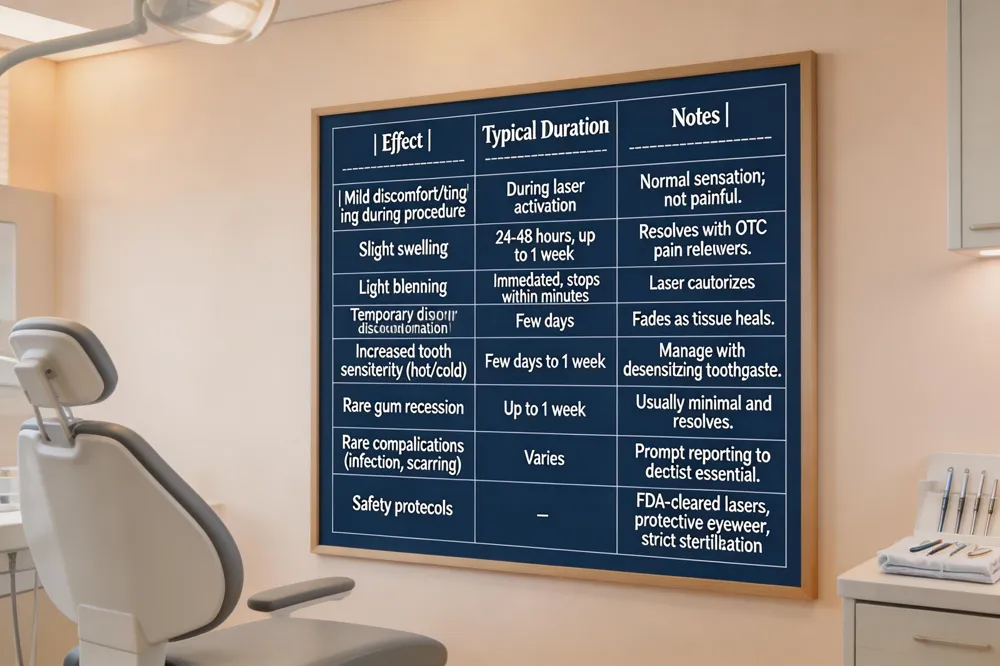 Gum laser treatment side effects
Laser gum treatment is generally safe, but patients may notice a few temporary side effects. Common reactions include mild discomfort or a tingling‑burning sensation during the procedure, slight swelling, and light bleeding of the gum tissue. Some individuals experience temporary discoloration of the treated area or increased tooth sensitivity to hot and cold temperatures. In rare cases, minimal gum recession or a brief change in bite can occur, but these effects usually resolve within a few days to a week. Overall, the side effects are mild, short‑lived, and far outweighed by the benefits of improved gum health.
Dental laser treatment side effects
Dental laser procedures are usually well‑tolerated, but you might notice a warm tingling feeling during the treatment. Afterward, mild swelling, temporary gum discoloration, or slight tooth sensitivity can occur. Because the laser simultaneously cuts and cauterizes tissue, bleeding is minimal, and stitches are rarely needed. Rare complications include infection, scarring, or a change in gum color, but these are uncommon when the laser is used by a trained professional. Good oral hygiene and following post‑procedure instructions help ensure a smooth recovery.
Typical post‑procedure sensations
Patients often report a warm, tingling sensation during the laser’s action, followed by mild swelling and occasional light bleeding that subsides within 24‑48 hours. Sensitivity to hot or cold may linger for a few days, but over‑the‑counter pain relievers usually suffice.
Rare complications
Although uncommon, possible complications include infection, scar formation, gum discoloration, or slight gum recession. Prompt reporting of unusual pain or prolonged swelling to the dentist minimizes risk.
Safety protocols
Clinicians use FDA‑cleared lasers, protective eyewear, and calibrated settings to avoid thermal injury. Procedures are performed under local anesthesia, and strict sterilization standards create a sterile field. Patients receive clear after‑care instructions—soft diet, gentle rinses, and avoidance of smoking—to support healing and prevent complications.
Pros, Cons, and Cost of Laser Gum Treatment
| Pros | Cons | Cost |
|---|---|---|
| Minimally invasive; little bleeding & no sutures | Higher cost than traditional scaling | $1,000‑$4,000 per quadrant (LANAP) |
| Faster healing; return to normal activities next day | Limited insurance coverage for laser adjunct | $5,000‑$12,000 for full‑mouth treatment |
| High bacterial kill (up to 99.9 %) | Limited penetration depth – deep pockets may need surgery | Conventional deep cleaning $150‑$300 per session (often covered) |
| Reduced postoperative pain & swelling | Requires trained clinician; case selection critical | Financing options (e.g., CareCredit) available |
| Potential tissue regeneration | Rare tissue damage if settings too high | – |
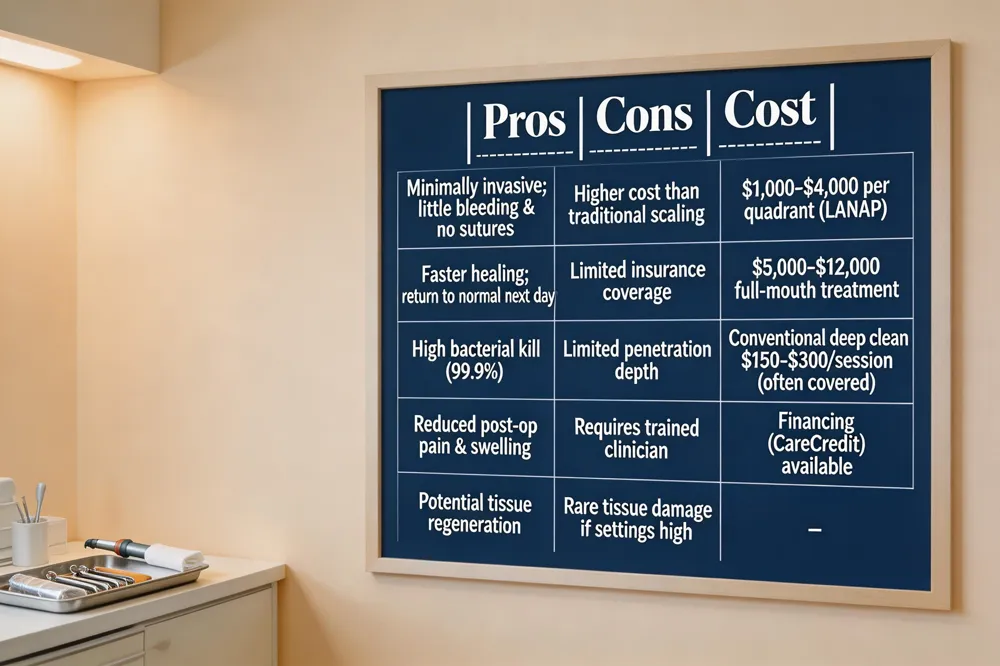 Laser gum treatment offers clear advantages over traditional surgery. Using a focused light beam instead of a scalpel means minimal bleeding, no sutures, and a quick return to normal activities—often the day after the appointment. The laser selectively vaporizes inflamed tissue while preserving healthy gum and bone, and it sterilizes the area, achieving bacterial reductions of up to 99.9 %. Patients typically report low pain scores and faster healing, which is especially helpful for those with dental anxiety.
What are two drawbacks of laser therapy? If the settings are set too high, the laser can cause unintended tissue damage such as burns or overheating. Its limited penetration depth also means deep pockets or extensive bone loss may still require conventional surgery, so case selection is critical.
Laser treatment for gum disease pros and cons Pros include minimally invasive tissue, reduced bleeding and swelling, high bacterial kill rates, and potential tissue regeneration. Cons are higher cost, limited insurance coverage, and limited effectiveness for very deep periodontal pockets.
Financial considerations A LANAP session typically costs $1,000 – $4,000 per quadrant, with full‑mouth treatment ranging from $5,000 – $12,000. Conventional deep cleanings (scaling and root planing) are far less expensive, usually $150 – $300 per session and often fully covered by insurance. Many practices offer financing options such as CareCredit to help manage out‑of‑pocket expenses.
What to Expect: Procedure, Healing, and After‑Care
| Phase | Details |
|---|---|
| Procedure | ~2 hours; may be 1‑2 visits; mild warming sensation; no sutures. |
| Immediate post‑procedure (0‑24 h) | Avoid vigorous rinsing, spitting, straws; soft cool diet; cold compress 20 min on/off. |
| Early recovery (24‑72 h) | Continue cold compress; switch to moist heat if needed; gentle brushing after day 1. |
| Intermediate recovery (1‑2 weeks) | Noticeable improvement; slight tenderness may persist; resume regular flossing after ~1 week. |
| Long‑term remodeling (months‑1 yr) | Full gum & bone remodeling; regular check‑ups essential. |
| Lifestyle restrictions | No smoking ≥ 48 h; avoid hot/spicy/crunchy foods early; follow up appointments. |
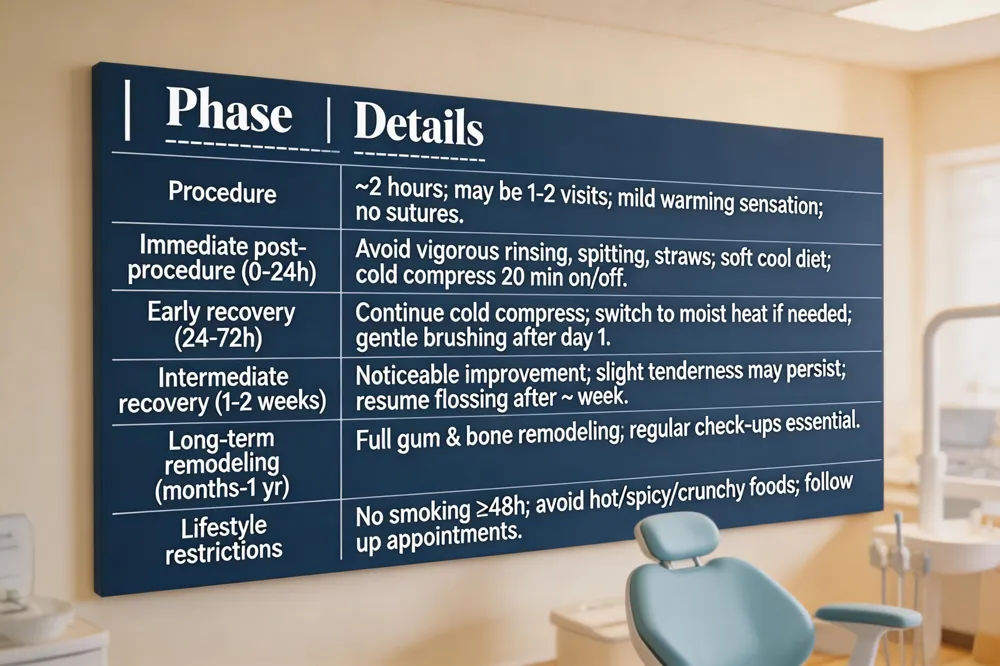 A typical laser gum treatment session lasts about two hours and may be completed in one or two visits, depending on the extent of the gum disease or cosmetic work needed. Patients typically experience only a mild warming sensation during laser gum treatment, and many report little to no pain both during and after the procedure.
Post‑procedure instructions – For the first 24 hours avoid vigorous rinsing, spitting, or using straws so the clot stays intact. Stick to a soft, cool diet (plain soups, scrambled eggs, cooked vegetables, yogurt) and steer clear of hot, spicy, crunchy, or acidic foods. Apply a cold compress to the cheeks for 20 minutes on, 20 minutes off during the first 36 hours, then switch to moist heat if needed. Gently clean the treated area after the first day with a soft toothbrush; resume regular flossing only after about a week, being careful not to push floss beneath the gum line. Refrain from smoking for at least 48 hours and keep any scheduled follow‑up appointments.
Recovery timeline – Most patients feel noticeably better within the first 1‑2 weeks as soft tissue heals, though slight tenderness and swelling may persist. Normal activities can often resume within a day, while full remodeling of gums and bone may take several months to a year. Regular check‑ups are essential to monitor progress and address any lingering sensitivity.
Finding Laser Gum Therapy Near You
| Provider | Location | Key Features |
|---|---|---|
| Dr. Anthony P. Parrella | Somerville, MA | FDA‑cleared soft‑tissue diode & Er:YAG lasers; LANAP® therapy. |
| Lightfoot Center for Laser Periodontics | Braintree, Duxbury, Hingham, Norwood, MA | Minimally invasive, rapid recovery, multiple laser platforms. |
| Dr. Frederick F. Nafash | Weymouth, MA | Emphasis on low‑bleed procedures, no sutures, quick healing. |
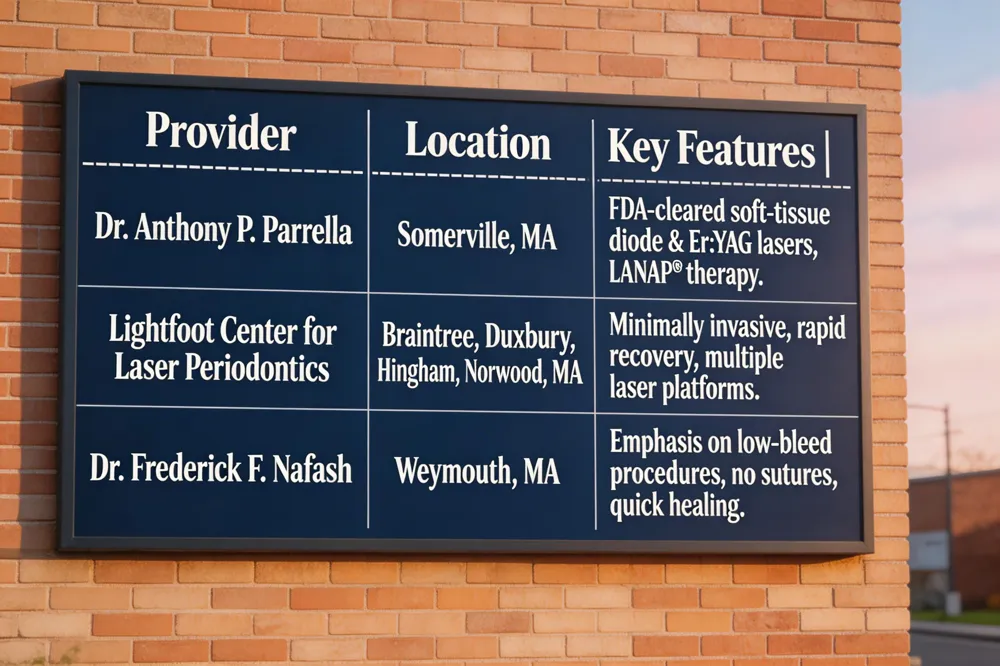 When you search for “laser gum therapy near me,” start with a local, reputable provider. In Somerville, MA, Dr. Anthony P. Parrella’s family‑run practice offers FDA‑cleared soft‑tissue diode and Er:YAG lasers for both therapeutic and cosmetic gum work, including LANAP® periodontal therapy. Nearby options include the Lightfoot Center for Laser Periodontics (Braintree, Duxbury, Hingham, Norwood) and Dr. Frederick F. Nafash in Weymouth, each emphasizing minimally invasive treatment, little bleeding and rapid recovery.
During your first consultation you’ll receive a comprehensive exam, digital imaging, and a discussion of your gum‑health goals. The dentist will explain how the laser selectively vaporizes diseased tissue, sterilizes the site, and often eliminates the need for sutures or general anesthesia. You’ll also learn the expected two‑hour session length, post‑procedure diet, and oral‑hygiene plan.
Insurance and financing tips: call the office ahead to verify coverage—many plans reimburse the underlying periodontal procedure but may list the laser as an adjunct. Ask about flexible payment plans or health‑savings accounts to offset the typical $2,000‑$8,000 cost range. Scheduling is simple via phone or online portal, and the team will help you maximize benefits before treatment begins.
Insurance, Coding, and Coverage Details
| CDT / CPT Code | Description | Coverage Notes |
|---|---|---|
| D4341 | Scaling & root planing (quadrant) with laser modifier | Often covered as medically necessary periodontal therapy. |
| D4342 | Scaling & root planing (1‑3 teeth) with laser modifier | Same coverage as D4341. |
| 41899 (unlisted CPT) | Miscellaneous laser‑only procedure | May be approved with documentation; verify with insurer. |
| Surgical flap codes (D4240‑D4241, D4260‑D4261) | Not appropriate for laser‑only | Usually denied for laser‑only procedures. |
| Local anesthesia | Topical gel or small injection | Standard for comfort; covered under routine procedure. |
| Soft‑tissue session cost | $200‑$500 | Often out‑of‑pocket; may be partially covered if deemed medically necessary. |
| Comprehensive therapy cost | $1,000‑$4,000 per quadrant | Insurance may cover portion; patient responsible for remainder. |
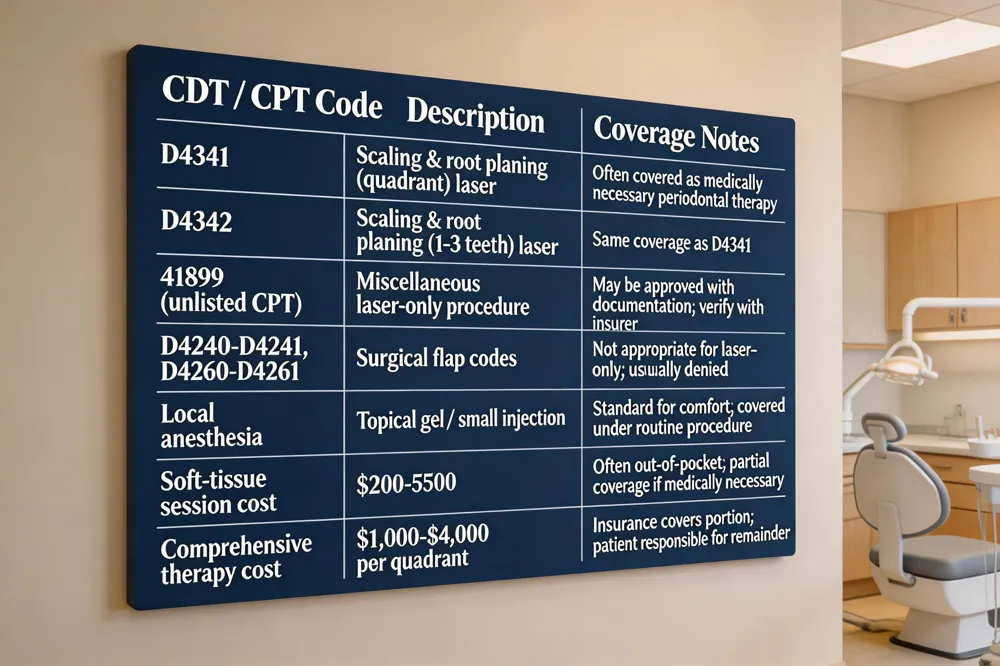 When your family schedules laser gum therapy, the office uses specific CDT codes to document the work. The most common codes are D4341 (scaling and root planing of a quadrant) and D4342 (scaling and root planing of one to three teeth) with a note that a laser was employed. Surgical flap codes such as D4240‑D4241 or D4260‑D4261 are not appropriate for laser‑only procedures and are usually denied. If a procedure cannot be captured with an existing code, many insurers accept the unlisted CPT code 41899, but you should verify coverage beforehand and provide a full periodontal chart, diagnosis, and radiographs.
Insurance reimbursement varies. Medical necessity (periodontal disease treatment) is often covered, while purely cosmetic laser work (e.g., gummy‑smile correction) is usually excluded. Call the payer before treatment to confirm benefits and any required pre‑authorizations.
Tips for patients: ask the office for a written estimate, request clarification on any co‑pays, and keep a copy of your treatment plan and insurance correspondence. Ask about financing options if out‑of‑pocket costs are a concern.
Laser periodontal therapy code – D4341 or D4342 with a laser modifier; unlisted CPT 41899 as a fallback.
Do they numb you for laser gum treatment? – Yes, a local anesthetic (topical gel or small injection) is applied to ensure comfort.
Dental laser treatment cost – Basic soft‑tissue sessions $200‑$500; comprehensive periodontal therapy $1,000‑$4,000 per quadrant, with insurance often covering medically necessary portions.
Patient Experiences and Reviews
| Aspect | Typical Feedback |
|---|---|
| Comfort | Almost painless; mild warming sensation rather than sharp pain. |
| Bleeding | Minimal to none; laser coagulates vessels. |
| Recovery time | Resume normal activities within 24‑48 h; much quicker than traditional flap surgery. |
| Satisfaction drivers | Practitioner training, type of laser, clear pre‑procedure counseling, sterilization effect. |
| Bacterial reduction | Up to 99 % kill rate reported by patients. |
| Post‑procedure swelling | Light swelling resolves within a few days; manageable with cold compress. |
| Overall rating | High satisfaction, especially among those with dental anxiety. |
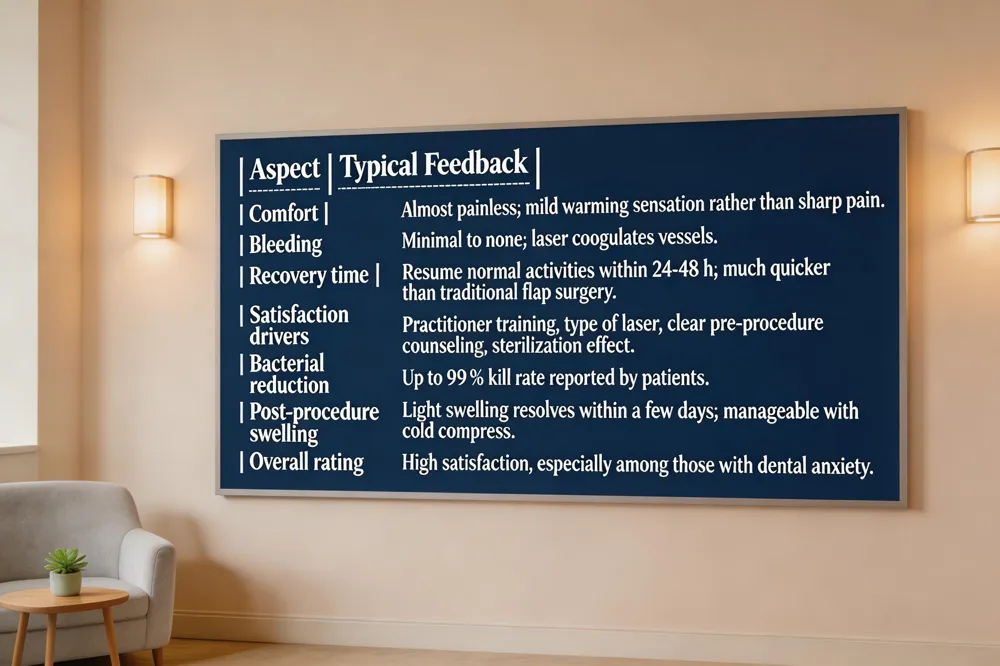 Patients who have undergone laser gum therapy consistently describe a comfortable, almost painless experience. The focused light beam vaporizes diseased tissue while simultaneously sealing blood vessels, which eliminates most bleeding and removes the need for stitches. Most testimonials highlight a mild warming sensation rather than sharp pain, and many report being able to resume normal activities within 24–48 hours—far quicker than the week‑plus recovery typical of traditional flap surgery.
Factors influencing satisfaction include the type of laser used (diode, Er:YAG, or Nd:YAG), the practitioner’s training (e.g., Dr. Parrella’s family‑run practice in Somerville, MA), and clear pre‑procedure counseling about expected outcomes and after‑care. Patients appreciate the sterilizing effect that reduces bacterial load by up to 99 % and the reduced swelling and postoperative discomfort.
Before choosing laser therapy, consider the severity of gum disease, insurance coverage (cosmetic uses are often excluded, and the need for diligent at‑home oral hygiene to maintain results. Discuss any concerns about long‑term effectiveness with the dental team to ensure the treatment aligns with your health goals and expectations.
Broader Benefits of Laser Dentistry
| Benefit | Explanation |
|---|---|
| Precision | Wavelength tuned to pigmented tissue; selective ablation preserves healthy structures. |
| Reduced bleeding & swelling | Laser coagulates small vessels during cutting; minimal postoperative discomfort. |
| Minimal anesthesia | Heat seals nerve endings; many procedures done with little or no local anesthetic. |
| Sterilization | Light energy kills up to 99 % of bacteria, promoting faster healing and lower infection risk. |
| Cosmetic applications | Gummy‑smile correction, painless gingivectomy, crown‑lengthening, peri‑implantitis management. |
| Patient comfort | Quiet, vibration‑free operation reduces anxiety, especially for nervous patients. |
| Tissue regeneration | Laser energy can stimulate fibroblast activity, aiding in gum and bone healing. |
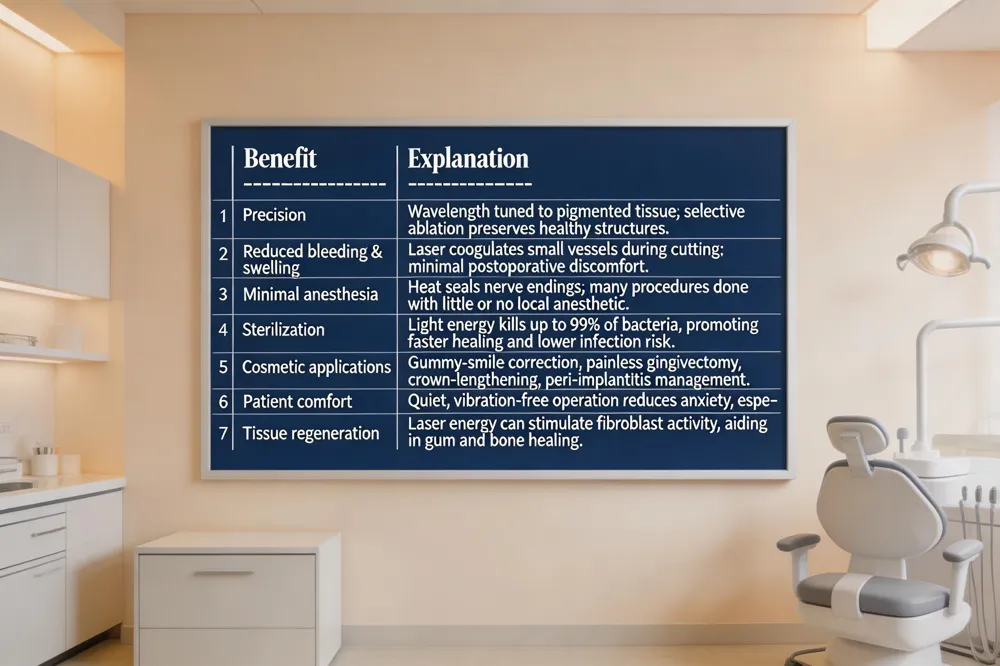 Laser dentistry brings remarkable precision to gum‑tissue work. By tuning the wavelength to the absorption peaks of pigmented (inflamed) tissue, soft‑tissue diode lasers, Er:YAG and Nd:YAG devices vaporize only diseased gum while sparing the surrounding healthy connective tissue. This selective ablation preserves healthy tissue, reduces collateral damage, and allows clinicians to reshape the gum line or perform crown‑lengthening with millimetre accuracy.
Because the laser simultaneously coagulates small blood vessels, patients experience far less bleeding, swelling and postoperative pain. The heat also seals nerve endings, so many procedures are performed with little or no local anesthesia, which dramatically lowers dental anxiety. The quiet, vibration‑free operation further eases the experience for nervous patients.
Beyond treating periodontal disease, laser technology is an effective adjunct for cosmetic and restorative cases. It can correct a gummy smile, perform painless gingivectomy, and assist in peri‑implantitis management. The same light energy sterilizes the treatment site, killing up to 99 % of harmful bacteria and promoting faster tissue regeneration—benefits that improve both health outcomes and aesthetic results for families seeking gentle, modern dental care.
Embracing a Painless Future for Gum Health
Laser‑assisted gum therapy has transformed how we treat both disease and cosmetic concerns. By using focused light energy, the laser selectively vaporizes infected tissue while sealing blood vessels, which means virtually no stitches, minimal bleeding, and a warm, tingling sensation instead of sharp pain. The built‑in sterilization kills up to 99.9% of harmful bacteria, reducing the risk of post‑operative infection and promoting faster tissue regeneration. Patients typically return to normal activities within a day, experience only mild soreness, and enjoy a smoother, quicker healing process compared with traditional scalpel surgery. Because the procedure is minimally invasive, it is especially appealing for those with dental anxiety or medical conditions that make conventional surgery riskier. If you have persistent gum swelling, bleeding, or a gummy‑smile that bothers you, laser therapy offers a comfortable, effective alternative. Our family‑run practice in Somerville is ready to assess your unique needs and tailor a laser‑based treatment plan that fits your lifestyle. Call us today or book an online appointment to start a painless journey toward healthier, happier gums.