Introduction
Daily oral care is the foundation of a healthy smile and a vital component of overall well‑being. Brushing twice a day with fluoride toothpaste and flossing removes plaque that can cause cavities, gum disease, and bad breath. When plaque is left unchecked, bacteria release acids that erode enamel and trigger inflammation that can spread to the heart, lungs, and other organs. Studies link poor oral hygiene to conditions such as heart disease, diabetes complications, and adverse pregnancy outcomes. By maintaining consistent brushing, flossing, and regular dental visits, families protect teeth, support systemic health, and enjoy confidence that lasts a lifetime.
Foundations of Daily Brushing, Flossing, and Toothbrush Care
| Practice | Details |
|---|---|
| Toothpaste | Fluoride toothpaste to remineralize enamel and reduce acid‑producing bacteria |
| Brushing | Soft‑bristled brush, 45° angle to gum line, gentle circular motions, 2 minutes, twice daily |
| Flossing | C‑shaped motion around each tooth, daily or after brushing, to clean interdental spaces |
| Mouthwash | Alcohol‑free antibacterial or fluoride rinse, after brushing, to lower bacterial load |
| Toothbrush replacement | Every 3–4 months or sooner if bristles are frayed |
| Diet & lifestyle | Limit sugary/acidic foods, stay hydrated with fluoridated water, avoid tobacco & excess alcohol |
| Professional care | Dental check‑ups at least twice a year for cleanings and early detection |
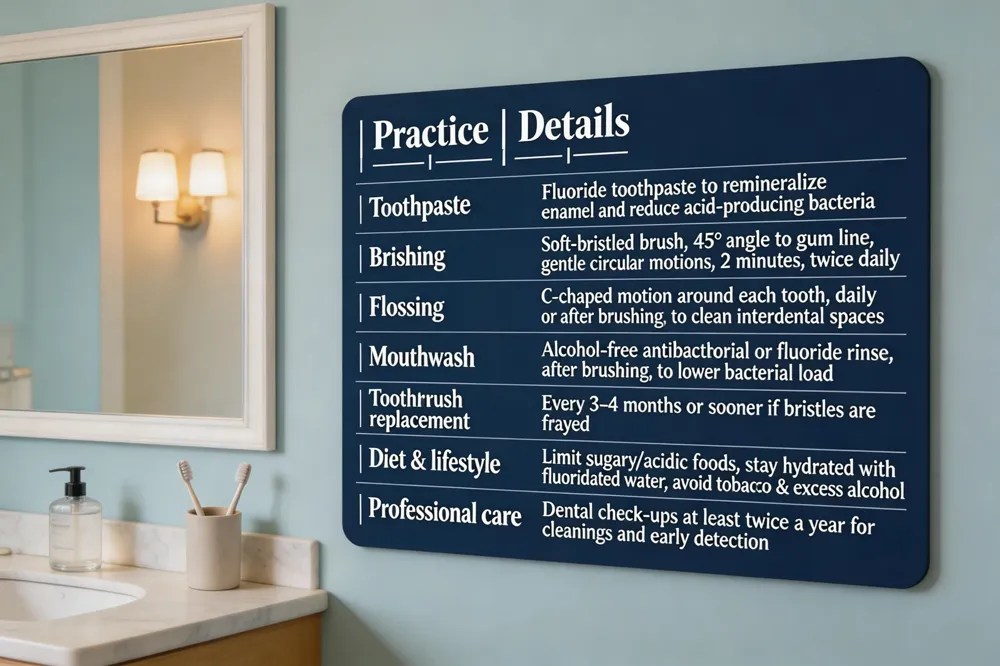 Oral hygiene is the daily practice of keeping the mouth clean and disease‑free by removing plaque and food debris. It begins with a fluoride toothpaste, which delivers cavity‑preventing fluoride to the enamel, remineralizing early decay and reducing acid‑producing bacteria. Brush twice a day for two minutes using a soft‑bristled brush held at a 45‑degree angle to the gum line, employing gentle circular motions to cover all tooth surfaces and the tongue. After brushing, floss or use an interdental cleaner to disrupt biofilm in the spaces a brush cannot reach; a C‑shaped motion around each tooth removes plaque and food particles. Finish the routine with an alcohol‑free antibacterial or fluoride mouthwash to lower bacterial load and provide extra protection. Replace your toothbrush or head every three to four months, or sooner if bristles become frayed, to maintain effective cleaning. In addition to meticulous home care, limit sugary and acidic foods, stay hydrated with fluoridated water, and avoid tobacco and excess alcohol. Regular dental check‑ups (at least twice a year) allow professional cleanings and early detection of cavities, gum disease, or oral cancer, helping you preserve a healthy, confident smile for life.
Nutrition, Lifestyle, and Natural Strategies for Cavity Prevention
| Strategy | Examples |
|---|---|
| Limit sugar/starch | Reduce frequent sugary snacks and drinks, especially between meals |
| Fluoridated water | Drink tap water with fluoride; consider fluoride rinse after meals |
| Calcium & Vitamin D | Eat dairy, leafy greens, fortified foods to neutralize acid and strengthen teeth |
| Hydration | Keep saliva flowing; sip water throughout the day |
| Regular dental visits | Exams and cleanings at least twice a year for professional fluoride treatments |
| Xylitol gum | Sugar‑free xylitol gum after meals to stimulate saliva and reduce bacteria |
| Lifestyle | Quit smoking, moderate alcohol, maintain a nutrient‑dense diet |
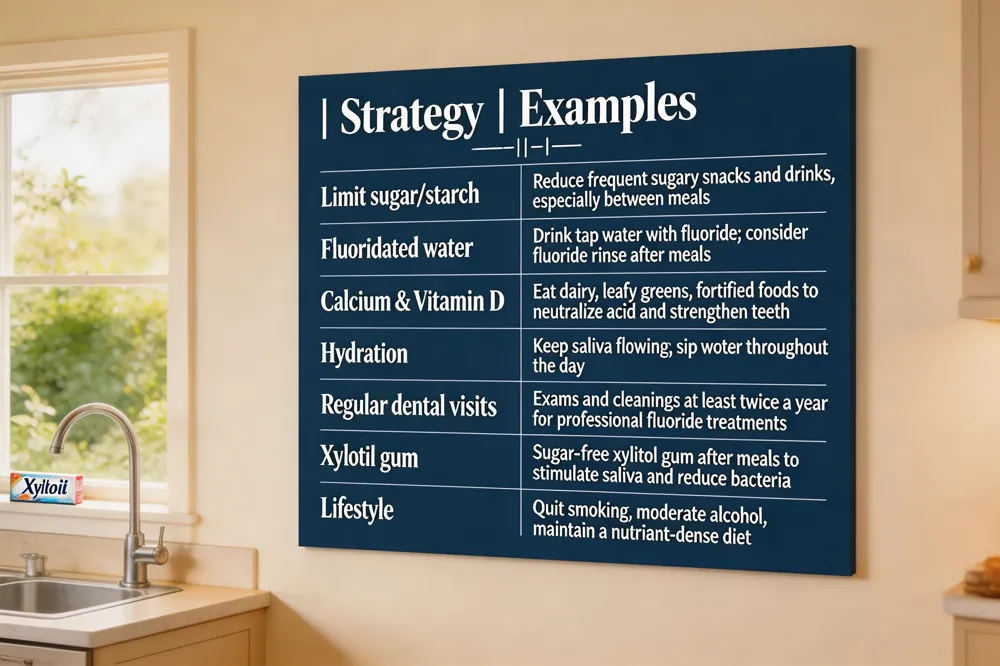 Maintaining a cavity‑free smile relies on controlling plaque, acid attacks, and mineral loss.
How can I prevent my cavities naturally?
Limit frequent sugary or starchy snacks and drinks, especially between meals. Brush twice daily for two minutes with fluoride toothpaste and floss to remove plaque, letting saliva remineralize enamel. Drink fluoridated tap water and consider a fluoride rinse or sugar‑free xylitol gum after meals. Eat calcium‑rich foods, vegetables, and vitamin D sources to neutralize acid and strengthen teeth. Schedule regular dental check‑ups for professional cleanings and early detection.
5 ways to prevent tooth decay
- Brush twice daily with fluoride toothpaste.
- Floss or use interdental cleaners each day.
- Limit sugary/acidic foods and drinks; choose water, preferably fluoridated.
- Stay well hydrated to keep saliva flowing.
- Visit the dentist at least every six months for exams and fluoride treatments.
10 ways to keep your teeth healthy
Brush with a soft‑bristled brush, floss, use an alcohol‑free antimicrobial mouthwash, limit sugar, drink fluoridated water, eat calcium‑ and vitamin D‑rich foods, stay hydrated, quit smoking, moderate alcohol, wear a mouthguard during sports, and keep routine dental appointments.
Oral health tips for adults
Maintain twice‑daily brushing and daily flossing, avoid tobacco and excess alcohol, stay hydrated with fluoridated water, follow a nutrient‑dense diet, and see a dentist at least once a year for early screening and professional fluoride care.
How to keep teeth healthy naturally
Combine proper brushing, flossing, a sugar‑controlled diet, adequate water intake, and regular professional care to support enamel remineralization and gum health without costly procedures.
Professional Dental Care, Preventive Treatments, and Care Planning
| Treatment | Purpose |
|---|---|
| Fluoride varnish / prescription rinse | Strengthen enamel, reduce acid attacks, halt early demineralization |
| Sealants | Protect pits and fissures of molars from decay |
| Silver‑diamine fluoride (SDF) | Arrest very small lesions and promote remineralization without drilling |
| Dental insurance / membership plans | Reduce cost of exams, X‑rays, cleanings; provide access to preventive services |
| Routine professional care | Early detection of cavities, gum disease, oral cancer; regular cleanings |
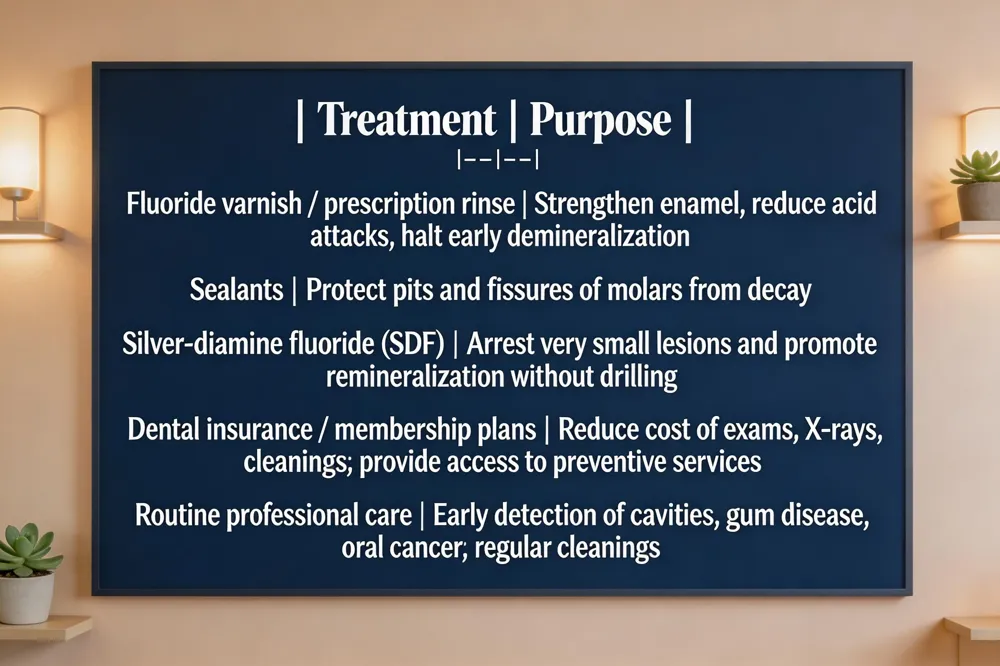 Preventive treatments such as fluoride varnish, sealants, and silver‑diamine fluoride (SDF) can halt early demineralization before a true cavity forms. Fluoride varnish or prescription‑strength fluoride mouth rinses strengthen enamel and reduce acid attacks, while sealants protect the pits and fissures of molars. For very small lesions, SDF arrests bacterial activity and encourages remineralization without drilling.
Dental insurance and low‑cost membership plans, like the Oral Care Dental Plan, make these services affordable. The plan provides free exams and X‑rays, up to 50 % off routine cleanings, and no waiting periods, allowing families to receive preventive care without financial strain. By combining regular professional visits, evidence‑based preventive treatments, and accessible financing, patients can maintain a healthy smile and avoid costly restorative procedures.
Natural Remedies, Oil Pulling, and Quick‑Fix Myths
| Myth / Remedy | Effectiveness |
|---|---|
| Oil pulling | Can lower plaque and bacterial load but cannot rebuild tooth structure once a cavity forms |
| “Heal cavity in two days” at Not possible; early enamel damage can be slowed with diligent oral care but requires professional treatment | |
| Home remineralization | Fluoride or hydroxyapatite toothpaste, proper diet, and saliva can aid early‑stage enamel repair |
| Quick‑fix myths | No substitute for brushing, flossing, fluoride, and professional dental care |
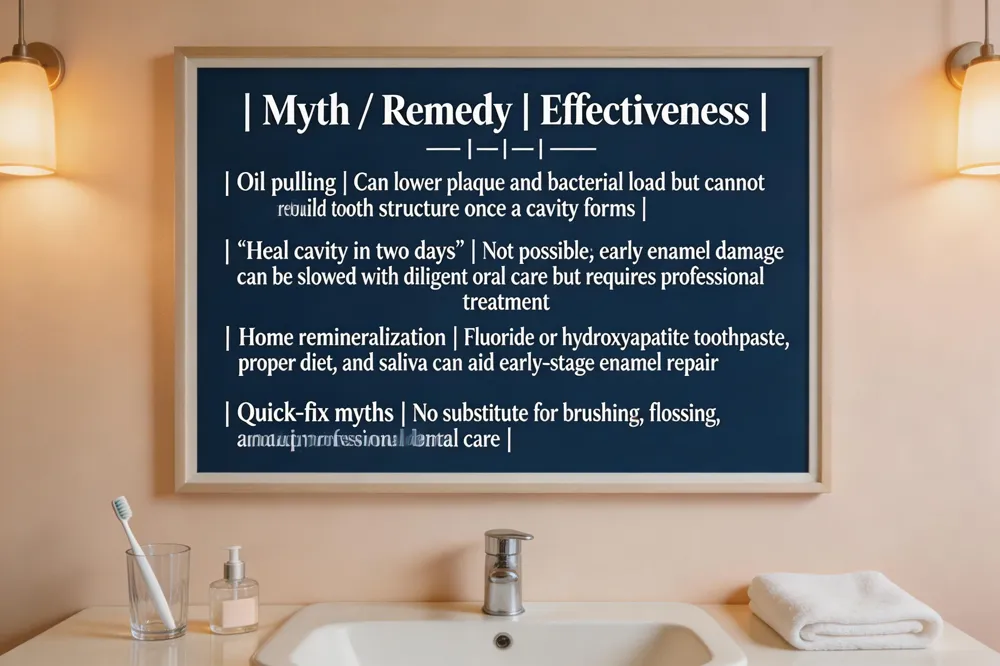 Can oil pulling heal cavities naturally?
Oil pulling can reduce plaque and bacterial load, but it cannot rebuild tooth structure once a cavity has formed. It is best used as a complementary habit alongside brushing, flossing, and fluoride use. In the very earliest stages of enamel weakening, good oral hygiene, a low‑sugar diet, and fluoride may support natural remineralization, but a true hole requires professional treatment.
How can cavities be healed at home in two days?
Cavities cannot be completely cured at home in two days. Early‑stage enamel damage can be slowed with diligent care: brush twice daily with fluoride or hydroxyapatite toothpaste, floss, use a fluoride rinse, and consider coconut‑oil pulling or a warm salt‑water rinse. Calcium‑rich, low‑sugar foods and adequate hydration help saliva‑mediated remineralization, but a dentist must evaluate any progressing lesion.
Oral hygiene presentation for adults
Adults should brush twice a day with a soft‑bristle brush and fluoride toothpaste, angling bristles 45° toward the gum line. Daily floss or interdental cleaning removes plaque between teeth. An alcohol‑free antibacterial mouthwash and regular dental check‑ups (at least twice a year) complete a preventive regimen that protects teeth, gums, and overall health.
Putting It All Together: A Daily Routine for a Healthy Smile
| Step | Action |
|---|---|
| 1 | Rinse with antimicrobial (alcohol‑free) mouthwash |
| 2 | Brush all tooth surfaces for 2 minutes with soft‑bristled brush, fluoride toothpaste, 45° angle |
| 3 | Floss using a C‑shaped motion around each tooth |
| 4 | Finish with fluoride mouthwash, swish 30 seconds; avoid eating/drinking for 30 minutes |
| 5 | Clean tongue (optional) and stay hydrated with fluoridated water |
| 6 | Limit sugary/acidic foods and chew sugar‑free gum to stimulate saliva |
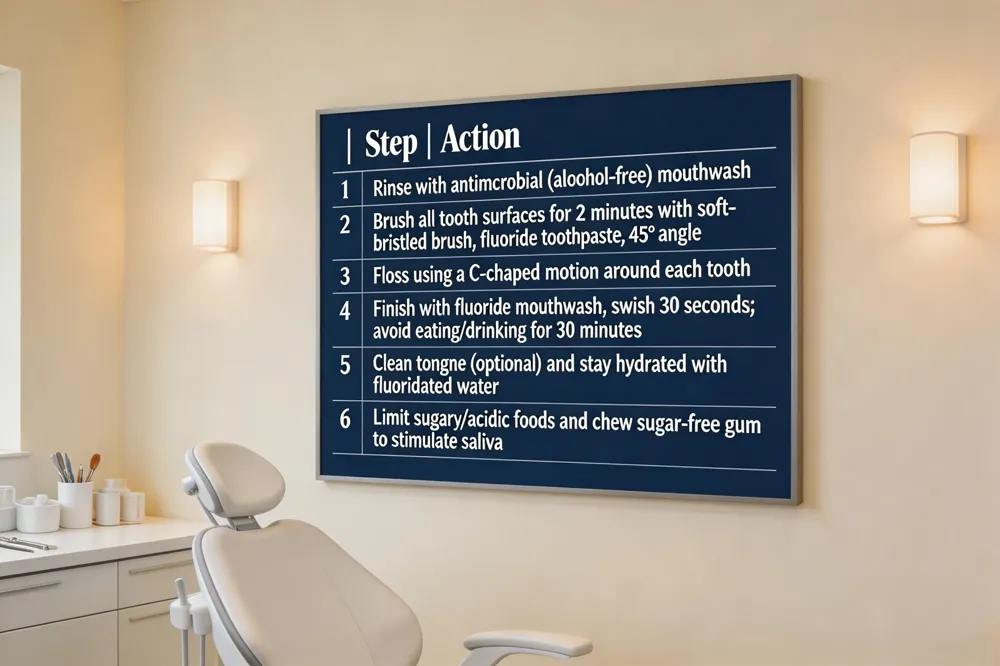 Steps of oral hygiene
- Rinse with antimicrobial mouthwash.
- Brush all surfaces for two minutes with a soft‑bristled brush, fluoride toothpaste, and a 45‑degree angle to the gum line.
- Floss daily, using a C‑shaped motion to remove plaque.
- Finish with fluoride mouthwash, swish 30 seconds; avoid food/drink for 30 minutes.
Oral hygiene routine order Floss first, then brush, clean the tongue, and end with fluoride mouthwash to maximize plaque removal and fluoride contact.
How to care for your teeth without visiting the dentist Follow the routine, limit sugary foods, hydrate with fluoridated water, chew sugar‑free gum to boost saliva, and avoid tobacco and alcohol. Watch for bleeding gums, bad breath, or tooth sensitivity and see a dentist promptly if they appear. Schedule cleanings twice a year for early detection.
Conclusion
Maintain a healthy smile by brushing twice for two minutes with a soft‑bristled, fluoride‑containing toothbrush, and flossing every day to clear the spaces a brush cannot reach. Choose an antimicrobial or fluoride mouthwash when advised, stay hydrated, limit sugary or acidic foods, and avoid tobacco and excessive alcohol. Replace your brush every three to four months and consider a powered brush if manual dexterity is limited. These simple habits dramatically lower plaque, caries, and gum disease risk. Schedule a professional cleaning and exam at Dr. Parrella’s office every six months—or more often if you have specific risk factors—to keep your oral health on track.