Why a Bathroom Mirror Makes a Great Starting Point
Using a bathroom mirror as the focal point for a home‑based dental lab is a first step. The existing plumbing, countertop, and built‑in lighting give you a work surface and access to water for cleaning instruments. A mirror, especially when paired with a daylight‑balanced LED lamp, provides true color rendering essential for shade matching and detailed inspection of models or restorations. Safety and regulatory basics must still be observed: install an exhaust fan or HEPA filter to control dust and fumes, keep a GFCI‑protected outlet for all equipment, and follow OSHA‑approved ventilation and PPE guidelines. Finally, ensure the space meets local zoning and FDA rules for in‑house lab work, using only licensed supervision for fabrication.
Setting the Stage: Space, Safety, and Utilities
 Cost of starting a dental lab – Initial investment typically ranges from $150,000 to $300,000, covering digital scanners ($20‑30k), a 5‑axis mill ($50‑100k), curing ovens ($15‑20k), workspace build‑out ($20‑40k), consumables ($15‑30k), staffing, insurance and overhead ($30‑50k). Financing over 5‑7 years makes the budget manageable for a small, tech‑forward lab.
Dental lab for sale – Prices vary widely, from $500,000 to $2 million depending on size, technology, and client base. Smaller fully‑equipped labs with real‑estate typically list around $480,000‑$600,000. Evaluate equipment age, reputation for turnaround time, and existing contracts before purchasing to ensure the acquisition supports your practice’s growth.
Essential Equipment: From Handpieces to 3‑D Printers
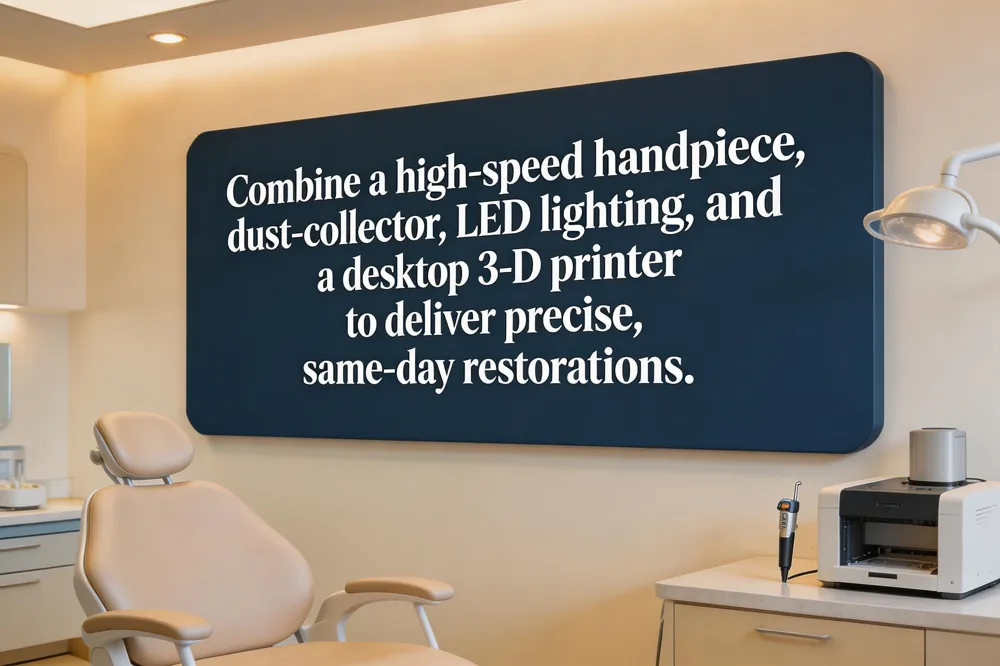 A compact high‑speed handpiece paired with a mini‑star unit gives a mini‑lab the same cutting power found in a full‑size office, while staying quiet enough for a home‑based workspace. An integrated dust collector with on‑demand suction captures grinding particles at the source, protecting the technician’s lungs and keeping the work surface pristine.
Color‑correct LED task lighting with a CRI of 90 or higher reproduces true shades, which is critical for accurate color matching of crowns, bridges, and veneers. An adjustable 2.5× magnifying lens mounted on an articulating hinge provides hands‑free detail work, and an ergonomic stool with removable arm rests reduces fatigue during long case preparations.
For digital fabrication, a desktop 3‑D printer or a small milling machine creates study models, provisional crowns, and orthodontic appliances in under an hour, enabling same‑day patient communication and faster treatment planning.
Dental Lab Technician – A dental lab technician crafts custom prosthetics—crowns, bridges, dentures, veneers, and orthodontic appliances—by interpreting dentist prescriptions and working with impressions or digital scans. They blend traditional hand‑crafting with modern CAD/CAM technology, using materials such as wax, porcelain, metal alloys, and composite resins to produce functional, aesthetic restorations. In a family‑run practice like Dr. Parrella’s, a skilled technician ensures each piece fits precisely and meets the patient’s needs.
Dental Lab Technician salary – In the United States, median annual earnings are about $56,000, with entry‑level salaries near $43,000 and experienced technicians reaching $93,000 or more. Salaries vary by state; Massachusetts averages $60,170, while Alaska and New Hampshire exceed $62,000.
Dental Lab owner salary – Lab owners typically net $80,000 to $200,000 per year, depending on volume, efficiency, and overhead. Investing in modern equipment, streamlined workflows, and strong dentist relationships pushes earnings toward the upper end of this range, providing a comfortable six‑figure income for a well‑run practice.
Lighting, Mirrors, and Visualization: Achieving Clinical Accuracy at Home
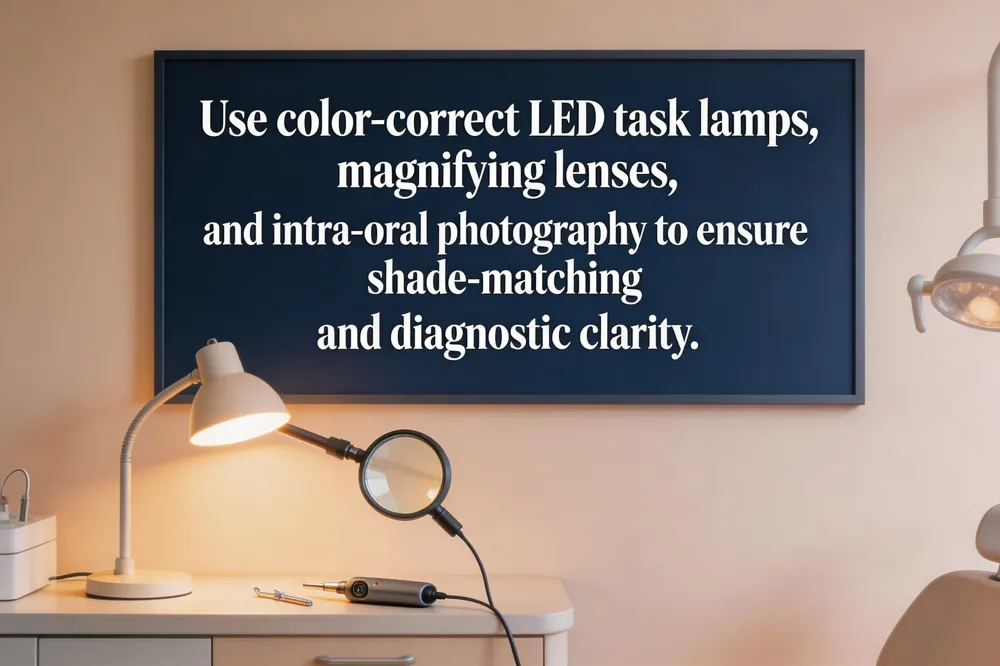 For fine detail, attach a color‑correct LED task lamp or use a 2.5× magnifying lens on an articulating hinge. Loupes (2×‑5×) can also be clipped onto the mirror for hands‑free magnification, reducing eye strain during polishing or adjustment.
Intra‑oral photography basics are essential for documentation. Use a DSLR or a high‑resolution smartphone with a macro lens and ring flash, position the patient’s head on the Frankfort horizontal plane, and capture images against a solid‑color background. This creates a clear record for case tracking and patient education.
Dental tool names – Dental professionals rely on a variety of specialized instruments to keep your mouth healthy. Common tools include a dental mirror for visual inspection, a manual scaler and an ultrasonic scaler for removing plaque and tartar, and a curette for sub‑gingival cleaning. A periodontal probe measures pocket depths, while a dental explorer detects decay and surface irregularities. Polishing is completed with an air‑polisher or polishing cup to smooth and shine the enamel. These instruments work together to provide thorough cleanings and early detection of oral problems.
Define the dental model cast and explain its use in dentistry – A dental model cast is a three‑dimensional replica of a patient’s teeth, gums, and sometimes surrounding oral structures, created by pouring a hard material such as plaster, stone, or resin into an impression taken with alginate, silicone, or another molding compound. The cast accurately reproduces the patient’s anatomy, allowing the dentist to examine occlusion, tooth alignment, and tissue relationships outside the mouth. It is used for diagnostic and planning purposes, helping to visualize problems, design treatment strategies, and communicate cases to specialists. The same model serves as a precise foundation for fabricating custom restorations—crowns, bridges, dentures—or orthodontic appliances like retainers and aligners. By providing a tangible, exact copy of the mouth, dental model casts improve accuracy, efficiency, and patient education throughout the entire course of care.
What can I use to make a mold of my teeth? – You can use dental‑grade alginate, a cheap, non‑toxic material that sets in a minute and captures fine detail—just like the impression material the dentist uses. For a harder, more durable mold you can choose a dental plaster such as Vel‑Mix, which produces a very strong, fine‑grained cast that can be kept for weeks. If you need a mold that will survive many repetitions, a silicone rubber (RTV) or vulcanized silicone rubber will give a flexible, non‑shrinking mold with excellent release properties. Natural rubber molds are also an option and offering high tear strength and long shelf life, though they are less common for dental work. Choosing the right material depends on how many reproductions you need and how long you want the mold to last.
Dental Cleaning Tools Amazon – Amazon carries a wide range of consumer‑grade dental hygiene products—electric toothbrushes, floss picks, water flossers, and inexpensive “professional‑style” kits that include stainless‑steel mirrors, scalers, plaque removers and multi‑piece instrument sets. These kits are typically 4‑6 pieces, rated 4 plus stars, and priced between $5 and $15, making them popular for at‑home or even pet use. While they can help maintain daily oral health, they are not a substitute for the sterilized, high‑precision instruments used in a dental office and may not meet the same regulatory standards. For routine care you can use these Amazon tools, but any tartar buildup, gum concerns, or restorative needs should be evaluated by Dr. Parrella at his Somerville practice. In short, Amazon offers convenient, low‑cost options for everyday hygiene, but professional treatment still requires a visit to the clinic.
Workflow Design: From Dirty to Clean and From Model to Restoration
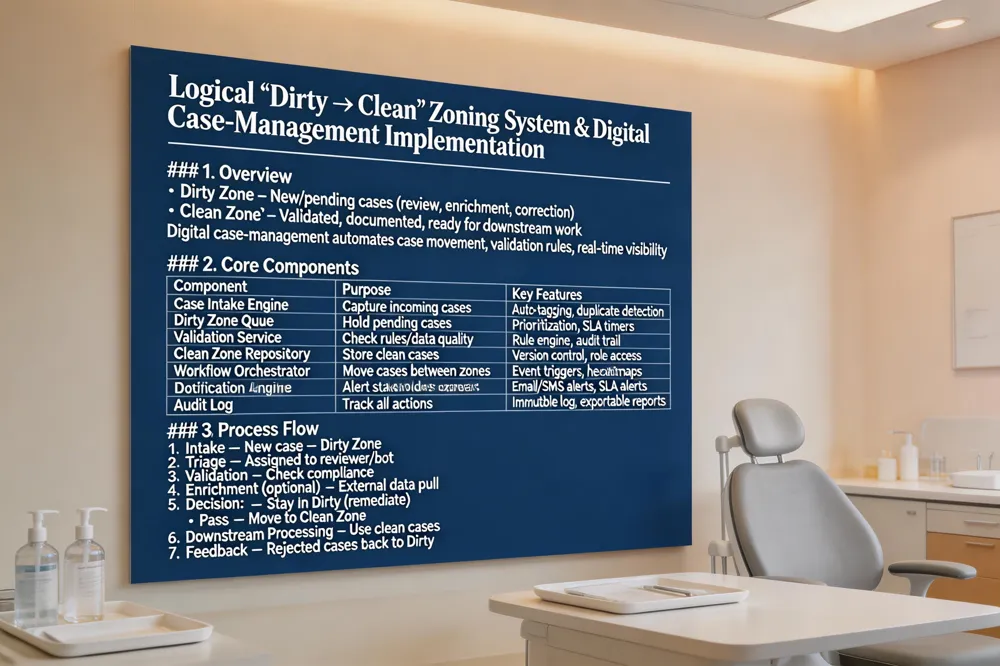 A well‑planned dental lab follows a logical "dirty → clean" flow that mirrors sterilization procedures. First, contaminated impressions and model materials enter a dedicated wet zone, move through a drying area, and finish in a pristine clean zone for polishing and shade‑matching. Zoning the space into wet, dry, sterilization, and storage sections reduces cross‑contamination and speeds case progression.
Digital case‑management software ties each step together, automatically assigning tasks, tracking turnaround times, and alerting technicians when a case moves from one zone to the next. This visibility prevents bottlenecks and ensures patients receive restorations on schedule.
Ergonomic design is equally vital. Adjustable arm‑pan shelves placed at eye level keep work‑in‑progress cases within arm’s reach, while sturdy, dust‑collector‑integrated workstations provide a clean, safe environment for grinding and polishing.
Dental labs near me – Greater Boston families can rely on Boston Dental Lab, New England Dental Studios, or Dr. Anthony P. Parrella’s in‑house Somerville lab for fast, high‑quality crowns and bridges.
Dentist with in‑house lab near me – Dr. Parrella’s family‑run practice offers same‑day adjustments and digital impressions, eliminating long wait times.
Best teeth cleaning tools for home use – A rechargeable electric toothbrush with timer, daily floss or interdental brushes, a water flosser, a soft‑bristled scaler, and a tongue scraper together provide comprehensive at‑home oral care.
Hands‑On Procedures: Polishing, Scaling, and Finishing
 At our Somerville family practice we blend modern technology with gentle, patient‑focused care when it comes to polishing, scaling and finishing your smile.
Using ultrasonic scalers safely at home – Ultrasonic dental cleaning tools generate high‑frequency vibrations that break down calculus while a fine water spray keeps the procedure comfortable. Although these devices are powerful, they are designed for professional use under strict infection‑control protocols. For home care, stick to FDA‑approved toothbrushes, floss, and water flossers; avoid attempting ultrasonic scaling yourself.
Hand scaling techniques for precision – Hand scalers and curettes give a tactile feel that professionals use to remove stubborn plaque without harming gum tissue. The sharp tips require training, so patients should not try to scrape plaque on their own. Instead, use a soft‑bristled brush and interdental brushes for daily maintenance.
Air‑polishers and polishing cups for enamel shine – In‑office, air‑polishers deliver a fluoride‑rich mist that smooths enamel after scaling. Polishing cups with a low‑abrasion paste give a final shine. At home, a gentle polishing paste used sparingly can maintain polish, but never replace professional polishing.
Personal protective equipment and sterilization – When handling any dental instrument, wear gloves, eye protection and a mask. Clean tools with an EPA‑registered disinfectant after each use and store them in a sealed container to prevent contamination.
Professional dental cleaning tools – Designed for safe, efficient plaque removal, these tools include ultrasonic scalers, hand scalers, polishing cups and air‑polishers. Use them only under a dentist’s guidance.
Ultrasonic dental cleaning tools – They combine vibration and water spray to remove calculus deeply and comfortably, reducing treatment time while protecting enamel.
Is it okay to scrape plaque off your own teeth? – No. DIY scraping can cause gum trauma, enamel scratches and infection. Stick to brushing, flossing and professional cleanings.
Professional dental tools for home use – True professional‑grade instruments are not recommended for home use due to the need for specialized training and strict sterilization. Opt for consumer‑grade, FDA‑approved products and schedule regular visits with Dr. Parrella’s team for comprehensive care.
Digital Integration: Scanners, Software, and 3‑D Printing
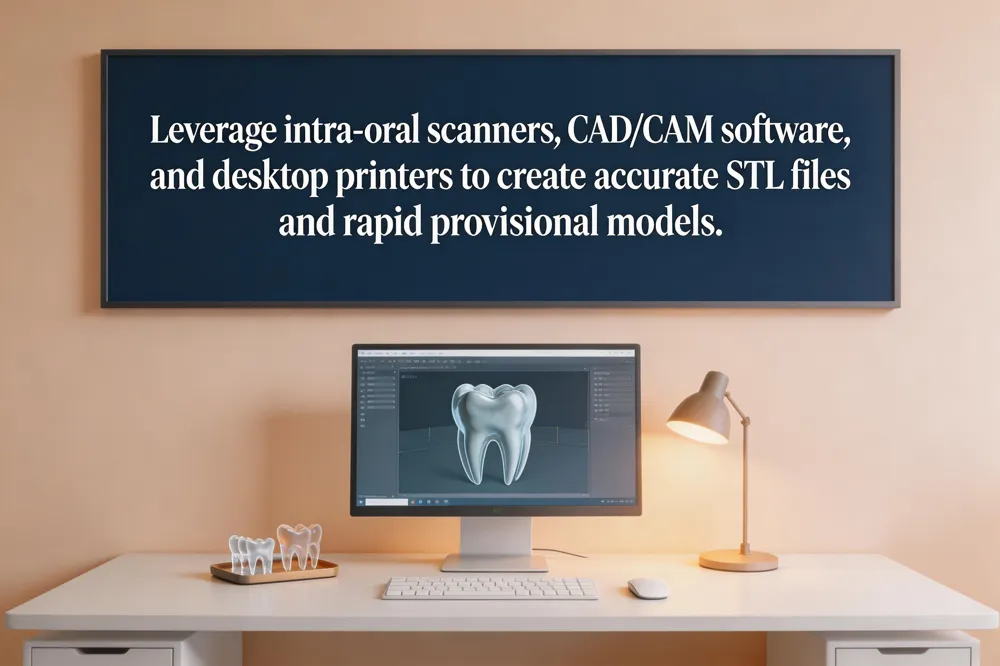 A portable intra‑oral scanner turns the patient’s mouth into a digital map in seconds, eliminating messy impression trays and giving the lab an exact STL file to work from. The file is imported into CAD/CAM software where the technician sketches the shape of a crown, bridge or provisional, checks margin lines and verifies shade matches under daylight‑balanced LED lighting. Once the design is approved, the STL is sent to a desktop 3‑D printer that builds a resin model or a provisional crown layer by layer; the printed piece is then cured, finished and tried in the mouth the same day.
Case‑management software links the scanner, design program and printer, automatically logging each step, notifying the dentist of status changes and storing files for future reference. This seamless workflow reduces hand‑offs, cuts errors and speeds up communication.
Is owning a dental lab profitable? Yes. Modern labs can achieve 5‑10 % profit margins, especially when they serve both in‑house and external clients. Investing in CAD/CAM, 3‑D printing and skilled technicians lowers labor costs and shortens turnaround, but careful financial planning is essential because equipment and training represent significant upfront expenses.
Dental Lab Technician – The technician translates dentist prescriptions into custom restorations using wax, porcelain, metal or composites. They blend traditional hand‑crafting with CAD/CAM tools, often working from digital scans, and must stay current through certification (CDT) and continuing education. In a family‑run practice, a skilled technician ensures each crown or denture fits precisely and looks natural, reinforcing patient trust.
What is the 80/20 rule in dentistry? It reminds us that roughly 80 % of revenue or patient satisfaction comes from 20 % of our efforts. By focusing on high‑impact tasks—such as accurate digital impressions and efficient case tracking—practices maximize outcomes while minimizing waste.
Safety, Sterilization, and Regulatory Checklist
 A dental lab, whether set up in a small bathroom or a dedicated clinic space, must prioritize safety, infection control, and regulatory compliance.
Personal protective equipment (PPE) – Always wear gloves, safety goggles, and a surgical‑grade mask when handling materials, operating hand‑pieces, or cleaning equipment. PPE protects you from dust, chemicals, and aerosolized particles.
Cleaning and disinfecting surfaces – Use EPA‑registered disinfectants on all worktops, benches, and tool trays after each case. A clean, flat surface is essential for accurate shade matching and model work.
Air quality – Install a HEPA‑filtered exhaust fan or a small dust‑collector with on‑demand suction to capture acrylic, polishing, and 3‑D‑printing fumes. Proper ventilation keeps airborne contaminants below OSHA limits.
Regulatory compliance – Follow OSHA safety standards, FDA guidelines for Class II medical devices, HIPAA rules for patient data, and any state dental board requirements (e.g., registration in the seven states that mandate it). Even when a professional license isn’t required to own a lab, the supervising dentist remains legally responsible for patient care.
Key Q&A
- Do you need a license to open a dental lab? No, most states do not require a specific license for laboratory owners, though registration may be required in a few states. Local business permits, health‑safety rules, and FDA regulations still apply.
- Professional dental cleaning tools – Ultrasonic scalers, hand curettes, polishing cups, and air‑polishers are used by clinicians. At home, stainless‑steel kits can supplement care but must be sterilized and used under professional guidance.
- Is it okay to scrape plaque off your own teeth? No. Self‑scraping can damage gums and enamel and push tartar deeper. Use a soft toothbrush, floss, and schedule regular cleanings with Dr. Parrella’s team for safe plaque removal.
Your Mini Lab Is Ready – A New Era of At‑Home Dental Innovation
The bathroom mirror lab gives you a flat, well‑lit surface, easy access to water and a built‑in visual reference. Core tools include a compact handpiece, a desktop 3‑D printer or milling unit, a CAD/CAM scanner, color‑correct LED lighting (CRI ≥ 90), and a dust‑collector with on‑demand suction. Arrange stations in a logical dirty‑to‑clean flow, keep PPE, disinfectants and a sealed workbench within arm’s reach, and use a GFCI‑protected outlet for all electricity. This setup lets you fabricate study models, provisional crowns or orthodontic appliances on‑site, shortening turnaround time and allowing same‑day shade checks with the mirror’s true‑color illumination. Start modestly, follow OSHA, FDA and HIPAA guidelines, and expand as confidence and case volume grow for you today.