Why Small Daily Actions Matter
Consistent, simple oral‑care habits do more than keep teeth looking bright—they protect your whole body. Brushing twice a day with fluoride toothpaste, flossing, and rinsing with water or an alcohol‑free mouthwash remove plaque that, if left unchecked, can trigger gum disease, heart disease, diabetes complications, and even certain cancers. Small lifestyle tweaks—staying hydrated, chewing sugar‑free gum, using a straw for acidic drinks, and limiting sugary snacks—help maintain saliva flow and lower acid attacks on enamel. Dr. Anthony P. Parrella’s team in Somerville, MA, reinforces these daily steps with personalized guidance, routine exams, and professional cleanings, ensuring each family member receives the preventive care needed for a healthier smile and better overall health.
Building a Strong Foundation: Brushing, Flossing & Routine Order
| Step | Action | Key Details |
|---|---|---|
| 1 | Quick water rinse | Loosen food debris before any cleaning |
| 2 | Floss / Interdental brush | Use ~18 inches of floss, C‑shape around each tooth, slide below gumline |
| 3 | Brush | 2 minutes, soft‑bristled brush, 45° angle, circular motions; cover all surfaces, tongue, cheeks |
| 4 | Mouthwash | Alcohol‑free antibacterial or fluoride, 30 seconds |
| 5 | Final water rinse | Clear residual particles |
| 6 | Hydration & diet | Fluoridated water, limit sugary/acidic foods, chew sugar‑free gum |
| 7 | Professional care | Dental cleaning & exam ≥ 2×/year |
| 8 | Toothbrush maintenance | Replace brush/head every 3‑4 months or when bristles fray |
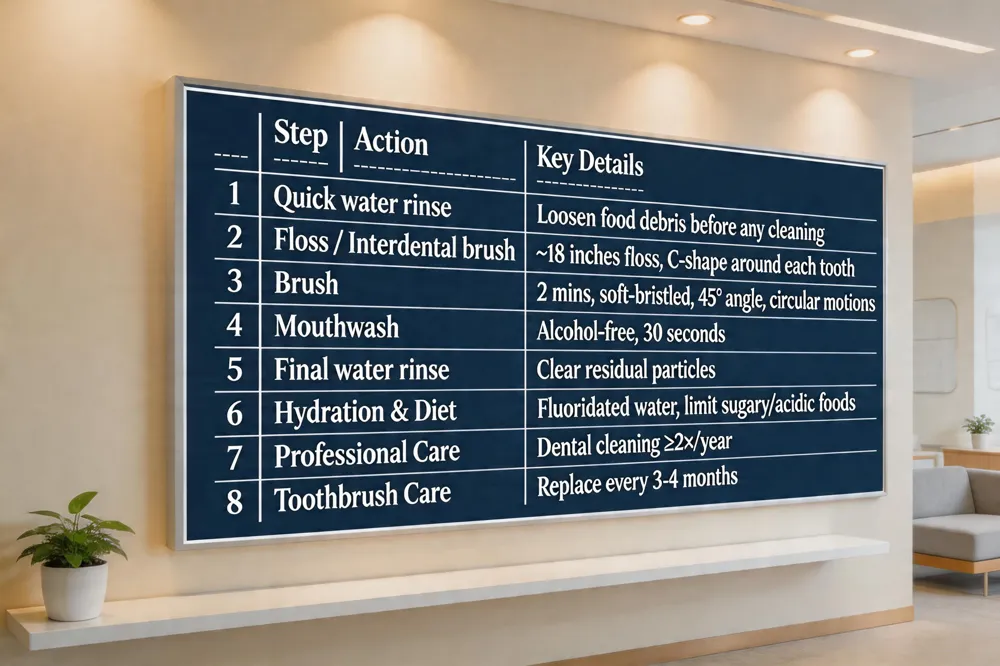 A solid oral‑care routine starts with a quick water rinse to loosen food debris, then moves to flossing or an interdental brush. Using about 18 inches of floss, wrap it around the middle fingers and form a gentle C‑shape around each tooth, sliding up and down below the gumline. This step removes plaque that a brush cannot reach and prepares the surfaces for optimal cleaning.
Next, brush for a full two minutes with a soft‑bristled toothbrush and fluoride toothpaste. Position the bristles at a 45‑degree angle toward the gumline and use short, circular motions to sweep all tooth surfaces, the tongue, and the inner cheeks. Replace the brush or electric head every three to four months, or sooner if the bristles become frayed, to maintain cleaning efficiency.
After brushing, rinse with an alcohol‑free antibacterial or fluoride mouthwash for 30 seconds. This extra layer reduces bacterial load, strengthens enamel, and freshens breath. Finish with a final water rinse to clear any residual particles.
To keep your smile healthy at home, stay hydrated with fluoridated water, limit sugary or acidic foods and drinks, chew sugar‑free gum after meals to boost saliva, and avoid tobacco. Schedule professional cleanings and exams at least twice a year so a dentist can remove tartar, detect early decay, and apply fluoride treatments when needed. Consistency, proper technique, and the right product choices together build the foundation for a brighter, healthier smile.
Protecting Your Smile: Diet, Hydration, Lifestyle & Nutrition
| Category | Recommendation | Why it matters |
|---|---|---|
| Fluoride | Drink fluoridated water | Continuous low‑level enamel protection |
| Saliva | Stay hydrated, chew sugar‑free gum | Buffers acids, supplies minerals for remineralization |
| Minerals/Vitamins | Calcium, Phosphorus, Vitamin D, K2, C, Magnesium, A, B‑complex | Build and maintain enamel, dentin, gum collagen, mucosa health |
| Foods | Dairy, leafy greens, fortified foods, fatty fish, citrus, nuts, whole grains | Provide essential nutrients |
| Tobacco | Quit smoking | Reduces gum disease, staining, oral cancer risk |
| Alcohol | Moderate intake | Lowers head‑and‑neck cancer risk and systemic inflammation |
| Vaccinations | HPV, etc. | Additional protection against oral cancers |
| Routine care | Brush 2×/day, floss daily, mouthwash, professional cleanings 2×/year | Maintain overall oral health |
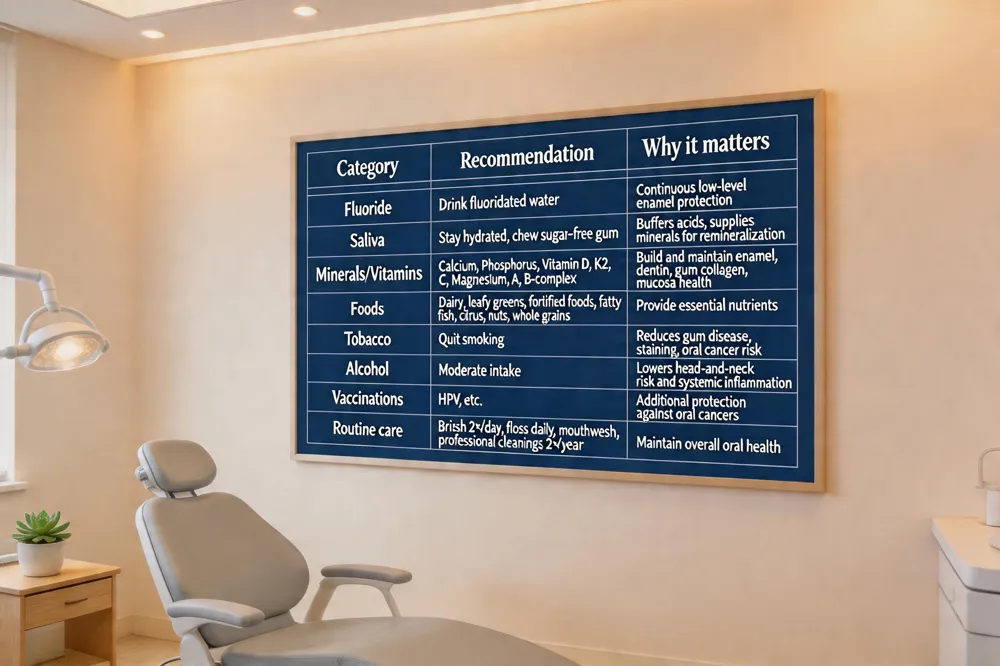 Fluorated water and saliva work hand‑in‑hand to keep enamel strong. Fluoride in tap water continuously supplies low‑level protection, while saliva, stimulated by chewing sugar‑free gum or staying well‑hydrated, buffers acids and delivers minerals that remineralize enamel.
Strong teeth rely on a blend of minerals and vitamins. Calcium and phosphorus build the structural foundation of enamel and dentin, vitamin D enhances their absorption, vitamin K2 directs calcium to teeth, vitamin C supports collagen‑rich gums, magnesium aids mineralization, and vitamin A and B‑complex vitamins maintain oral mucosa and tissue repair. Dairy, leafy greens, fortified foods, fatty fish, citrus fruits, nuts, and whole grains provide these nutrients.
Smoking and excessive alcohol use undermine oral health and increase systemic disease risk. Tobacco fuels gum disease, tooth staining, and oral cancer, while heavy alcohol consumption raises the likelihood of head‑and‑neck cancers. Both habits also exacerbate inflammation, compromising heart health, diabetes control, and overall immunity. Quitting tobacco, moderating alcohol, and staying up‑to‑date on vaccinations such as HPV further protect your smile and your body.
Adults should brush twice daily with fluoride toothpaste, floss each day, rinse with an antibacterial or fluoride mouthwash, and schedule professional cleanings at least twice a year. These simple, evidence‑based habits keep enamel resilient, gums healthy, and your smile bright for life.
Professional Care, Early Detection & Red‑Flag Signs
| Red‑flag sign | Typical cause | Recommended action |
|---|---|---|
| Persistent bad breath | Bacterial overgrowth | Schedule dental exam |
| Swollen/bleeding gums | Plaque‑induced inflammation | Professional cleaning, improved hygiene |
| Visible plaque/tartar | Inadequate brushing/flossing | Deep cleaning, reinforce technique |
| Tooth sensitivity | Enamel erosion, gum recession | Desensitizing toothpaste, check for decay |
| Discoloration | Staining, early decay | Evaluate for whitening or restorative treatment |
| Frequent cavities | Poor oral hygiene, diet | Review brushing/flossing, fluoride treatment |
| Coated tongue, white patches | Bacterial/fungal buildup | Oral exam, possible antifungal/antibacterial therapy |
| 3‑3‑3 rule | Brush 3×/day, ≥3 min each, finish within 3 min after meals | Helps control plaque after meals |
| Routine exams | Every 6 months | Early detection of decay, gum disease, oral cancer |
| Professional cleanings | ≥2×/year | Remove hardened tartar, apply fluoride/sealants |
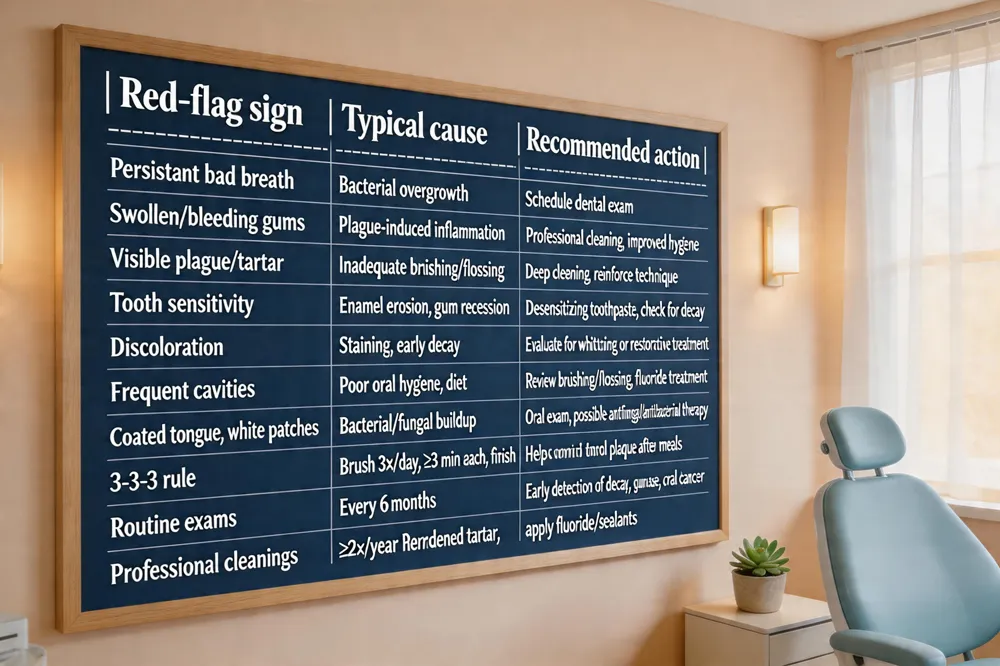 Maintaining a healthy smile starts with recognizing the early warning signs of poor oral hygiene. Common red flags include persistent bad breath, swollen or bleeding gums, visible plaque or tartar, tooth sensitivity, discoloration, and frequent cavities despite regular brushing. A coated tongue with white patches, redness, or indentations can also signal bacterial buildup. When any of these appear, schedule a dental exam with Dr. Anthony P. Parrella.
Routine dental exams every six months are essential. Professional cleanings remove hardened tartar that at brushes miss, detect early decay, gum disease, and oral cancer, and allow the dentist to apply fluoride or sealants. Early detection prevents costly restorative work and protects overall health.
The 3‑3‑3 rule reinforces effective brushing habits: brush three times a day, for at least three minutes each session, and finish within three minutes after meals. This schedule helps control plaque and inflammation, especially after sugary or acidic foods. Combine the rule with the ADA‑recommended twice‑daily two‑minute brush, daily floss, tongue cleaning, and an antimicrobial mouthwash for optimal protection.
By staying vigilant and partnering with your dentist, you can keep your smile bright and your mouth healthy for life.
Boosting Your Smile: Muscles, Natural Whitening & Confidence
| Exercise | Description | Frequency |
|---|---|---|
| Whistle | Press lips together, hold 10 s | 10 reps, twice daily for 2 weeks |
| Rabbit | Closed‑mouth smile, wiggle nose, hold 5 s | 10 reps, twice daily for 2 weeks |
| Wide Smile | Open‑mouth stretch, hold 15 s | 10 reps, twice daily for 2 weeks |
Whitening routine | Brush 2×/day, floss daily, stay hydrated, use ADA‑approved OTC whitening or whitening toothpaste | Ongoing | | Baking‑soda paste | Gentle abrasive, use a few times/week | Consult dentist before use | | Cavity prevention with partner | Maintain hygiene, use antibacterial mouthwash | Ongoing | | Professional check‑ups | Regular visits to Dr. Parrella | At least twice a year | | Confidence boost | Healthy teeth + toned muscles = brighter smile | Consistent practice |
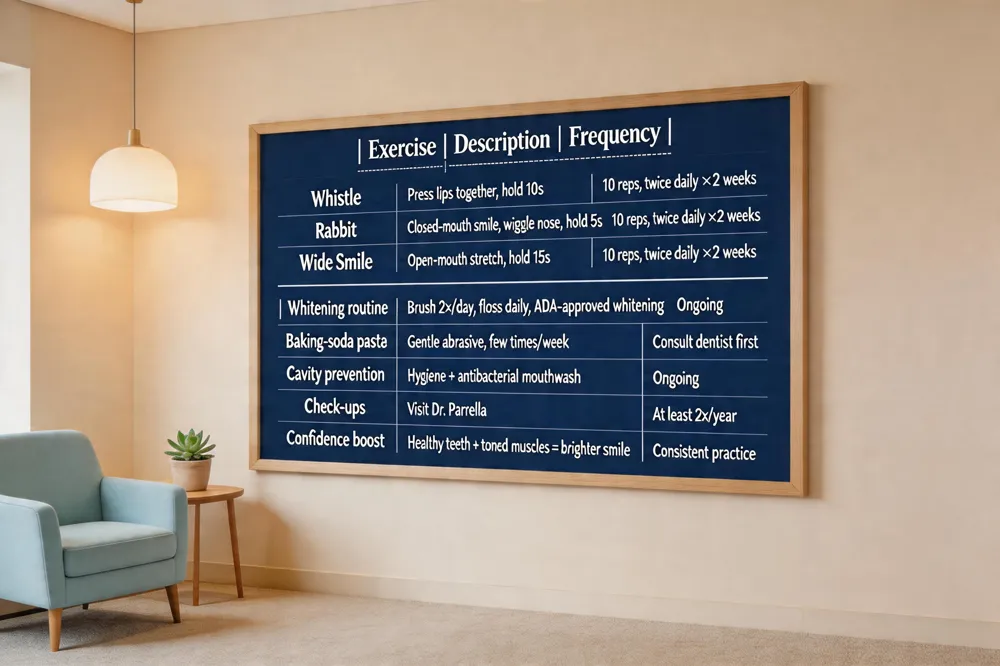 A bright, confident smile starts with healthy teeth and strong facial muscles. Begin each day with simple muscle‑building exercises: the “Whistle” (press lips together, hold 10 seconds, repeat ten times), the “Rabbit” (closed‑mouth smile, wiggle nose, hold five seconds, repeat ten times), and the “Wide Smile” (open‑mouth stretch, hold 15 seconds, repeat ten times). These movements tone the cheek and lip muscles that define smile width, especially when done twice daily for two weeks. For safe at‑home whitening, brush twice a day with a soft‑bristled brush and fluoride toothpaste, floss daily, and stay hydrated to rinse away acids. Choose an ADA‑Seal toothpaste‑approved over‑the‑counter whitening product or a whitening toothpaste, and consider a gentle bake‑soda paste a few times a week, but always ask Dr. Parrella before bleaching. If your partner has cavities, kissing is still fine, but remember saliva can share decay‑causing bacteria. Both of you should maintain diligent oral hygiene—brushing, flossing, and an alcohol‑free antibacterial mouthwash — lower bacterial load while the cavity is treated. Regular check‑ups at Dr. Parrella’s office ensure plaque is removed, gum health is monitored, and any cosmetic concerns are addressed, keeping your smile vibrant and your confidence high.
Community Care, Personalized Plans & Quick FAQ
| FAQ | Answer |
|---|---|
| How often should I replace my toothbrush? | Every 3 months, or sooner if bristles are frayed |
| Is flossing really necessary? | Yes – daily flossing removes plaque from ~40 % of tooth surface brushing can’t reach |
| Can I use a straw for sugary drinks? | Absolutely – a straw minimizes contact with teeth and reduces staining |
| Best way to protect enamel after acidic foods? | Rinse with water, wait 30‑60 minutes before brushing to let saliva neutralize acids |
| Community involvement | Local health fairs, school workshops, free screenings for underserved families |
| Health impact | Good oral health lowers risk of heart disease, diabetes complications, systemic conditions |
| Personalized plans | Tailored oral‑health recommendations during each dental visit |
| Quick FAQ format | Concise answers combined with bi‑annual check‑ups promote a healthy, bright smile |
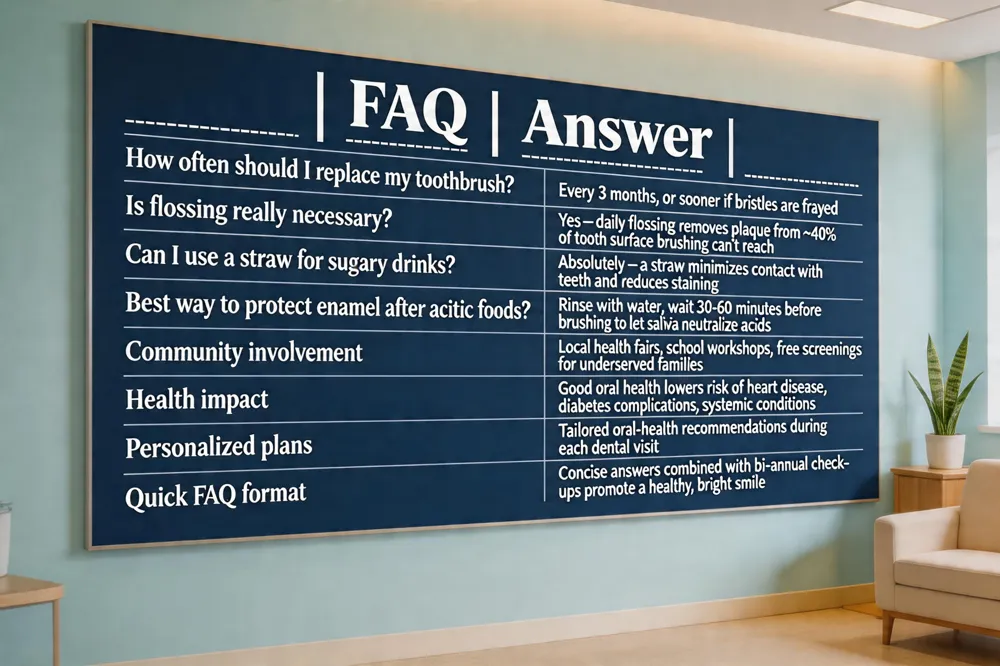 Deeply rooted in the Somerville community, the office sponsors local health fairs, provides oral‑health workshops at schools, and partners with neighborhood organizations to bring free screenings to underserved families. This involvement reflects a commitment to not only beautiful smiles but also overall well‑being, recognizing that good oral health lowers the risk of heart disease, diabetes complications, and other systemic conditions.
Quick FAQ
- How often should I replace my toothbrush? Every three months, or sooner if bristles are frayed.
- Is flossing really necessary? Yes—daily flossing removes plaque from the 40 % of tooth surface brushing can’t reach, preventing gum disease.
- Can I use a straw for sugary drinks? Absolutely; a straw minimizes contact with teeth and reduces staining.
- What’s the best way to protect enamel after acidic foods? Rinse with water and wait 30‑60 minutes before brushing to let saliva neutralize acids.
These concise answers, combined with regular check‑ups twice a year, help families maintain a healthier, brighter smile.
Putting It All Together for a Healthier, Brighter Smile
A healthy, confident smile rests on a handful of simple, evidence‑based habits. Brush twice a day for two minutes with a soft‑bristled, fluoride‑approved toothbrush, angle the bristles 45° to the gum line, and replace the brush every three months. Floss or use a water flosser daily to clear plaque from between teeth and below the gumline, and don’t forget to clean your tongue each time. Stay hydrated, chew sugar‑free gum after meals, and limit sugary or acidic foods and drinks—using a straw for the latter can further protect enamel. Rinse with an alcohol‑free antibacterial or fluoride mouthwash for extra protection. Finally, schedule professional cleanings and exams at least twice a year. Dr. Anthony P. Parrella and his Somerville team are ready to tailor a preventive plan to your family’s needs; call today to book your personalized visit.