Why an HSA Matters for Your Oral Health
Health Savings Accounts (HSAs) give you a triple‑tax benefit: contributions lower your taxable income, the money grows tax‑free, and withdrawals for qualified dental care are tax‑free as well. To open an HSA you must be enrolled in a high‑deductible health plan (HDHP) that meets IRS minimums – for 2025 the deductible is at least $1,600 for individuals and $3,200 for families. Once eligible, you can use HSA funds for a wide range of dental expenses that the IRS classifies as medically necessary. Preventive services such as exams, cleanings, X‑rays and sealants are covered. Restorative work—including fillings, crowns, bridges, dentures, root canals and implants—also qualifies. Orthodontic treatment, nightguards, and periodontal therapy are eligible when they address a functional problem. Cosmetic procedures like whitening or veneers are excluded unless a dentist provides a letter of medical necessity. Keeping receipts and medical‑necessity letters ensures smooth reimbursement and protects you during an IRS audit.
Preventive Dental Services That Are HSA‑Qualified
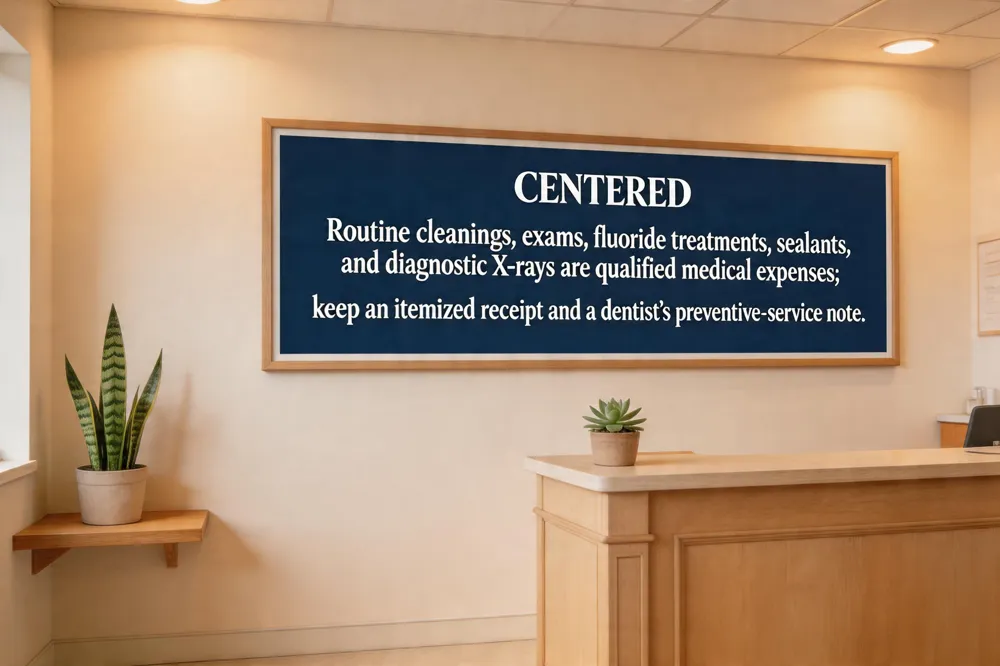 Routine cleanings, exams, fluoride treatments, sealants, and diagnostic X‑rays are all classified by the IRS as qualified medical expenses because they prevent or treat disease. To claim these costs from your Health Savings Account, keep an itemized receipt that shows the date of service, provider name, procedure description, CPT/CDT codes, and amount paid. A brief note from the dentist confirming the service was preventive (e.g., “routine prophylaxis cleaning”) is helpful, especially if you are asked for documentation during an audit.
Can you use HSA for dental cleaning? Yes—routine cleanings are HSA‑eligible. Pay with your HSA debit card or submit a claim with the receipt and a preventive‑service note. Personal oral‑care items like toothpaste or whitening kits are not eligible.
Can you use HSA for dental fluoride? Yes—dentist‑administered fluoride treatments are qualified. Use the HSA card at the office or reimburse later, retaining the receipt and a treatment description.
Documentation needed for reimbursement: Itemized invoice, date of service, provider name, CPT/CDT codes, amount paid, and, when applicable, a dentist’s letter of medical necessity or a preventive‑service note. This ensures a smooth, tax‑free reimbursement process.
Restorative and Major Dental Procedures
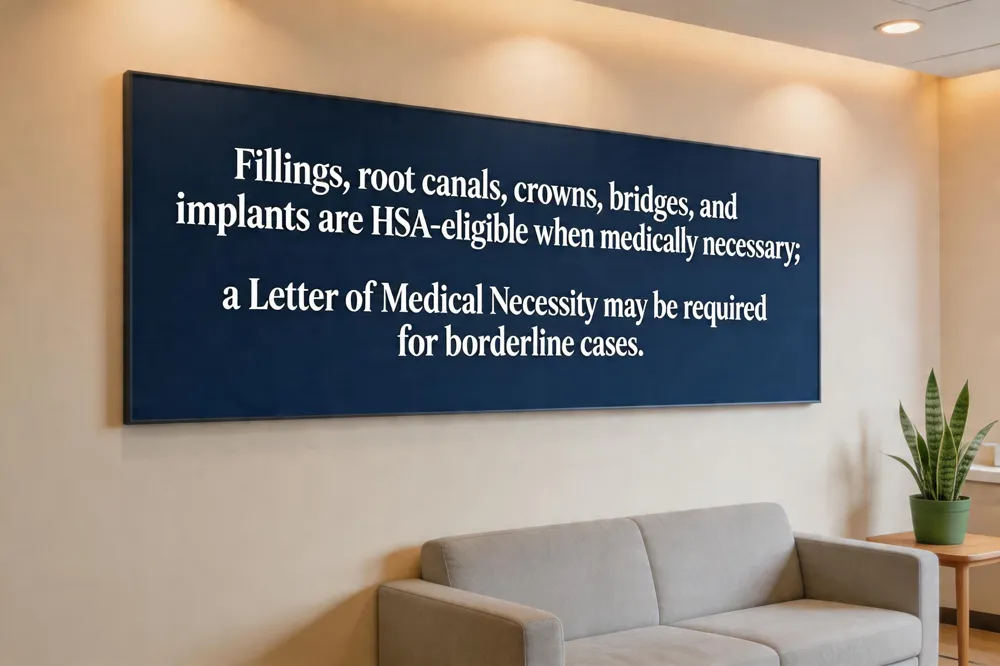 When it comes to restoring a healthy smile, many dental treatments go beyond routine cleanings and require a deeper investment of both clinical expertise and your tax‑advantaged savings. The good news is that Health Savings Accounts (HSAs) can be a powerful tool for covering these restorative and major procedures—provided they are medically necessary and properly documented.
Fillings and Root Canals
Dental decay that has progressed past a simple surface polish needs to be removed and the tooth restored. Fillings, whether composite or amalgam, and root‑canal therapy are classified by the IRS as qualified medical expenses because they treat disease and preserve oral function. You can comfortably tap your HSA for these services. Keep an itemized receipt that lists the procedure date, tooth code (e.g., D2330 for a composite filling), and amount paid. Most providers do not require a Letter of Medical Necessity for routine restorations, but a savvy HSA administrator may ask for it in rare cases.
Crowns and Bridges
When a tooth is severely damaged, a crown caps the remaining structure to restore strength and appearance. Bridges replace missing teeth by anchoring artificial crowns to adjacent healthy teeth. Both are considered medically necessary when they re‑establish chewing ability, protect adjacent teeth, or support a prosthesis. The IRS permits HSA withdrawals for crowns and bridges, but if the crown is purely cosmetic—such as a high‑shine porcelain veneer without a functional need—it is not eligible. In those borderline situations, a dentist’s Letter of Medical Necessity (LMN) detailing the diagnosis, functional impairment, and why the restoration is required can make the expense HSA‑eligible. Ask your dentist to provide this letter before you submit a claim.
Dental Implants
Dental implants are the gold‑standard solution for replacing a missing tooth because they restore bite force, speech, and facial structure. The IRS includes implant placement, associated X‑rays, anesthesia, bone‑grafting, and the final prosthetic crown as qualified expenses—provided the implant is needed to treat disease, injury, or a congenital absence, not merely for aesthetic enhancement. Documentation is key: a treatment plan that outlines the medical indication (e.g., “restores chewing function after loss of a molar due to periodontal disease”) and any supporting imaging should be retained. If your provider feels the case is borderline cosmetic, request an Letter of Medical Necessity to safeguard reimbursement.
When a Letter of Medical Necessity Is Required
A Letter of Medical Necessity is a concise, dentist‑signed statement that explains the medical basis for a procedure. It typically includes:
- Patient’s diagnosis or condition
- Functional impairment or risk if untreated
- Specific procedure recommended and why it is the appropriate treatment
- Any alternative options considered
While many restorative services (fillings, root canals) are automatically eligible, crowns that are non‑cosmetic, bridges, and implants often trigger an LMN request from HSA custodians. Secure the letter before you pay, keep it with your itemized receipt, and submit both when you file a claim. This documentation protects you from claim denials and IRS audits.
Answers to Common Questions
- Can you use HSA for dental fillings? Yes. Fillings are medically necessary restorations, so HSA funds can cover them. Keep an itemized receipt; a Letter of Medical Necessity is rarely needed for routine fillings.
- Can you use HSA for a dental crown? Yes, if the crown restores function. Crowns that replace a large filling, follow a root canal, or support a bridge are eligible. Cosmetic‑only crowns require an Letter of Medical Necessity to qualify.
- Can you use HSA for dental implants? Yes, when the implant is medically indicated. Implants that replace a missing tooth due to disease, injury, or congenital absence are qualified. Provide a treatment plan and, when requested, a Letter of Medical Necessity.
By planning ahead—scheduling restorative work before the end of the calendar year, confirming eligibility with your HSA provider, and retaining thorough documentation—you can maximize the tax‑free power of your HSA while protecting the long‑term health of your family’s smiles.
Orthodontics, Vision, and Cross‑Category Coverage
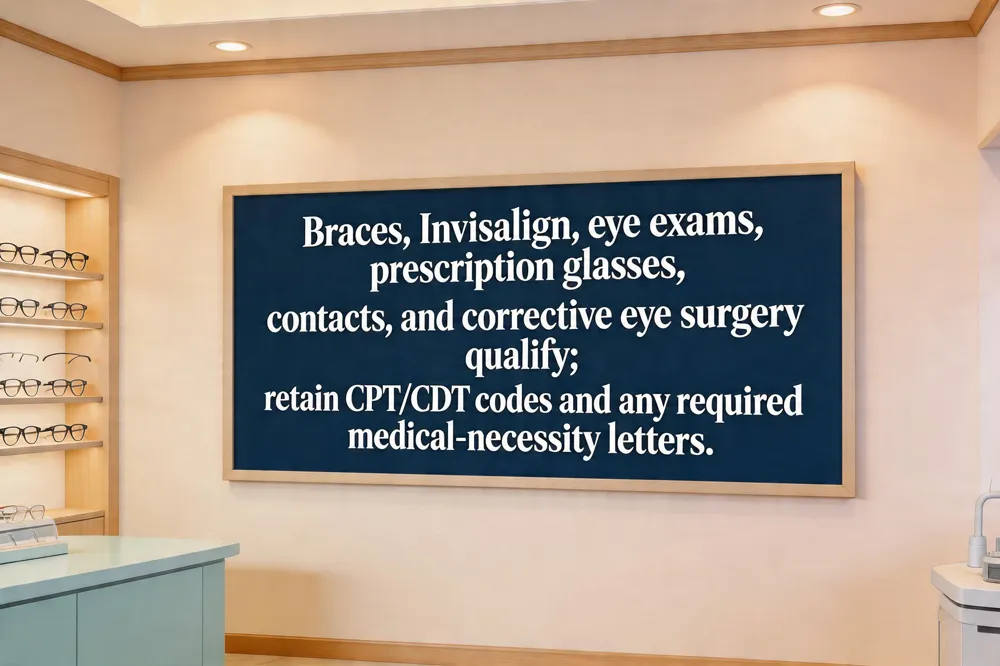 Braces and Invisalign are HSA‑eligible when they treat a medical problem such as malocclusion, gum‑disease risk, or jaw pain; a dentist’s letter of medical necessity can clear any borderline cases. Vision expenses that qualify for HSA or limited‑purpose FSA reimbursement include eye exams, prescription glasses, contact lenses, and corrective eye surgery—again, only when used to correct a specific visual impairment. Because HSAs accept any qualified medical expense, you can use the same account for both dental and vision care, keeping receipts, CPT/CDT codes, and any required medical‑necessity letters for audit purposes. Dental implants also qualify for FSA reimbursement when they are medically necessary to restore function or prevent bone loss; the claim must include an itemized invoice and a dentist’s statement confirming the need. In contrast, purely cosmetic items—such as toothbrushes, whitening kits, or non‑necessary veneers—are excluded from both HSA and FSA benefits.
Cosmetic Treatments and Ineligible Expenses
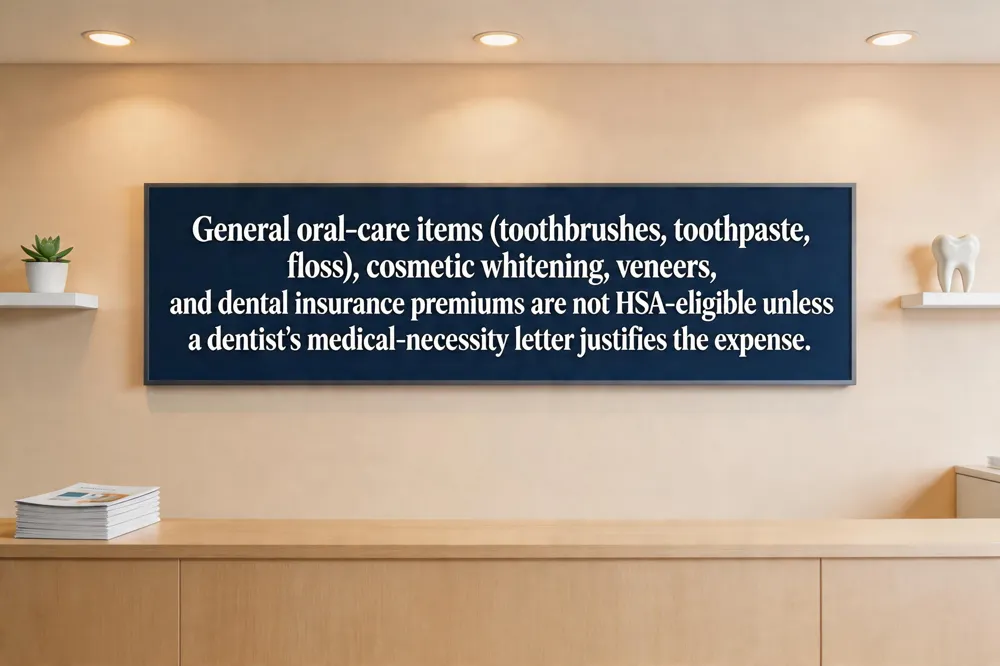 When planning dental care, it’s important to know which costs the HSA cannot cover. General‑use oral‑care items such as toothbrushes, toothpaste, floss, and mouthwash are considered everyday products, not medical treatments, so they are not HSA‑eligible. Cosmetic procedures—including routine teeth‑whitening, veneers, or polishing—are also excluded unless a dentist provides a Letter of Medical Necessity that links the treatment to a specific health condition (e.g., whitening after trauma). Even then, the letter must explain the diagnosis, functional impairment, and why the procedure is medically required. Dental insurance premiums do not qualify as HSA expenses; the IRS only permits premiums for long‑term care, COBRA, Medicare, or unemployment‑related coverage. To avoid penalties, always keep itemized receipts, CPT/CDT codes, and any medical‑necessity letters, and verify eligibility with your HSA administrator before spending. Using your HSA debit card for qualified copays—cleanings, fillings, crowns, orthodontics keeps withdrawals tax‑free and prevents the 20 % penalty for non‑qualified items.
Documentation, Claims, and Year‑End Strategies
When you pay a dental procedure with an HSA, keep an itemized receipt that lists the service date, provider, procedure description, CPT/CDT code and amount paid—this is the documentation your custodian will request. For services that may be deemed cosmetic (e.g., veneers, certain crowns), obtain a dentist’s Letter of Medical Necessity that explains the diagnosis, functional impairment and why the treatment is required. HSAs roll over year‑to‑year, so any unused balance can be saved for future major work such as implants or orthodontics; however, you can still tax‑free savings by scheduling preventive cleanings, sealants, X‑rays, or restorative work before the calendar year ends, thereby using up insurance deductibles and preserving funds for larger procedures later.
Answers to common questions
- HSA dental care: Yes—medically necessary treatments (cleanings, fillings, crowns, bridges, dentures, orthodontics, implants) are eligible; purely cosmetic items are not unless a medical‑necessity letter is provided.
- HSA dental products: Eligible items include prescription‑strength fluoride toothpaste, denture cleaners, orthodontic wax, mouthguards, and, with a dentist’s note, electric toothbrushes. Keep receipts for tax‑free reimbursement.
- Can you deduct dental expenses from HSA? Payments are not deducted on your return; they are withdrawn tax‑free from the HSA, avoiding income tax on the amount used for qualified dental care.
- What can I use my HSA for dental? Qualified expenses cover preventive, restorative, and major procedures that treat or prevent disease; general‑use oral‑care products and purely cosmetic services are excluded.
Stacking HSAs with FSAs and Dental Insurance for Maximum Savings
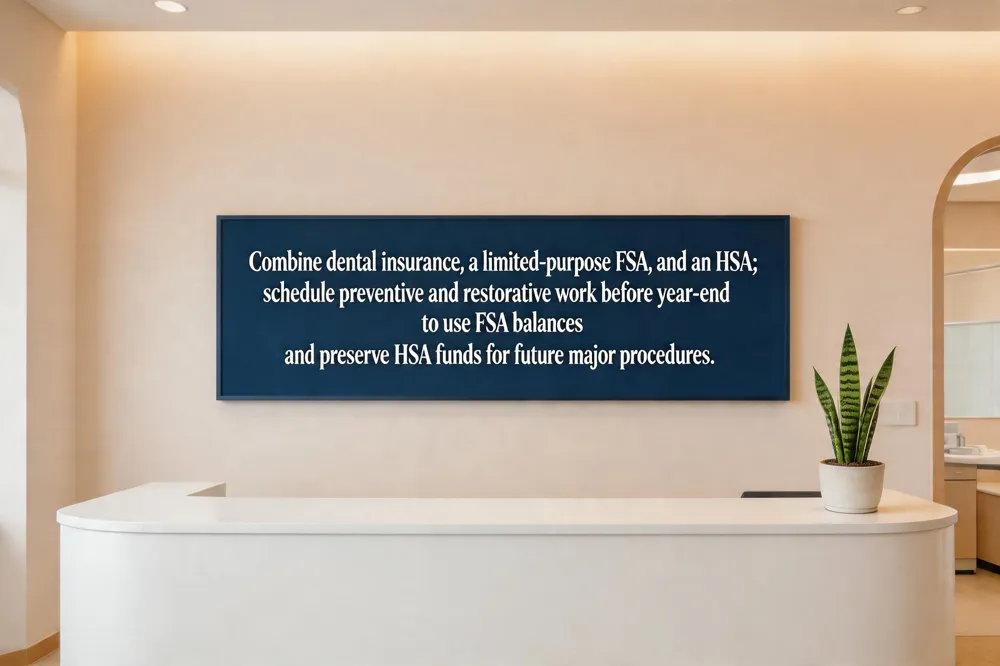 A three‑bucket approach—dental insurance, a Health Savings Account (HSA), and a Flexible Spending Account (FSA)—lets families capture every tax‑free dollar. Insurance handles routine cleanings and a portion of major work, while the FSA (or a limited‑purpose FSA) covers current out‑of‑pocket costs before the plan year ends, preventing “use‑it‑or‑lose‑it” losses. Schedule preventive cleanings, X‑rays, and any restorative work you can finish by December 31 so you fully use the FSA balance and any remaining dental‑insurance annual maximum. Meanwhile, contribute the maximum allowed to your HSA; the balance rolls over indefinitely and can be invested in low‑risk options, growing tax‑free for future orthodontics, implants, or unexpected oral surgery. By coordinating these three resources—insurance, FSA for near‑term expenses, and an HSA for long‑term savings—you protect your wallet, reduce taxable income, and keep your family’s smiles healthy year after year.
Take Control of Your Oral Health Savings Today
Start by checking your HSA balance and confirming you’ve maxed out the 2025 contribution limits ($4,300 individual, $8,550 family). Knowing how much you have lets you plan wisely. Schedule preventive cleanings, exams and X‑rays early in the calendar year—you’ll use insurance benefits before they reset and keep out‑of‑pocket costs low. For any procedure that could be deemed cosmetic—such as a crown, orthodontic appliance, or implant—ask your dentist for a Letter of Medical Necessity; the letter turns otherwise ineligible items into qualified expenses. Finally, adopt a three‑bucket strategy: use your dental insurance for routine care, draw on an FSA (or limited‑purpose FSA) for short‑term needs before the year‑end deadline, and reserve HSA funds for larger, future treatments like implants, extensive orthodontics, or major restorative work. This coordinated approach maximizes tax‑free dollars and protects your family’s oral health for years to come.