Why a 3‑Step Plan Works
Cavities begin when plaque bacteria metabolize sugars and starches, producing acids that demineralize enamel. If the acid attack is frequent, the enamel cannot repair itself and a small white spot can turn into a hole. A systematic preventive approach—combining daily at‑home care, professional dental services, and smart lifestyle choices—creates a "tug‑of‑war" in favor of the mouth’s defenses.
-
Daily habits: Brushing twice a day with fluoride toothpaste and flossing each day removes plaque, supplies fluoride for remineralization, and stimulates saliva, which naturally neutralizes acid.
-
Professional care: Six‑month check‑ups, cleanings, and fluoride or sealant applications catch early lesions and add extra protection that home care alone cannot provide.
-
Lifestyle choices: Limiting sugary/acidic snacks, drinking fluoridated water, and chewing sugar‑free gum boost saliva flow and reduce the fuel for acid‑producing bacteria.
When these three pillars work together, the mouth’s protective side stays stronger than the bacterial side, keeping teeth healthy and cavities at bay.
The Three Levels of Prevention
Levels of Dental Prevention
| Level | Goal | Key Actions | Practical Example for Somerville Families |
|---|---|---|---|
| Primary | Keep the mouth healthy before disease starts | • Brush twice daily with fluoride toothpaste <br>• Floss daily <br>• Use mouth cleaning <br>• Fluoride treatments or sealants <br>• Limit sugary/acidic foods | Schedule six‑month dental visits, use fluoridated tap water, chew sugar‑free gum after meals, apply sealants on first permanent molars (ages 5‑7). |
| Secondary | Detect early disease and stop progression | • Routine check‑ups & radiographs <br>• Professional cleanings <br>• Apply fluoride varnish or sealants to white‑spot lesions <br>• Minimally invasive treatment of early cavities | During the 6‑month visit, the dentist spots a white‑spot lesion and applies fluoride varnish to remineralize. |
| Tertiary | Manage established disease and prevent complications | • Restorative treatments (fillings, crowns, bridges, implants) <br>• Periodontal therapy <br>• Ongoing maintenance & hygiene | A child with a small cavity receives a composite filling; follow‑up visits ensure the restoration lasts. |
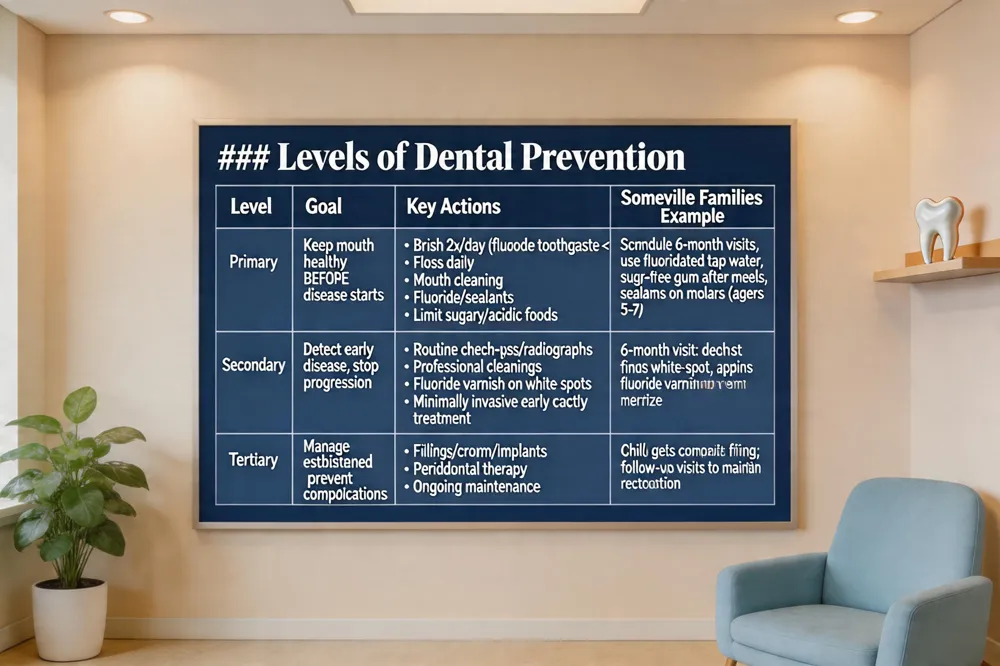 Primary, secondary, and tertiary prevention definitions
Primary prevention in dentistry focuses on keeping the mouth healthy before disease develops. It includes daily brushing with fluoride toothpaste, flossing, tongue cleaning, fluoride treatments, dental sealants, and dietary counseling to limit sugary and acidic foods. Secondary prevention aims to catch problems early and halt their progression through routine check‑ups, professional cleanings, radiographs, and minimally invasive treatment of early lesions. Tertiary prevention manages established disease, restoring function with fillings, crowns, bridges, implants, and periodontal therapy while emphasizing ongoing maintenance.
How each level stops decay at a different stage
- Primary: removes plaque and strengthens enamel, preventing acid attacks.
- Secondary: detects white‑spot lesions or early cavities and applies fluoride varnish or sealants to reverse demineralization.
- Tertiary: repairs cavities and protects remaining tooth structure to avoid further breakdown.
Practical examples for families in Somerville
- Schedule six‑month dental visits at a local family practice.
- Use fluoridated tap water and chew sugar‑free gum after meals to boost saliva.
- Apply sealants soon after the first permanent molars erupt (ages 5‑7).
- Follow a balanced diet rich in calcium‑bearing foods and limit between‑meal snacks.
Q&A
Primary, secondary and tertiary prevention in dentistry – Primary prevention keeps the mouth healthy before disease, secondary catches early disease early, and tertiary treats established disease to prevent complications.
What are the three levels of prevention in dentistry? – Primary, secondary, and tertiary prevention, each progressing from disease avoidance to early detection to restoration.
Primary prevention dental – Daily oral‑hygiene habits, fluoride, sealants, and diet counseling empower Somerville families to maintain a healthy smile for life.
Daily Home‑Care Routine
Oral‑Hygiene Routine Steps
| Step | Description | Tools / Products | Approx. Time |
|---|---|---|---|
| 1. Rinse / Oil Pull | Loosen debris; optional 5‑10 min oil pull on empty stomach | Coconut oil (optional) | 5‑10 min (oil pull) |
| 2. Floss | Dislodge interdental plaque before brushing | Dental floss or water flosser | 1‑2 min |
| 3. Brush | Two‑minute gentle circular motions with fluoride toothpaste | Soft‑bristled brush, fluoride toothpaste | 2 min |
| 4. Tongue Scrape | Remove bacterial film from tongue | Tongue scraper | <30 sec |
| 5. Mouthwash | Alcohol‑free therapeutic rinse; wait 30 min before eating | Fluoride or essential‑oil mouthwash | 30 sec (rinse) |
Follow the same order whether you oil oil‑pull or not; the key is to finish with mouthwash and wait before eating.
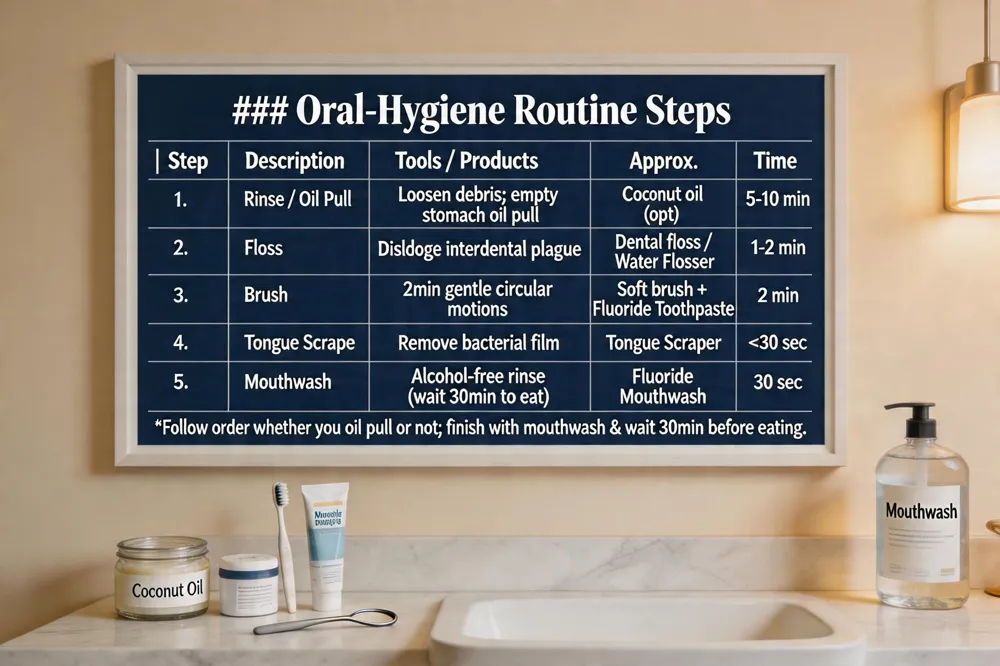
Oral hygiene routine order
Begin with an optional rinse or oil‑pull to loosen debris, then floss (or use a water flosser) to clear interdental plaque. Brush for a full two minutes with fluoride toothpaste using gentle circular motions, finish with a tongue scraper and an alcohol‑free therapeutic mouthwash that should sit for at least 30 minutes before eating.
Oral hygiene routine order with oil pulling
Start the morning with 5‑10 minutes of oil pulling on an empty stomach, spit into a trash can and rinse. Follow with a tongue scrape, then floss to dislodge plaque before brushing for two minutes with fluoride toothpaste. End with an alcohol‑free mouthwash for added antimicrobial protection.
5 ways to keep your teeth healthy
10 ways to keep your teeth healthy
Add to the above: stay well‑hydrated, replace your toothbrush every three months, consider sealants or professional fluoride treatments, avoid tobacco, schedule semi‑annual dental check‑ups, maintain a balanced diet rich in vegetables, fruits, nuts, and dairy, and keep your tongue clean.
What is the 3‑3‑3 rule for teeth?
Brush three times daily, spend at least three minutes per session, and replace your toothbrush (or head) every three months. This simple mnemonic supports optimal plaque removal and enamel protection.
Targeted Preventive Measures
Targeted Prevention Options
| Measure | Source / Method | Primary Benefit | Recommended Frequency |
|---|---|---|---|
| Fluoride Toothpaste | Daily brushing with 1,000‑1,500 ppm fluoride | Strengthens enamel, promotes remineralization | Every brush |
| n | Community Water Fluoridation | Tap water (≈0.7 ppm) | Systemic enamel protection |
| Professional Fluoride Varnish | In‑office application | High‑dose remineralization | 2–4 times/year for high‑risk patients |
| Dental Sealants | Thin resin coating on pits & fissures of molars | Blocks plaque, reduces cavity risk up to 80 % | Applied once after eruption (ages 5‑7) |
| Sugar‑Free Gum / Chewy Cheese | Chew after meals | Stimulates saliva, buffers acids | As needed, especially after sugary foods |
| Calcium‑Rich Snacks (cheese, yogurt, veggies) | Dietary choice | Supplies calcium & phosphate for repair | Between meals |
| Oil Pulling (coconut oil) | 5‑10 min weekly | Reduces oral bacteria, boosts saliva | 1‑2 times/week |
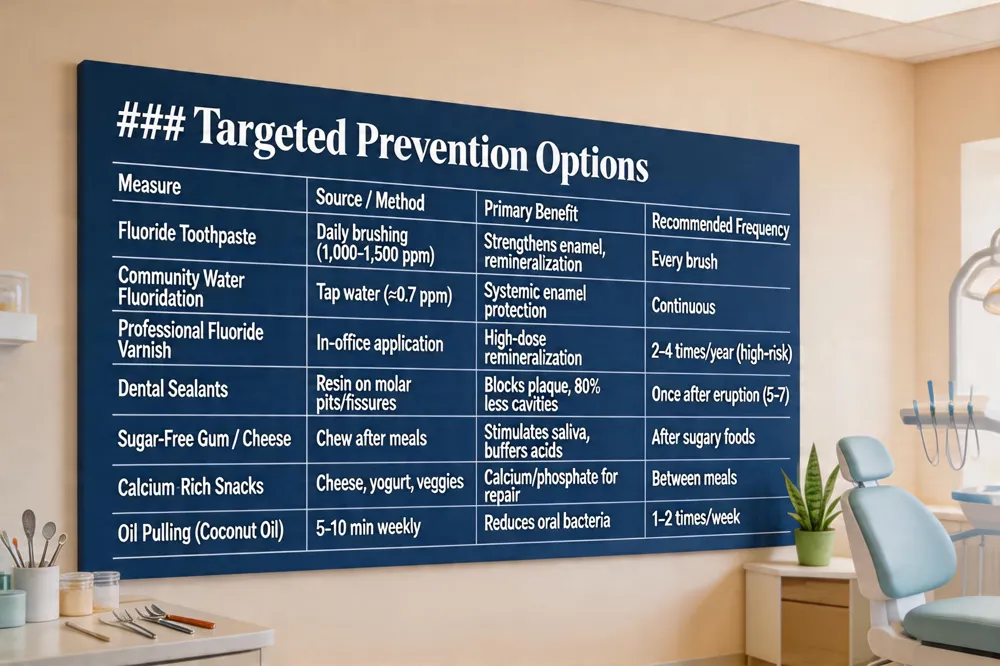 Fluoride comes from community‑water fluoridation (about 63% of Americans), fluoride toothpaste, mouth rinses, and professional varnish or gel applications that boost remineralization. Sealants thin thin protective coating placed on the pits and fissures of permanent molars soon after eruption; they block plaque and food particles, cutting cavity risk by up to 80% in children and teens. Limit acid attacks by choosing low‑sugar, low‑acid foods, drinking water between meals, and favoring calcium‑rich snacks such as cheese, yogurt, and crunchy vegetables that stimulate saliva. Chewing sugar‑free gum or sucking on sugar‑free lozenges after meals further increases saliva flow, which neutralizes acids and supplies calcium and phosphate for natural repair.
How to prevent tooth decay from spreading – Brush twice daily with a soft‑bristled brush and fluoride toothpaste, floss, rinse with fluoride or essential‑oil mouthwash, limit sugary snacks, drink fluoridated water, and see your dentist for sealants and regular check‑ups.
How to stop tooth decay from spreading home remedies – Maintain rigorous brushing and flossing, use a mild hydrogen‑peroxide rinse or essential‑oil mouthwash, increase calcium‑rich foods, and consider oil pulling with coconut oil a few times weekly.
How to heal cavities in 2 days at home – True cavities cannot be cured at home; however, aggressive fluoride brushing, flossing, antibacterial rinses, and a diet low in sugar while rich in calcium and vitamin D can halt progression until professional treatment is obtained.
Professional Services & Treatment Planning
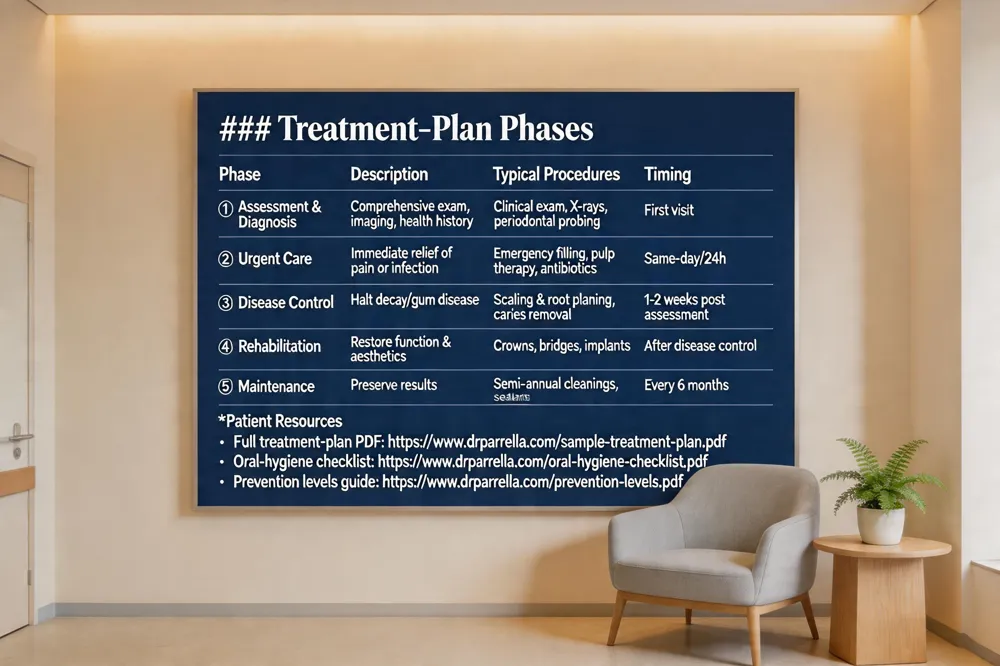
Treatment‑Plan Phases
| Phase | Description | Typical Procedures | Timing |
|---|---|---|---|
| 1️⃣ Assessment & Diagnosis | Comprehensive exam, imaging, health history | Clinical exam, X‑rays, periodontal probing | First visit |
| 2️⃣ Urgent Care | Immediate relief of pain or infection | Emergency filling, pulp therapy, antibiotics | Same‑day or within 24 h |
| 3️⃣ Disease Control | Halt progression of decay/gum disease | Scaling & root planing, caries removal, endodontic therapy | Within 1‑2 weeks after assessment |
| 4️⃣ Rehabilitation | Restore function & aesthetics | Crowns, bridges, implants, prosthetics | After disease control, as needed |
| 5️⃣ Maintenance | Preserve results & prevent recurrence | Semi‑annual cleanings, sealants, fluoride, hygiene reinforcement | Every 6 months |
Patient Resources
- Full treatment‑plan PDF: https://www.drparrella.com/sample-treatment-plan.pdf
- Oral‑hygiene checklist: https://www.drparrella.com/oral-hygiene-checklist.pdf
- Prevention levels guide: https://www.drparrella.com/prevention-levels.pdf
 Routine exams and cleanings are scheduled every six months. This regular recall lets us detect early decay, remove tartar, and apply preventive treatments before problems become severe.
Dental sealants and fluoride applications are key defenses. Sealants are thin plastic coatings placed on the chewing surfaces of molars to block plaque and food particles, while fluoride (toothpaste, water, mouth rinses, or in‑office varnish) strengthens enamel and promotes remineralization.
Understanding treatment‑plan phases: 1️⃣ Assessment & diagnosis – comprehensive exam, imaging, health history. 2️⃣ Urgent care – pain, infection, or broken teeth addressed promptly. 3️⃣ Disease control – scaling, root planing, caries removal, or endodontic therapy. 4️⃣ Rehabilitation – crowns, bridges, implants, or prosthetics restore function and aesthetics. 5️⃣ Maintenance – regular recall schedule and reinforced oral‑hygiene habits preserve results.
PDF resources for patients:
- Full treatment‑plan PDF: https://www.drparrella.com/sample-treatment-plan.pdf
- Oral‑hygiene checklist: https://www.drparrella.com/oral-hygiene-checklist.pdf
- Prevention levels guide: https://www.drparrella.com/prevention-levels.pdf These tools help you stay informed and keep your smile healthy.
Special Cases & Frequently Asked Questions
FAQs & Special Cases
| Case | Key Advice | Recommended Actions | Resources |
|---|---|---|---|
| Children’s Cavity Management (7‑yr‑old) | Early detection + gentle home care | Brush twice with pea‑sized fluoride paste, floss daily, limit sugary snacks, use fluoride rinse if advised, give acetaminophen/ibuprofen for pain, cold pack on cheek | https://www.drparrella.com/oral-hygiene-checklist.pdf |
| Diabetes & Dental Coverage | Prevent gum disease, know insurance limits | Regular cleanings, X‑rays, fluoride treatments (often covered), maintain tight glycemic control, use Medicaid or community clinics if uninsured | https://brandandbritt.com/customer-resources/blog/preventive-vs-basic-vs-major-dental |
| Natural Approaches for Baby Teeth | Protect enamel without aggressive chemicals | Soft infant brush, rice‑grain‑size fluoride paste, water rinse after meals, calcium‑rich foods, avoid bedtime bottles, consider xylitol products | https://thepediatricdentist.com/daily-tips-for-cavity-prevention/ |
| Pain‑Management (3‑3‑3 Rule) | Short‑term relief, not a cure | 200 mg ibuprofen tablets ×3 doses/day for ≤3 days, monitor swelling/fever, seek professional care promptly | ./how-smallpractice-flexibility-leads-to-faster-treatment-decisions#the-333-rule-for-teeth |
| How to Stop Decay from Spreading (Home) | Aggressive fluoride + diet | Brush with fluoride toothpaste, floss, antibacterial rinse, low‑sugar diet, calcium‑rich foods, consider oil pulling 1‑2×/week | https://kmbdds.com/simple-steps-to-keep-cavities-at-bay/ |
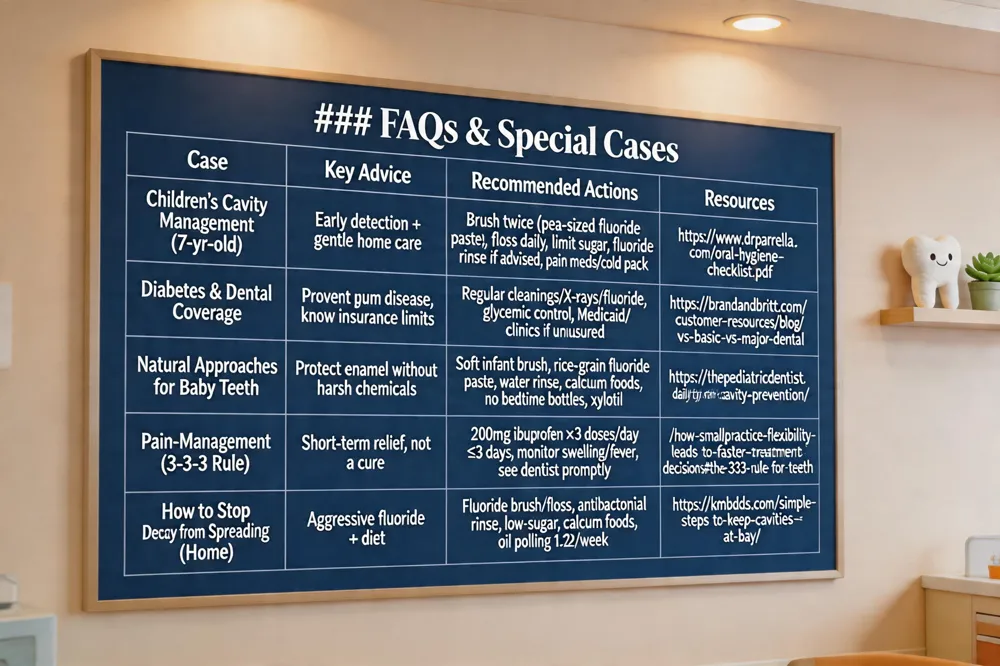 Children’s cavity management – A professional exam is the first step for a 7‑year‑old with tooth decay. At home, brush twice daily with a pea‑sized amount of fluoride toothpaste, floss daily, and limit sugary snacks and drinks. Use a fluoride mouth rinse or gel if the dentist recommends it, and give age‑appropriate acetaminophen or ibuprofen for pain with a cold pack on the cheek.
Diabetes and dental coverage – The United States does not provide universal free dental care for diabetics. Coverage depends on private insurance, Medicaid, state programs, or low‑cost community clinics. Preventive services such as exams, cleanings, X‑rays, and fluoride treatments are often covered at no out‑of‑pocket cost, which is especially important because diabetes raises gum‑disease risk.
Natural approaches for baby teeth – Strengthen enamel by brush twice a day with a soft infant brush and a rice‑grain‑size amount of fluoride toothpaste, rinsing with water after meals, and offering calcium‑rich foods. Limit sugary drinks, avoid bedtime bottles, and consider xylitol‑sweetened products. Prompt pediatric evaluation is needed if a spot darkens or causes sensitivity.
Pain‑management guidelines – For temporary relief of toothache, the 3‑3‑3 rule (three 200‑mg ibuprofen tablets three times a day for no more than three days) may reduce inflammation, but it is not a cure. Seek professional dental care promptly, especially if swelling, fever, or infection is present.
Putting the Plan Into Practice
The three‑step preventive framework we recommend is simple and effective: (1) oral hygiene – brush twice a day with fluoride toothpaste, floss daily and consider a mouthwash; (2) preventive care – schedule a cleaning, exam and fluoride or sealant application every six months; (3) lifestyle and diet – limit sugary and acidic snacks, stay hydrated with fluoridated water and chew sugar‑free gum to boost saliva. To get started with Dr. Parrella’s practice, call the office at (555) 123‑4567 or use the online portal to pick a time for your first visit. Don’t forget to download the free PDF guide from our website and begin your prevention plan today.