Why Interdental Brushing Matters
Interdental cleaning refers to any method that removes plaque and food debris from the spaces between teeth—areas a regular toothbrush cannot reach. Interdental brushes are small, cone‑ or cylindrical‑shaped brushes that fit into these gaps; they come in a range of diameters (≈0.4 mm‑1.5 mm) so a snug, comfortable fit can be selected for each patient. Daily use of an appropriately sized brush dramatically lowers interproximal plaque scores—by up to 40 % compared with brushing alone—and reduces gingival inflammation and bleeding. By disrupting the bacterial biofilm that fuels gum disease, interdental brushing helps prevent gingivitis, periodontitis, and the cavities that often develop between teeth. This targeted cleaning is a core component of preventive dental care, complementing twice‑daily brushing, fluoride toothpaste, and regular professional check‑ups to maintain healthy gums, protect systemic health, and reduce the need for more invasive, costly treatments.
Understanding Interdental Cleaning and Preventive Care
| Preventive Service | Typical Cost (USD) | Insurance Coverage | Key Benefits |
|---|---|---|---|
| Routine exam, cleaning, X‑rays | $100‑$250 (avg $200; MA $178) | 100 % with no deductible on most plans | Early detection of decay/gum disease, reduces systemic inflammation, cost‑effective long‑term |
| Fluoride application | Included in visit | Covered | Strengthens enamel, prevents caries |
| Sealants | Included in visit | Covered | Protects pits & fissures, especially in children |
| Personalized oral‑health education | Included in visit | Covered | Improves brushing, diet, tobacco cessation habits |
 Preventive dental treatment includes routine oral exams, professional cleanings, fluoride applications, sealants, diagnostic X‑rays, and personalized education on brushing, diet, and tobacco cessation. These services catch decay or gum disease early, protect the periodontium, and can diminish systemic inflammation linked to heart disease and diabetes. In Dr. Parrella’s Somerville practice, preventive care is tailored to each family member’s anatomy and risk factors.
A typical preventive visit—exam, cleaning, and X‑rays—costs $100‑$250 nationally (average $200; Massachusetts $178). Most dental plans cover these services at 100 % with no deductible, so patients often pay little or nothing out‑of‑pocket. Regular six‑month cleanings help avoid costly emergency treatment later, making preventive care both health‑wise and economical.
Safety, Reusability, and Practical Use
| Aspect | Recommendation | Note |
|---|---|---|
| Size selection | Choose snug fit; no forcing | Resistance or bleeding → smaller size |
| Bristle condition | Replace when frayed (≈1 week daily use) | Maintains cleaning efficiency |
| Reuse | Rinse after each use, air‑dry; up to ~7 days if bristles intact | Compost bamboo handle if biodegradable |
| Pressure | Use gentle back‑and‑forth motion (2‑3 times) | Prevents gum trauma |
| Replacement interval | 1‑2 weeks for disposable; 1 month for reusable handles | Depends on wear and hygiene |
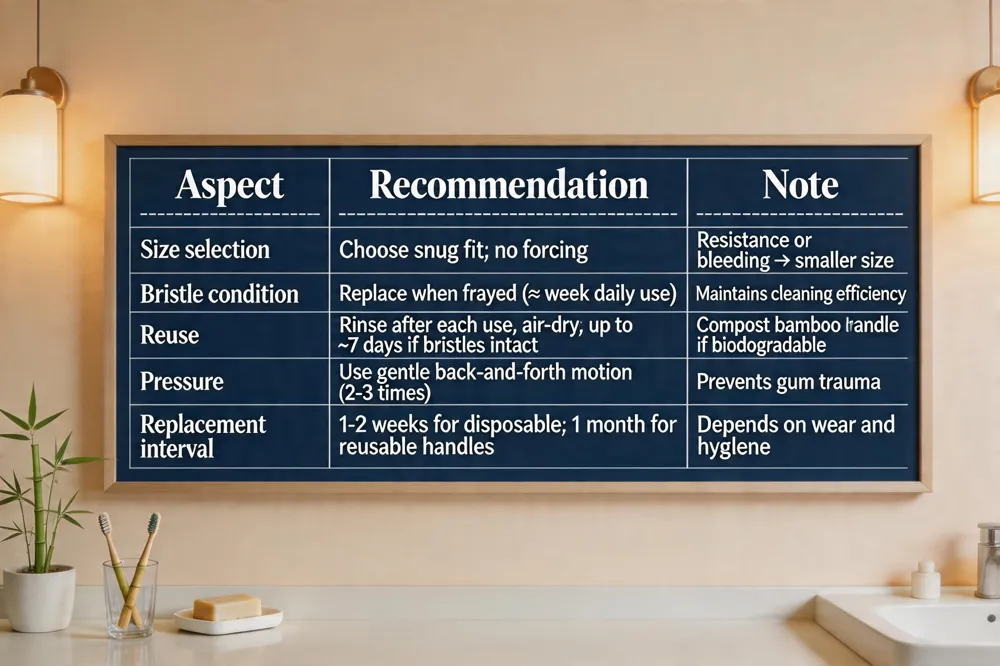 Interdental brushes are safe when used correctly—choose a size that fits snugly in each gap, avoid forcing the brush, and follow the manufacturer’s instructions. A proper fit prevents gum trauma and enamel damage; mild bleeding may appear initially but usually subsides as plaque is removed and gums heal. Reusable options are now available, often featuring a biodegradable bamboo handle and nylon or castor‑oil bristles. After each use, rinse the brush (or soak it in an antimicrobial mouthwash) and let it air‑dry; replace it when the bristles become frayed, typically after a week of daily use. While the handle can be composted, the brush itself must be discarded to maintain hygiene. Potential drawbacks include gum irritation if the wrong size is selected or if excessive pressure is applied, the need for frequent replacement (every 1–2 weeks) which can increase cost, and limited effectiveness in very tight interproximal spaces where floss or a thin pick may be preferable. In practice, an interdental brush can be reused for several days—up to about a week—provided the bristles remain intact; replace it as soon as cleaning efficiency drops. A short instructional video demonstrates gentle insertion, a back‑and‑forth motion, and proper rinsing after each use.
Who Should Use Them and Timing in Your Routine
| Patient Group | Indications | Recommended Timing |
|---|---|---|
| Adults with larger interdental gaps | Gaps >0.5 mm, braces, bridges, implants | Daily, before brushing |
| Seniors or arthritis patients | Limited manual dexterity | Daily, before brushing; consider ergonomic handles |
| Orthodontic patients | Brackets & wires | Daily, before brushing; use color‑coded sizes for each bracket gap |
| Floss‑averse individuals | Discomfort with floss | Daily, before brushing; start with medium size and adjust |
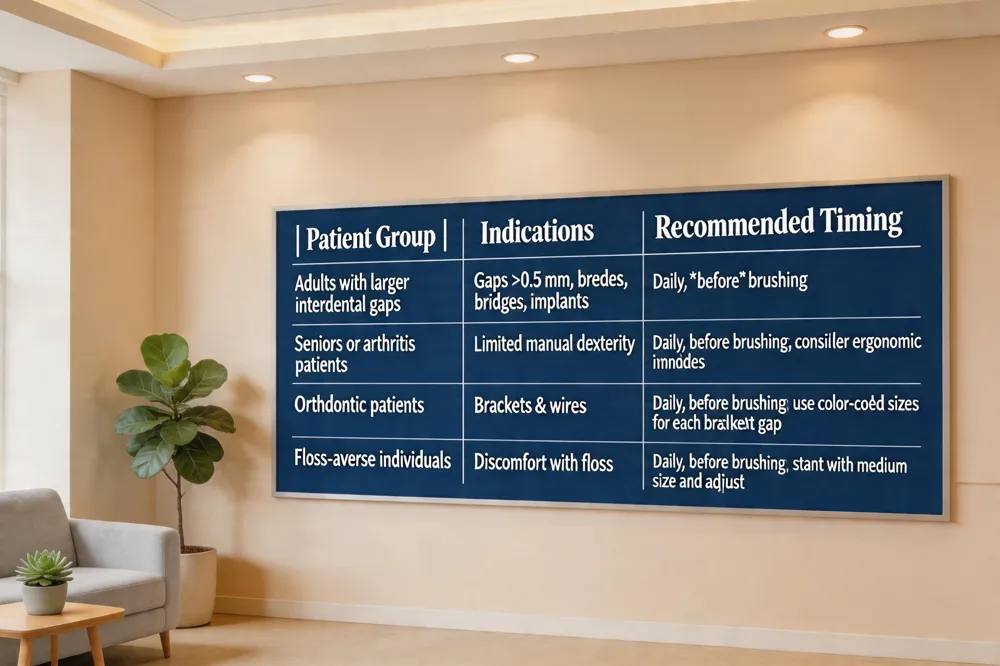 Interdental brushes are ideal for anyone whose teeth have spaces that floss can’t easily reach—larger gaps, orthodontic brackets, bridges, implants, or patients with limited manual dexterity such as seniors or those with arthritis. They are also a gentle alternative for anyone who finds flossing uncomfortable, offering a back‑and‑forth motion that cleans front and back teeth without excessive pressure.
When to use them – The best routine is to clean the interdental spaces before you brush. Removing debris first lets the toothbrush clear the remaining surface plaque more effectively. Consistency—daily use before brushing—is key.
Braces – Choose a size that fits the gaps around brackets and wires (color‑coded sizes help). Gently insert the brush, keeping the head straight or lightly bent to follow the wire contour, and move it back‑and‑forth 2‑3 times while sliding up and down each side of the brace. Rinse after each space and replace the brush when bristles fray.
3‑3‑3 rule – Brush three times a day, spend at least three minutes per session, and replace your toothbrush or brush head every three months.
2‑2‑2 rule – Brush twice daily for two minutes each time and see your dentist for cleanings and exams twice a year.
How to use – Hold the brush like a pencil, insert gently at the gum line, move back‑and‑forth 2‑3 times, clean every space, rinse after each use, and replace every 1–2 weeks.
Choosing the Right Size and Type of Interdental Cleaner
| Brush Size (mm) | Example Color Code | Suitable Gap Width | Example Product |
|---|---|---|---|
| 0.5 mm | Pink (TePe) | Very tight contacts | GUM Ultra‑Tight Proxabrush |
| 0.7‑1.0 mm | Green (TePe) | Tight to moderate gaps | TePe 1.0 mm brush |
| 1.0‑1.5 mm | Blue (TePe) | Moderate gaps | DenTek Slim Brush Advanced Clean |
| 1.5‑2.0 mm | Yellow (TePe) | Wide gaps, bridges | GUM Proxabrush Wide |
| 2.0‑2.5 mm | Red (TePe) | Very wide embrasures | TePe 2.5 mm brush |
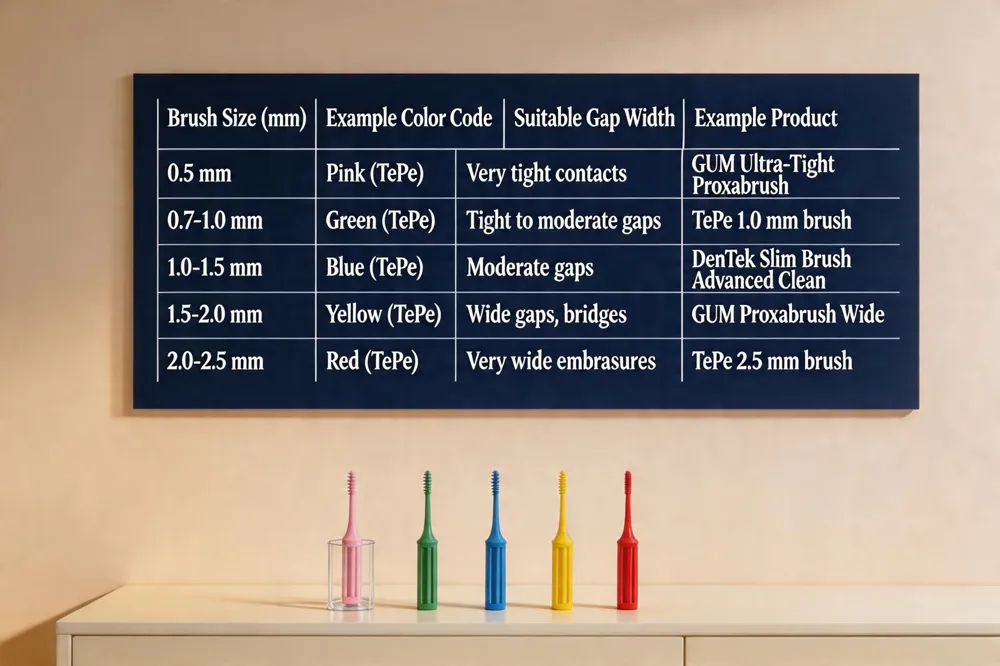 Interdental cleaning is a cornerstone of preventive dental care, and selecting the right size and type of cleaner can make a big difference in plaque control and gum health.
Interdental brush sizes – Brushes are offered from roughly 0.5 mm for tight contacts up to 2.5 mm for wider gaps. Color‑coded systems such as TePe’s nine‑size line or GUM’s Proxabrush series (four sizes) help patients match the brush to each space. The brush should fit snugly without forcing; any resistance or bleeding indicates a smaller size is needed.
Types of interdental cleaning aids – Options include traditional floss (waxed, unwaxed, picks), interdental brushes of various diameters, soft‑pick or rubber‑pik devices, wooden sticks, and water‑flossers. Choice depends on interdental gap width, manual dexterity, and specific oral anatomy (e.g., braces, bridges, implants).
Effectiveness overview – Systematic reviews show interdental brushes outperform floss for plaque and gingivitis reduction, especially in widened embrasures. Rubber‑tip brushes give comparable results with higher comfort, while wooden sticks add little benefit. Oral irrigators chiefly reduce gingival inflammation but have modest plaque impact. Using a combination of aids yields the best overall outcome.
Top‑rated brushes – Highly recommended products are GUM Proxabrush Go‑Betweens (tight, moderate, wide), DenTek Slim Brush Advanced Clean, and TePe’s color‑coded line. For very tight spaces, ultra‑tight GUM brushes or GUM Soft‑Picks are effective, and reusable options like Tandex FLEXI provide 11 size choices and a reshaped head for hard‑to‑reach areas.
Clinical Evidence and Integrating Interdental Brushes into a Preventive Routine
| Study Outcome | Brush vs Floss | Practical Implication |
|---|---|---|
| Plaque reduction | Brushes ≥ floss in wide gaps | Use brushes for embrasures >0.7 mm |
| Gingivitis scores | Brushes lower inflammation more than brushing alone | Pair brushes with routine brushing |
| Patient compliance | Higher with brushes (ease of use) | Recommend brushes for floss‑averse patients |
| Combined regimen | Best plaque control when brushes + floss used appropriately | Brush larger spaces, floss tighter contacts |
| Cost‑effectiveness | Prevents costly emergency treatment | Encourage regular use to reduce long‑term expenses |
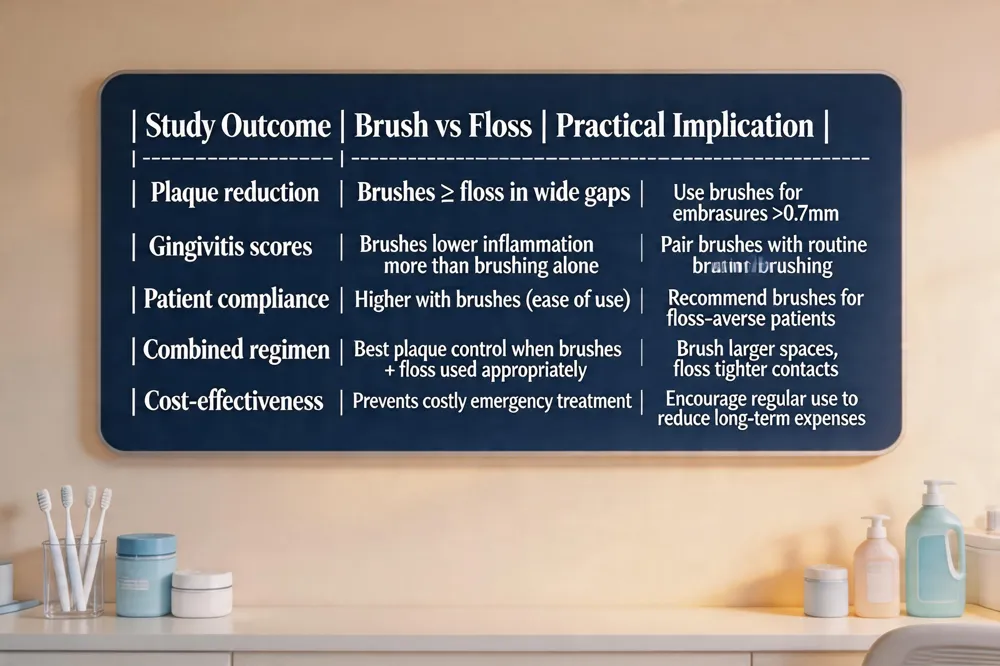 Interdental brushes clean wider spaces more efficiently than floss, removing more plaque and reducing gingival bleeding, while floss remains superior for very tight contacts. Using both—brushes for larger embrasures and floss for narrow gaps—provides the most comprehensive plaque control. Clinical studies consistently show that interdental brushes lower plaque scores and gingivitis more than brushing alone and are at least as effective as floss. Their ease of use improves patient compliance, and they can be paired with fluoride or chlorhexidine gels for added protection. When sized and used gently, interdental brushes do not create new gaps; an oversized brush may irritate gums but does not separate teeth. Wooden picks reach tight spaces and offer a mild flavor, yet reviews reveal only modest inflammation reduction and a risk of splintering, making brushes or silicone picks the preferred choice. Interdental cleaning devices—including brushes, floss, soft‑pick rubber picks, and oral irrigators—are essential adjuncts to brushing. Selecting the right device based on space size and comfort maximizes oral health, supporting a preventive routine that aligns with insurance coverage of exams, cleanings, and X‑rays at 100 % and helps families avoid costly restorative procedures.
Make Interdental Brushing a Daily Habit
Choosing the right interdental brush size is the first step toward effective cleaning. Most brands use colour‑coded probes ranging from 0.4 mm to 1.5 mm; a snug fit cleans the space without pressing the gums. Your dentist can measure each gap and recommend a specific size for front teeth, molars, and areas around bridges, implants or braces. Using the correct size daily removes up to 35 % of plaque that a regular toothbrush misses, lowering gingivitis, periodontal disease and even interproximal cavities. Over the long term, fewer infections mean reduced systemic inflammation, which research links to better heart health, diabetes control and respiratory outcomes. In Dr. Anthony P. Parrella’s Somerville practice, every new patient receives a personalized interdental‑brush chart, a brief hands‑on demonstration, and follow‑up reminders to replace brushes every 1–2 weeks. This tailored support turns a simple habit into lasting oral and overall health benefits.